
Ultrasonic Spray Coating of Biosensors
Ultrasonic Spray Coating of Biosensors – Biosensors – Cheersonic
Knowledge related to biosensor spray coating mainly involves the fabrication process of biosensors, particularly the application of ultrasonic spray coating technology. The following is a detailed summary of knowledge related to biosensor spray coating:
1. Introduction to Biosensors
A biosensor is an instrument that is sensitive to biological substances and converts their concentration into an electrical signal for detection. It typically consists of immobilized biologically sensitive materials (such as enzymes, antibodies, antigens, microorganisms, cells, tissues, nucleic acids, and other bioactive substances) as recognition elements, along with appropriate physicochemical transducers (such as oxygen electrodes, phototubes, field-effect transistors, piezoelectric crystals, etc.) and signal amplification devices. Biosensors function as both receivers and transducers, capable of recognizing the target and inducing a physical or chemical change, which is then converted into an electrical signal for output.
2. Application of Ultrasonic Spray Coating Technology in Biosensor Fabrication
Ultrasonic spray coating technology is a technique based on high-frequency vibration to atomize liquid coating into tiny droplets and precisely deposit them onto the target substrate. It has the following significant advantages in biosensor fabrication:
1)High-precision coating: It can precisely control the droplet size and distribution, achieving uniform coating coverage, which is crucial for the performance of biosensors.
2) High material utilization: Significantly reduces paint waste and lowers production costs.
3.)Environmental friendliness: Reduces volatile organic compound emissions, meeting green manufacturing requirements.
4.)Strong adaptability: Applicable to paints with various viscosities and surface tensions, meeting the preparation needs of different materials.
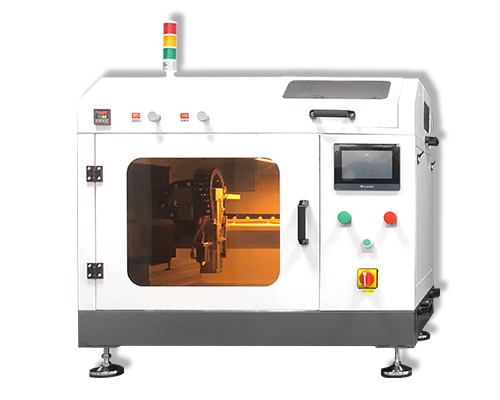
Specific applications of ultrasonic spraying technology in biosensor fabrication include:
1. Protein detection sensors: Depositing titanium dioxide nanofibers and gold nanoparticles on the electrode surface enhances the adsorption capacity and electrochemical activity of biomolecules, thereby improving sensor sensitivity and detection stability.
2. Enzyme sensors: Depositing carbon nanotubes and polymer composites improves enzyme molecule stability and response time to target molecules, enhancing sensor sensitivity and lifespan.
3. DNA sensors: Depositing silver nanoparticles and titanium dioxide nanofibers improves the conductivity and surface activity of sensor electrodes, significantly enhancing the detection sensitivity and specificity of DNA sequences.
4. Environmental pollutant detection sensors: Depositing zinc oxide nanostructures enhances the sensor’s detection sensitivity and selectivity for heavy metal ions and organic pollutants.
3. Key Elements of Biosensor Spray Coating Process
1.)Coating Selection and Formulation: Select appropriate coatings (such as nanomaterials, bioactive substances, etc.) and formulate them precisely according to the application requirements of the biosensor.
2.)Spraying Parameter Settings: This includes setting parameters such as spraying speed, spray volume, and coating thickness. These parameters directly affect the uniformity of the coating and the performance of the sensor.
3) Substrate Treatment: Pre-treat the biosensor substrate, such as cleaning and drying, to ensure uniform coating adhesion.
4)Post-processing and Testing: After spraying, perform post-processing on the sensor (such as drying and curing) and conduct performance testing to ensure it meets design requirements.
5. Development Trends of Biosensor Spray Coating Technology
1) Material Innovation: Continuously explore new coating materials, such as nanomaterials with higher biocompatibility and specificity, to meet the diverse needs of biosensors.
2) Process Optimization: Improve coating uniformity and sensor performance stability by refining the spraying process and parameter settings.
3) Intelligentization and Automation: Introduce intelligent control systems and automated equipment to improve the production efficiency and quality control level of biosensor spray coating. 4. Environmental Protection and Sustainability: Emphasis is placed on environmental protection and sustainable development during the spraying process, reducing the emission and waste of harmful substances.
In summary, knowledge related to biosensor spraying involves multiple aspects, including an introduction to biosensors, the application of ultrasonic spraying technology, key elements of the spraying process, and development trends. With continuous technological advancements and the ongoing development of the medical field, biosensor spraying technology will continue to be optimized and innovated, providing more efficient and accurate detection methods for fields such as medical diagnosis, environmental monitoring, and food safety.
About Cheersonic
Cheersonic is the leading developer and manufacturer of ultrasonic coating systems for applying precise, thin film coatings to protect, strengthen or smooth surfaces on parts and components for the microelectronics/electronics, alternative energy, medical and industrial markets, including specialized glass applications in construction and automotive.
Our coating solutions are environmentally-friendly, efficient and highly reliable, and enable dramatic reductions in overspray, savings in raw material, water and energy usage and provide improved process repeatability, transfer efficiency, high uniformity and reduced emissions.
Chinese Website: Cheersonic Provides Professional Coating Solutions
