Design of AEM Electrolysis Water Hydrogen Production System
Anion exchange membrane (AEM) water electrolysis for hydrogen production combines the advantages of traditional alkaline electrolysis and proton exchange membrane electrolysis. With its compatibility with non-precious metal catalysts, low water quality requirements, and flexible load response, it has become an important development direction for green hydrogen production. System design must revolve around the core reaction mechanism, balancing efficiency, stability, and safety, achieving end-to-end optimization from component selection to overall integration.
The core reaction mechanism and component design are the foundation for efficient system operation. In AEM water electrolysis, the anode and cathode are separated by anion exchange membranes. Water permeates from the anode to the cathode, where a hydrogen evolution reaction occurs under the action of the cathode catalyst to generate hydrogen gas. The resulting hydroxide ions pass through the membrane back to the anode, completing the oxygen evolution reaction to generate oxygen gas. The membrane module, as the core component, needs to possess high ionic conductivity, excellent alkali resistance, and mechanical strength. Polyarylene ring piperidine materials are typically selected, with a thickness controlled at around 80 μm, capable of withstanding a pressure difference of 3 MPa, and effectively preventing gas cross-permeation.
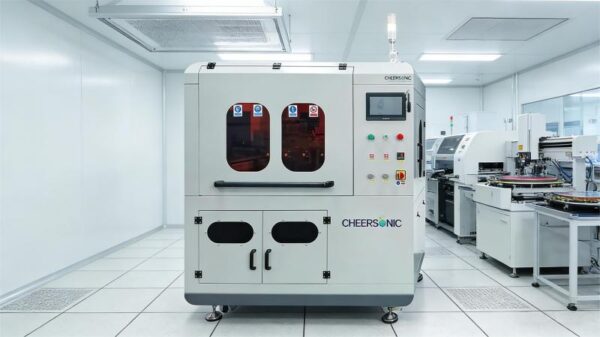
Catalyst selection requires a balance between activity and cost. A single-atom Pt/MXene catalyst is used at the cathode to improve hydrogen evolution efficiency, while a nickel-cobalt-iron layered bimetallic hydroxide catalyst is selected at the anode, with performance optimized by doping with elements such as cerium and ruthenium. The core step in membrane electrode assembly (MEA) fabrication relies on an ultrasonic sprayer for precise coating. This equipment, utilizing high-frequency vibration atomization, transforms the catalyst slurry into uniformly sized microdroplets, ensuring precise control over the coating thickness (typically 5-15 μm) and preventing catalyst particle agglomeration, significantly improving the smoothness and porosity of the catalyst layer. During operation, the ultrasonic frequency (generally 20-120 kHz) and spraying pressure (0.1-0.3 MPa) must be adjusted according to the slurry viscosity. A precision displacement platform is used to achieve uniform coating on both sides of the membrane. A hot-pressing shaping process then ensures a tight bond between the catalyst layer and the membrane, significantly reducing interfacial impedance. The electrolyzer flow channel design must match the power requirements. Low-power systems can use a simple internally sealed flow channel, while high-power systems use an externally sealed double-support plate structure to improve membrane utilization and reduce leakage risk.
System integration requires consideration of both material circulation and process control. The overall system consists of an electrolyzer, a raw water supply unit, an electrolyte circulation unit, a gas-liquid separation unit, and a control system. After pretreatment in a water tank, the raw water is pumped to the anode circulation system. The electrolyte is a 1%–5% wt KOH solution, and the optimal reaction temperature of 50–80°C is maintained by a radiator. Hydrogen generated at the cathode is separated into gas and liquid components, and the output pressure is regulated by a back pressure valve. Anode oxygen can be recycled or discharged in compliance with standards; a hydrogen concentration monitoring device is required to ensure safety.
The control system is crucial for stable system operation. Full-process automated control is achieved by monitoring parameters such as temperature, pressure, current, voltage, liquid level, and electrolyte conductivity. During startup, a constant pressure ramp-up method is used to slowly increase the pressure, avoiding damage to the membrane modules from sudden pressure changes. During operation, the current density is stabilized at approximately 1.5 A/cm² by adjusting the electrolyte concentration and reaction temperature to reduce electrochemical impedance. The system requires a pressure regulating device to maintain a hydrogen-oxygen outlet pressure difference of less than 0.5 kPa, and is equipped with a vent pipe, sampling and analysis valve, and hydrogen leakage monitoring device to meet safety regulations.

Performance optimization focuses on cost reduction, efficiency improvement, and lifespan extension. This is achieved by optimizing the flow channel design (with a bottom-inlet, top-outlet structure), improving the conductivity of the bipolar plates to reduce contact resistance, and using fiber-reinforced membrane materials to reduce swelling and improve mechanical stability. During operation, low electrolyte concentration and low reaction voltage conditions are controlled to reduce catalyst oxidation and membrane degradation, while simultaneously improving the corrosion resistance of the gas diffusion layer to avoid mechanical damage. Future development requires breakthroughs in technologies such as mass production of membrane materials to reduce costs and catalyst modification and upgrading to further enhance the system’s economic efficiency and potential for large-scale application.
About Cheersonic
Cheersonic is the leading developer and manufacturer of ultrasonic coating systems for applying precise, thin film coatings to protect, strengthen or smooth surfaces on parts and components for the microelectronics/electronics, alternative energy, medical and industrial markets, including specialized glass applications in construction and automotive.
Our coating solutions are environmentally-friendly, efficient and highly reliable, and enable dramatic reductions in overspray, savings in raw material, water and energy usage and provide improved process repeatability, transfer efficiency, high uniformity and reduced emissions.
Chinese Website: Cheersonic Provides Professional Coating Solutions