
Analysis of Venous Stent Spraying
Analysis of Venous Stent Spraying – Spraying Stents – Cheersonic
Whether or not drugs inhibiting endothelial cell proliferation are needed in venous stent spraying requires consideration of multiple factors.
1. The Role of Drugs Inhibiting Endothelial Cell Proliferation in Venous Stent Spraying
- Reducing Restenosis Risk: Excessive proliferation of endothelial cells is one of the important causes of in-stent restenosis. Spraying drugs that inhibit endothelial cell proliferation onto the stent surface can effectively control endothelial cell growth, reduce the formation of neointima, and thus reduce the incidence of restenosis.
– For example, rapamycin and its derivatives have strong anti-cell proliferation effects and have been widely used in drug-eluting stents, achieving good clinical results. - Maintaining Stent Patency: By inhibiting endothelial cell proliferation, the patency of the vascular lumen within the stent can be maintained, ensuring normal blood flow. This is crucial for preventing venous thrombosis and maintaining venous function.
– Long-term patent stents can reduce the risk of reoperation and improve the patient’s quality of life.
2. Potential Problems
- Delayed Endothelialization: Excessive inhibition of vascular endothelial cell proliferation may delay the endothelialization process on the stent surface. Normal endothelialization is crucial for preventing thrombosis and maintaining the integrity of the vessel wall. If endothelialization is delayed, the stent surface may be exposed to the blood for an extended period, increasing the risk of thrombosis.
– For example, some potent anti-proliferative drugs may slow endothelial cell growth, thus affecting the rate of endothelialization. - Potential Drug Side Effects: Drugs that inhibit vascular endothelial cell proliferation may produce side effects, such as affecting the normal physiological function of blood vessels and causing systemic adverse reactions.
– For example, rapamycin may have a certain suppressive effect on the immune system, increasing the risk of infection.
3. Other Considerations
- Individual Patient Differences: Different patients have different physical conditions, disease severity, and responses to drugs. When deciding whether to use drugs that inhibit vascular endothelial cell proliferation for intravenous stent application, it is necessary to fully consider the individual patient’s situation and develop a personalized treatment plan.
– For example, some high-risk patients, such as those with underlying conditions like diabetes or hyperlipidemia, may require anti-proliferative drugs to reduce the risk of restenosis; while some low-risk patients may be able to choose not to use drug-coated stents. - Stent Type and Design: Different types of venous stents differ in materials, structure, and surface characteristics, which can also influence whether drug-inhibiting agents are needed for coating.
– For example, some newer biodegradable stents may have better biocompatibility and endothelialization capabilities, thus requiring less drug coating. - Treatment Goals and Expected Outcomes: Physicians need to determine whether to use drug-coated stents based on the patient’s specific condition and treatment goals. If the primary goal is to prevent restenosis, then using anti-proliferative drugs may be a reasonable choice; however, if short-term stent patency or patient tolerability is prioritized, other factors may need to be considered.
In conclusion, whether or not drugs that inhibit endothelial cell proliferation are needed in venous stent application requires a comprehensive assessment and decision-making process, taking into full account factors such as individual patient differences, stent type and design, treatment goals, and expected outcomes. Simultaneously, close monitoring of drug side effects and potential risks is essential to ensure patient safety and treatment efficacy.
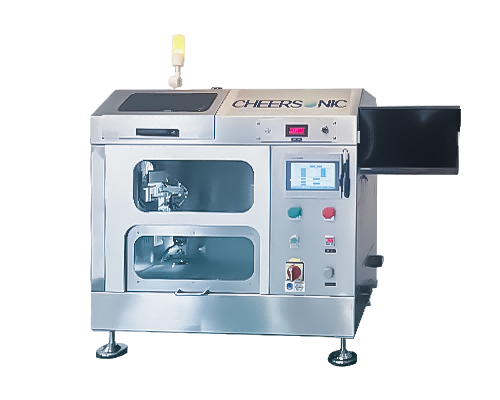
The quality of venous stent coatings directly determines clinical treatment efficacy and safety. The core requirements are achieving coating uniformity, precise drug loading control, and excellent biocompatibility to reduce postoperative complications such as thrombosis and restenosis. Ultrasonic spraying technology, with its unique atomization principle and precise control capabilities, has become an ideal solution for venous stent coating preparation.
This technology generates high-frequency acoustic vibrations through the piezoelectric effect, atomizing the coating material (such as biocompatible polymers and drug carriers) into uniform droplets on the nozzle surface. It eliminates the need for high-pressure gas assistance, fundamentally avoiding problems such as overspraying and droplet rebound common in traditional spraying. The generated micron-sized droplets are uniform in size and can be precisely deposited on the complex mesh structure of the venous stent, achieving uniform coverage in all dimensions. The coating uniformity error can be controlled within 5%.
Considering the flexibility and compression resistance of venous stents, ultrasonic spraying can precisely control the coating thickness (from several micrometers to tens of micrometers), ensuring strong adhesion between the coating and the stent substrate to prevent post-implantation detachment, while not affecting the stent’s mechanical compatibility. Meanwhile, this technology boasts a material utilization rate exceeding 85%, significantly reducing the loss of expensive biomaterials and drugs. It also features a self-cleaning nozzle function, effectively preventing clogging and improving process stability.
In terms of functionality, ultrasonic spraying can precisely prepare drug-eluting coatings. By adjusting process parameters, it achieves stable and sustained drug release, extending the treatment cycle. Combined with an aerosol humidification system, it can also assist drug crystallization and optimize coating performance. Its compatibility with various medical solvents and polymer materials also makes it possible to prepare multifunctional composite coatings (such as antibacterial + biocompatible coatings), providing key technical support for the clinical application of venous stents.
About Cheersonic
Cheersonic is the leading developer and manufacturer of ultrasonic coating systems for applying precise, thin film coatings to protect, strengthen or smooth surfaces on parts and components for the microelectronics/electronics, alternative energy, medical and industrial markets, including specialized glass applications in construction and automotive.
Our coating solutions are environmentally-friendly, efficient and highly reliable, and enable dramatic reductions in overspray, savings in raw material, water and energy usage and provide improved process repeatability, transfer efficiency, high uniformity and reduced emissions.
Chinese Website: Cheersonic Provides Professional Coating Solutions