Advantages of Liquid Metal Catalysts
Advantages of Liquid Metal Catalysts – Catalyst Spraying – Cheersonic
Liquid metal catalysts offer the following advantages:
1. High Catalytic Activity:
Good Atomic Dispersion: The metal is dispersed at the atomic level in the liquid metal solvent, possessing an extremely high catalytic surface area. This provides numerous active sites for chemical reactions, making it easier for reactants to contact the catalyst, thus significantly improving the rate and efficiency of catalytic reactions. For example, in some hydrogenation and dehydrogenation reactions, liquid metal catalysts can efficiently promote the reaction.
Unique Electronic Structure:The electronic structure of liquid metals differs from that of solid metals. This unique electronic structure can influence the adsorption and activation of reactant molecules on the catalyst surface, lowering the activation energy of the reaction and making it easier for the reaction to occur.
2. Good Selectivity: By precisely controlling the composition and structure of liquid metal catalysts, highly selective catalysis of specific reactions can be achieved. For example, in some complex chemical reactions, it can selectively promote the formation of target products, reduce side reactions, and improve product purity and yield.
3. Mild Reaction Conditions:
Good Low-Temperature Activity: Compared to traditional solid catalysts, liquid metal catalysts exhibit good catalytic activity at lower temperatures. This not only reduces the energy consumption required for the reaction and lowers energy costs, but also avoids the adverse effects of high temperatures on reactants and products, such as thermal decomposition and increased side reactions.
Low pressure requirements: In some reactions, liquid metal catalysts can effectively catalyze reactions without high pressure conditions, reducing the requirements and investment costs of reaction equipment.
4. High designability:
Adjustable composition: The composition of liquid metal catalysts can be flexibly selected and adjusted according to different reaction requirements. For example, by changing the type and proportion of metal elements, catalyst performance can be optimized.
Controllable structure: The fluidity of liquid metals allows the catalyst structure to be controlled by external conditions (such as temperature, electric field, magnetic field, etc.), thereby adapting to different reaction environments and requirements.
5. Good resistance to carbon buildup and poisoning: In some catalytic reactions, solid catalysts are easily deactivated due to carbon buildup or poisoning. Liquid metal catalysts, due to their good fluidity and self-cleaning ability, can effectively avoid carbon buildup and have good tolerance to impurities that may cause catalyst poisoning, thus having a longer service life and higher stability.
6. Easy to recover and recycle: Liquid metal catalysts can usually be recovered and separated through simple physical methods (such as centrifugation and filtration), facilitating recycling and reducing the cost of catalyst use and environmental impact.
7. Wide range of applications: Liquid metal catalysts can be applied to a variety of chemical reactions, such as hydrogenation, dehydrogenation, oxidation, reduction, and coupling reactions, and have good adaptability to different types of reactants and reaction systems.
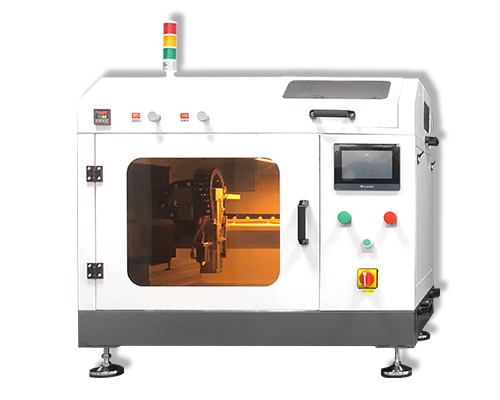
Ultrasonic spraying of liquid metal catalysts is an advanced technology that integrates precise spraying and high-efficiency catalysis. Its core principle is to atomize the liquid metal catalyst into uniform micron-sized droplets through high-frequency ultrasonic vibration, precisely depositing them onto the target substrate surface to form a high-performance catalytic coating. This technology effectively solves the pain points of uneven catalyst distribution and significant material waste in traditional spraying, significantly improving catalytic reaction efficiency and stability.
Its core advantages are reflected in three aspects: First, high atomization uniformity; ultrasonic vibration can break up liquid metal particle agglomeration, controlling coating thickness deviation within the nanometer level, ensuring uniform distribution of catalytic active sites. Second, material utilization exceeds 90%; the low-impact spraying mode avoids liquid splashing, making it particularly suitable for high-value liquid metal materials. Third, strong process compatibility; it can operate in low-temperature and low-pressure environments, adapting to various sensitive substrates such as polymers and ceramics, and can handle high-viscosity catalyst systems.
Currently, this technology has been widely applied in energy conversion and environmental governance fields, such as CO₂ hydrogenation to methanol and pollutant degradation reactions. The ultrasonic action can also promote the formation of active sites on the liquid metal surface, improving catalytic selectivity. With future process optimization, it is expected to achieve wider large-scale application in fields such as new energy and fine chemicals.
About Cheersonic
Cheersonic is the leading developer and manufacturer of ultrasonic coating systems for applying precise, thin film coatings to protect, strengthen or smooth surfaces on parts and components for the microelectronics/electronics, alternative energy, medical and industrial markets, including specialized glass applications in construction and automotive.
Our coating solutions are environmentally-friendly, efficient and highly reliable, and enable dramatic reductions in overspray, savings in raw material, water and energy usage and provide improved process repeatability, transfer efficiency, high uniformity and reduced emissions.
Chinese Website: Cheersonic Provides Professional Coating Solutions