Methods for Spraying Polyimide Materials
Polyimide materials, due to their excellent properties such as high temperature resistance and strong insulation, are widely used in high-end manufacturing fields such as electronics and aerospace. The quality of the spraying directly determines the coating performance. The following are general and efficient polyimide spraying methods, covering three core stages: substrate pretreatment, spraying process implementation, and curing.
Substrate pretreatment is fundamental to ensuring coating adhesion. First, degreasing and cleaning are performed. The substrate is ultrasonically cleaned with acetone for 20-30 minutes to remove grease, followed by ultrasonic cleaning with ethanol for 15-20 minutes to dehydrate and remove impurities. Finally, it is rinsed with deionized water and dried in an oven at 80-100℃ for 1-2 hours. If the substrate is silicon, metal, etc., further activation treatment is required: plasma treatment with 100-300W power for 5-15 minutes, or immersion in a 1%-5% concentration silane coupling agent solution for 30-60 minutes followed by drying, can be used to increase the adhesion by adding hydrophilic groups to the surface.
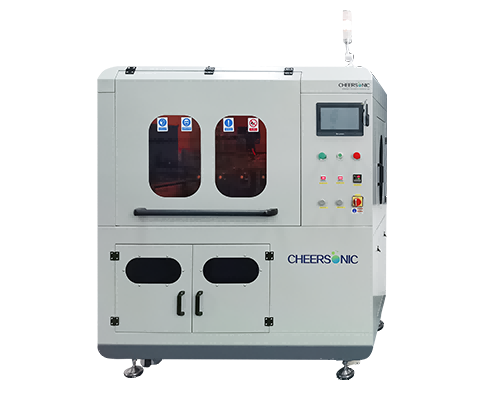
Ultrasonic spraying and spin coating are the mainstream spraying processes. Ultrasonic spraying atomizes the polyimide precursor solution into micron-sized droplets through high-frequency vibration. This non-contact spraying method requires precise parameter control: nozzle speed 70-130 mm/s, atomization pressure 0.36-0.54 MPa, spraying distance 140-200 mm, and row spacing 18-21 mm. This allows for precise film formation from submicron to hundreds of micron thicknesses. Spin coating is suitable for planar substrates such as wafers. First, a photoresist thinner is sprayed onto the static substrate surface to improve flowability. Then, the nozzle is moved to the center, using a “high-speed spreading + low-speed reflow” mode: high-speed rotation at 500-4000 rpm for 5-40 seconds to achieve thickness, followed by low-speed rotation at 100-1000 rpm for 1-3 seconds to optimize edge uniformity. An exhaust pressure of 2.0-6.0 kPa is maintained throughout the process.
Curing is crucial for achieving stable polyimide performance and requires a stepped temperature increase. First, low-temperature reduced-pressure drying is performed to remove the solvent at 20 Pa pressure and 80-100℃. Then, high-temperature curing is initiated: 160-180℃ for 20 minutes to remove residual solvent, 230-250℃ for 20 minutes to complete the imidization reaction, and finally, 450-470℃ for 20 minutes to strengthen the molecular arrangement. High-purity nitrogen is introduced throughout the curing process to control the oxygen concentration below 100 ppm to prevent oxidation and yellowing of the coating.
After spraying, the coating thickness uniformity and surface smoothness must be checked to ensure the absence of pinholes, bubbles, and other defects. By optimizing the parameters of each stage, a high-quality polyimide coating with a smooth surface, strong adhesion, high-temperature resistance, and insulation can be obtained, adaptable to different substrates and application scenarios.
About Cheersonic
Cheersonic is the leading developer and manufacturer of ultrasonic coating systems for applying precise, thin film coatings to protect, strengthen or smooth surfaces on parts and components for the microelectronics/electronics, alternative energy, medical and industrial markets, including specialized glass applications in construction and automotive.
Our coating solutions are environmentally-friendly, efficient and highly reliable, and enable dramatic reductions in overspray, savings in raw material, water and energy usage and provide improved process repeatability, transfer efficiency, high uniformity and reduced emissions.
Chinese Website: Cheersonic Provides Professional Coating Solutions