
Ultrasonic Spraying of Glass Slides
Ultrasonic Spraying of Glass Slides – Medical Diagnostic Device Coating – Cheersonic
Glass slide spraying is an important technology that plays a crucial role in fields such as biological experiments and medical diagnostics. The following is a detailed summary of knowledge related to slide spraying:
Purpose of slide spraying
The main purpose of glass slide spraying is to improve the surface properties of glass slides to meet specific experimental or diagnostic needs. By spraying, the hydrophilicity, affinity, or other specific properties of glass slides can be increased, thereby improving the accuracy and reliability of experimental results.
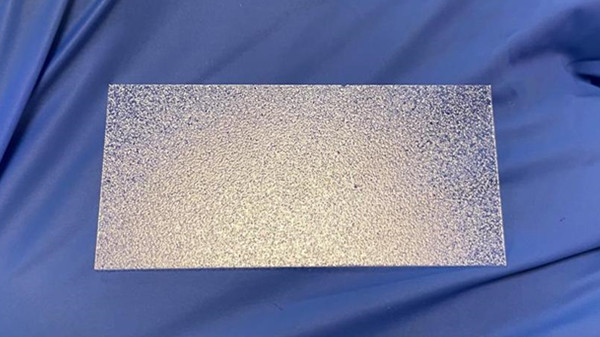
Common coating materials for glass slides
Polyurethane: Polyurethane coating can enhance the hydrophilicity and affinity of glass slide surfaces, making it suitable for biological experiments such as film coating and slice preparation.
Polyamines: Polyamine coatings can enhance the adhesion and cell affinity of glass slide surfaces, making them suitable for biological experiments such as cell culture and cell adhesion.
Aminosilane: Aminosilane coating can form a thin film on the surface of glass slides, improve the water contact angle of the glass slide surface, enhance the adhesion of liquids on the glass slide surface, and is suitable for biological experiments such as suspension precipitation and fluorescence detection.
Hydrophilic coating: such as OSLO hydrophilic coating, can make cells suspended in aqueous reagents more evenly spread on the surface of glass slides, without a large amount of cell accumulation or overlap, and the cells are clearly visible and easy to observe and identify.
Method of spraying glass slides
Soaking method: Soak the glass slide in a solution containing coating material, remove it after a certain period of time, and dry it. This method is suitable for coating materials such as polyurethane.
Spray method: Use professional spray equipment to evenly spray the coating material onto the surface of the glass slide. This method is applicable to various coating materials and can accurately control the thickness and uniformity of the coating.
Other methods, such as drop coating, spin coating, etc., should be selected according to specific coating materials and experimental requirements.
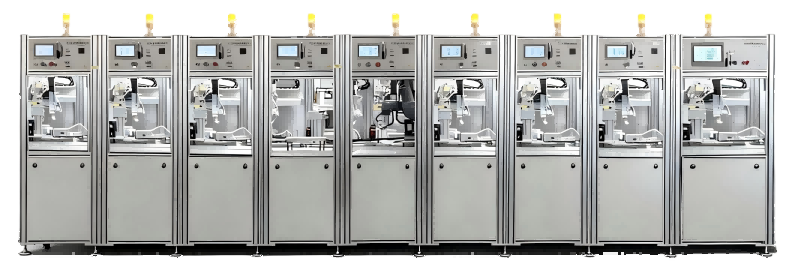
Ultrasonic spraying method: Ultrasonic spraying is an efficient technique for preparing functional coatings on glass slides, which is widely used in scientific research and testing fields due to its precise and controllable advantages. Its core advantage lies in the coating uniformity exceeding 95%, and the thickness can be flexibly adjusted between 20nm and 100 μ m, which can meet the functional requirements of different scenarios. This technology achieves low-pressure spraying through ultrasonic atomization, with no splashing or blockage, and a material utilization rate of over 85%, which is four times higher than traditional spraying. After spraying, glass slides can form hydrophilic, hydrophobic, AR anti reflective or biologically functional coatings, suitable for scenarios such as biosensors, pathological detection, optical observation, etc. The equipment is equipped with micron vacuum plate fixed glass slide, and can be equipped with a high temperature hot table of up to 500 ℃. It supports special processes such as spray pyrolysis, and is flexible in operation and suitable for R&D and small batch production.
Precautions for slide spraying
Selection of coating materials: Suitable coating materials should be selected based on specific experimental or diagnostic needs.
Adjustment of spraying parameters: During the spraying process, spraying parameters such as spraying speed, spraying distance, coating thickness, etc. need to be adjusted to ensure the quality and uniformity of the coating.
Drying and curing: After spraying, the glass slide needs to be dried and cured to ensure a strong bond between the coating and the glass slide.
Quality control: Strict quality control is carried out on the coated glass slides, including measurement of coating thickness, observation of surface morphology, etc., to ensure that the quality and performance of the coating meet the requirements.
About Cheersonic
Cheersonic is the leading developer and manufacturer of ultrasonic coating systems for applying precise, thin film coatings to protect, strengthen or smooth surfaces on parts and components for the microelectronics/electronics, alternative energy, medical and industrial markets, including specialized glass applications in construction and automotive.
Our coating solutions are environmentally-friendly, efficient and highly reliable, and enable dramatic reductions in overspray, savings in raw material, water and energy usage and provide improved process repeatability, transfer efficiency, high uniformity and reduced emissions.
Chinese Website: Cheersonic Provides Professional Coating Solutions
