
Types of Surface Coatings for Diffractive Optical Elements
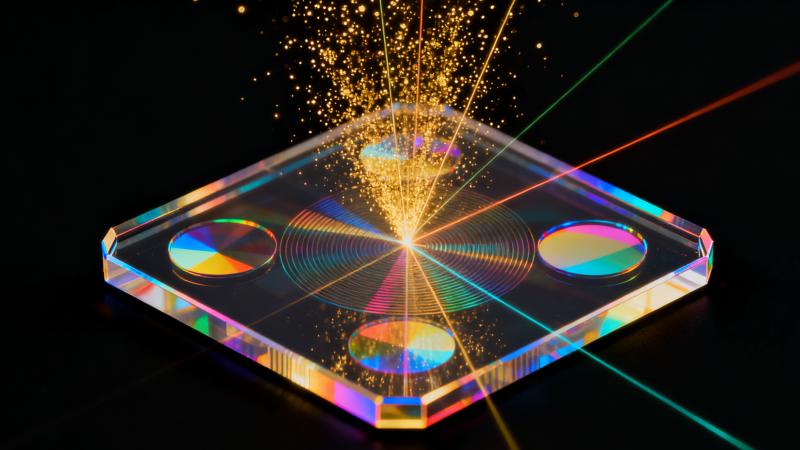
As a key device in the field of micro nano optics, diffractive optical elements (DOEs) achieve precise control of light splitting, focusing, and deflection through surface micro nano structures. The core function of their surface coatings is to optimize optical performance, protect micro nano structures, and adapt to complex application environments. Based on the application scenarios of DOE in high-tech fields such as semiconductor, laser technology, medical imaging, and new energy, the selection of surface coatings should take into account optical compatibility, mechanical stability, and environmental adaptability. The following are the mainstream coating types and technical details:
Core coating types and technical characteristics
1. Anti Reflective Coating (AR Coating)
– Core function: Reduce the surface reflectivity of DOE, improve the transmittance efficiency of the target wavelength band, and avoid stray light interference with the diffraction accuracy of micro nano structures.
Typical materials: mainly composed of oxides (SiO ₂ silicon dioxide, TiO ₂ titanium dioxide, Al ₂ aluminum oxide) and fluorides (MgF ₂ magnesium fluoride, YbF ₂ ytterbium fluoride), using multi-layer film stacking design (such as SiO ₂/TiO ₂ alternating layers), achieving anti reflection effect in wide or specific wavelength bands through film refractive index matching.
– Application scenarios: DOE (deep ultraviolet DUV band) for semiconductor lithography, LiDAR DOE, and beam shaping components in medical imaging equipment, requiring a transmittance of ≥ 99% and a reflectance of ≤ 0.1%.
Technical adaptability: Ultrasonic spraying technology can achieve uniform deposition of nanoscale thin films, with a film thickness error of ≤± 5nm, and the low-temperature process (≤ 150 ℃) avoids thermal deformation of DOE surface micro nano structures, especially suitable for high-precision DOE anti reflective film preparation.
2. Reflective/High Reflective Coating (HR coating)
– Core function: Enhance the light reflection efficiency of specific wavelength bands, used for DOEs that require beam turning and energy focusing (such as diffraction gratings, beam splitters).
– Typical materials: metal film (aluminum Al, silver Ag, gold Au)+dielectric film protective layer (SiO ₂, silicon nitride Si ∝ N ₄), or all dielectric multilayer film (such as TiO ₂/SiO ₂ high anti stacking). Metal films are suitable for wideband reflection, while dielectric films achieve ultra-high reflectivity (≥ 99.5%) in narrowband (such as laser wavelength).
– Application scenarios: DOE in laser processing equipment, diffraction focusing elements on photovoltaic cell surfaces, beam deflection DOE in infrared detection systems, which need to withstand high laser power density (to avoid film erosion).
3. Protective and wear-resistant coating
– Core function: Protect the micro and nano structures on the surface of DOE from physical friction, chemical corrosion, or environmental humidity, and extend the service life of the device.
– Typical materials: hard films such as diamond-like carbon (DLC), silicon nitride (Si ∝ N ₄), silicon carbide (SiC), as well as hydrophobic coatings such as perfluoropolyether (PFPE). The hardness of DLC coating can reach Hv 2000-3000, with a friction coefficient of ≤ 0.1, while maintaining optical transparency; Hydrophobic coating can prevent the adhesion of water vapor and oil stains, and is suitable for harsh industrial environments.
– Application scenarios: DOE for industrial laser processing, LiDAR DOE deployed outdoors, diffraction elements that require repeated disinfection in medical equipment, requiring coating adhesion ≥ 5B (hundred grid test) and resistance to wiping ≥ 1000 times.
4. Functional modified coating
– Core function: Customize performance according to specific application requirements, such as polarization control, phase compensation, and resistance to laser damage.
– Typical types:
– Polarization selective coating: using metal nano gratings or dielectric anisotropic materials (such as liquid crystal polymers) to achieve light transmission/reflection separation in specific – polarization directions, used for polarization imaging DOE;
– Laser damage resistant coating (LIDT): By doping rare earth elements (such as cerium Ce, ytterbium Yb) into oxide thin films, the laser damage threshold of the coating is increased (≥ 10 J/cm ² @ 1064nm, 10ns pulse), which is suitable for high-power laser systems;
– Phase correction coating: Photoresist derived film or sol gel material is used to realize phase compensation through film thickness gradient to correct the beam distortion caused by DOE processing error.

Compatibility between Coating Preparation Technology and Ultrasonic Spraying
The size of surface micro nano structures on DOE is usually in the range of hundreds of nanometers to several micrometers, which requires extremely high uniformity, thickness accuracy, and process temperature of the coating. Traditional coating techniques, such as evaporation and sputtering, suffer from high membrane stress and vulnerability to microstructure damage. However, ultrasonic spraying technology has become the preferred solution for DOE coatings due to its following advantages:
1. The film thickness is precise and controllable (10nm-1 μ m), with a uniformity error of ≤± 3%, to avoid optical performance deviations caused by uneven film thickness;
2. Low temperature process (room temperature -200 ℃), no high temperature thermal shock, protecting the micro nano structural integrity of DOE surface;
3. Fine droplet size (1-5 μ m), dense coating without pinholes, improving the mechanical stability and corrosion resistance of the film layer;
4. Strong compatibility, adaptable to various coating materials such as oxides, fluorides, DLC, etc., supporting multi-layer film stacking preparation.
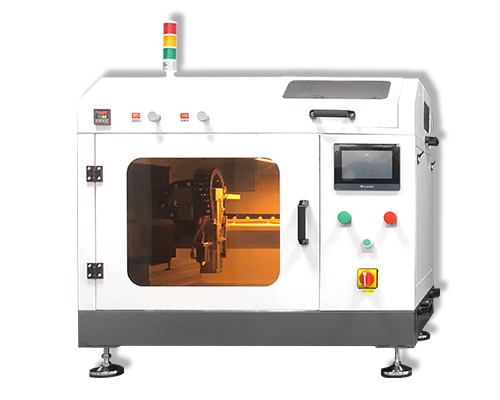
For example, in the preparation of DOE anti reflective films for semiconductor lithography, the SiO ₂/TiO ₂ alternating film layers can be sprayed by ultrasonic waves to achieve a transmittance of ≥ 99.2% in the deep ultraviolet band (193nm), meeting the high-precision optical requirements of lithography equipment; In the preparation of hydrophobic coatings for medical imaging DOE, ultrasonic spraying of PFPE film can achieve a contact angle of ≥ 110 °, effectively preventing body fluid contamination.
Summary
The surface coating of diffractive optical elements is centered around “optical performance optimization+structural protection”. Depending on the application scenario, anti reflective films, high reflectivity films, wear-resistant films, or functionalized modified films can be selected, with materials mainly consisting of oxides, fluorides, DLC, etc. In coating preparation, ultrasonic spraying technology, with its advantages of high precision, low-temperature process, and high compatibility, can perfectly adapt to the characteristics of DOE surface micro nano structure, providing high-performance coating solutions for DOE in semiconductor, laser technology, medical, new energy and other fields, promoting the application expansion of devices in high-precision and high reliability scenarios.
About Cheersonic
Cheersonic is the leading developer and manufacturer of ultrasonic coating systems for applying precise, thin film coatings to protect, strengthen or smooth surfaces on parts and components for the microelectronics/electronics, alternative energy, medical and industrial markets, including specialized glass applications in construction and automotive.
Our coating solutions are environmentally-friendly, efficient and highly reliable, and enable dramatic reductions in overspray, savings in raw material, water and energy usage and provide improved process repeatability, transfer efficiency, high uniformity and reduced emissions.
Chinese Website: Cheersonic Provides Professional Coating Solutions
