
Parylene Bench Top Coater
Parylene Bench Top Coater – Ultrasonic Coating – Cheersonic
In the field of precision manufacturing, uniform, ultra-thin, and high-performance coating protection on the surface of small devices is a key step in ensuring product stability and service life. The desktop ultrasonic Parylene coating equipment, designed specifically for small batch research and precise production, has been widely used in high-precision demand fields such as electronics, medical, aerospace, etc., thanks to the synergistic advantages of ultrasonic atomization technology and Parylene materials. It provides high-quality coating solutions with insulation, anti-corrosion, and biocompatibility characteristics for various sensitive devices.
Equipment working principle and core components
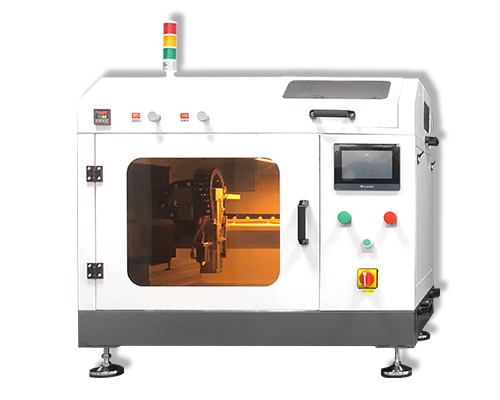
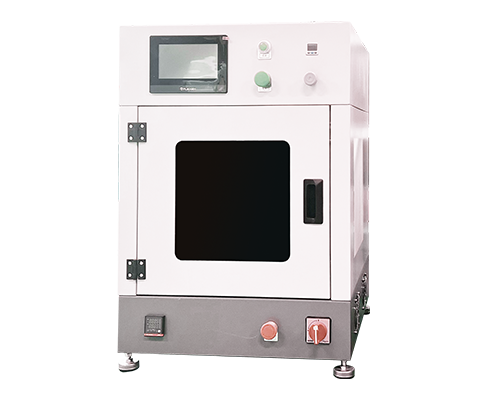
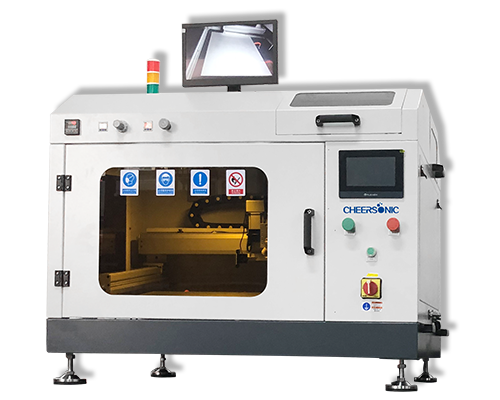
The core working logic of this device is based on ultrasonic atomization technology, which converts solid Parylene raw materials into micrometer sized atomized particles through high-frequency vibration. With precise airflow control, the atomized particles are uniformly attached to the surface of the substrate, and finally solidified to form a dense and pinhole free coating. The main body of the equipment consists of four core components: one is the ultrasonic generator, which can convert electrical energy into high-frequency mechanical vibration of 20-40kHz. The vibration frequency can be fine tuned at 0.1kHz according to the coating thickness requirements to ensure stable control of the atomized particle diameter within 5-10 microns; The second is the anti clogging atomizing nozzle, made of special ceramic material, with polished inner walls, which not only avoids clogging problems caused by residual raw materials, but also ensures a uniform distribution of atomized particles of over 95%; The third is a high-precision worktable that supports manual or automatic adjustment of X/Y axes, with a movement accuracy of up to 0.1mm. It can adapt to various substrates with sizes ranging from 5mm × 5mm to 200mm × 200mm. The worktable has a maximum load-bearing capacity of 8kg, meeting the coating needs of small devices and modules; Finally, there is an intelligent control system equipped with a 7-inch touch screen that can display real-time parameters such as atomization pressure, coating speed, and coating thickness. It supports the storage of 10 sets of process formulas, and operators can quickly call preset parameters based on different substrates to reduce operational complexity.
Core characteristics of Parylene coating materials
As a specialized coating material for this device, Parylene possesses key characteristics suitable for precision manufacturing. In terms of chemical stability, it can withstand extreme temperature environments ranging from -200 ℃ to 200 ℃, and has no swelling or cracking when exposed to acidic or alkaline solutions (pH 1-14) or organic solvents (such as ethanol and acetone) for a long time. It can effectively isolate water vapor, oxygen, and corrosive gases, providing long-term protection for the device. In terms of physical properties, the thickness of Parylene coating can be flexibly controlled between 0.1-10 microns, and the surface roughness Ra of the coating is ≤ 0.05 μ m, which does not affect the original dimensional accuracy and appearance of the substrate; At the same time, its volume resistivity is as high as 10 ¹⁶Ω· cm, and its dielectric constant is as low as 2.6 (at a frequency of 1MHz), making it an ideal choice for insulation coatings for electronic devices. In terms of biocompatibility, it meets the ISO 10993 biosafety standard, has no cytotoxicity, sensitization, or irritation, and can be directly applied as a surface coating for medical implantable devices such as microsensors and catheters.
Detailed explanation of key application scenarios
Electronic components field
In chip packaging and micro sensor manufacturing, the desktop ultrasonic Parylene coating equipment can accurately coat the chip pins and sensor sensitive components locally. For example, when coating the capacitive structure of MEMS acceleration sensors, the device forms a 3-5 micron Parylene coating by fine-tuning the atomization pressure (0.02-0.05MPa) and coating speed (5-10mm/s), which not only avoids external water vapor interference with the capacitance accuracy, but also does not affect the vibration sensitivity of the sensor due to the ultra-thin nature of the coating, so that the measurement error of the device is controlled within ± 1% in a humidity of 90% RH (40 ℃) environment.
Medical device field
For the electrode leads of implantable cardiac pacemakers, the device can achieve uniform coating throughout the circumference. During operation, fix the lead wire to the rotating fixture of the workbench (speed 10-20r/min), and the nozzle moves uniformly along the axial direction of the lead wire to form a 2-4 micron Parylene coating. This coating not only isolates the chemical reaction between body fluids and metal electrodes, preventing electrode corrosion, but also reduces the rejection reaction of human tissues to electrodes, extending the service life of pacemakers to 8-10 years. In addition, in the inner wall coating of disposable medical catheters (such as angiography catheters), the device uses negative pressure assisted atomization technology to evenly adhere Parylene to the inner wall of the catheter, reducing the friction coefficient between the catheter and blood, and improving the safety and comfort of clinical use.
Aerospace field
For micro connectors and electronic modules used in aerospace, the equipment can form a Parylene coating on the surface of the device that is resistant to extreme environments. For example, when coating micro RF connectors in satellite communication systems, the coating thickness is controlled at 5-8 microns. After testing, the coating can maintain stable electrical performance of the connector in temperature cycles from -180 ℃ to 150 ℃, increase the insertion and removal life from 500 times to over 2000 times, and resist space ultraviolet radiation and high-energy particle impact, ensuring the reliability of satellite communication during orbital operation.
Standard operating procedures and parameter control
Preprocessing stage
Firstly, the substrate needs to be cleaned: wipe the surface of the substrate with anhydrous ethanol to remove oil and dust. If there is an oxide layer on the surface of the substrate, plasma activation treatment (power 50-100W, treatment time 30-60 seconds) is required to improve the adhesion between the coating and the substrate; Subsequently, place the substrate in a drying oven at 60-80 ℃ for 10-15 minutes to prevent surface moisture from causing bubbles in the coating.
Coating parameter settings
Set core parameters based on substrate requirements: when the coating thickness is thin (0.1-1 micron), choose a higher atomization frequency (35-40kHz) and a lower coating speed (3-5mm/s); When the coating thickness is thick (5-10 microns), the atomization frequency can be reduced to 25-30kHz and the coating speed can be increased to 8-12mm/s. At the same time, the atomization pressure needs to be adjusted according to the substrate material. Metal substrates can choose 0.03-0.06MPa, and plastic substrates need to be reduced to 0.02-0.04MPa to prevent excessive pressure from causing substrate deformation.
Coating and post-treatment
Fix the preprocessed substrate on the workbench, start the equipment, and the nozzle completes the coating according to the preset path; After coating, transfer the substrate to the curing box and keep it at 70-90 ℃ for 30-60 minutes to promote cross-linking and curing of the coating. Finally, quality inspection is carried out: use an optical microscope to observe whether there are pinholes or scratches on the surface of the coating, use a coating thickness gauge to check the thickness uniformity (tolerance should be controlled within ± 5%), and test the adhesion using the scratch method (scratch spacing of 1mm, adhesion level should reach level 1 or above).
Equipment maintenance and performance optimization
To ensure long-term stable operation of the equipment, a regular maintenance mechanism should be established: after daily use, the atomizing nozzle should be rinsed with a special solvent (such as cyclohexane) to remove residual Parylene raw materials and prevent nozzle blockage; Every 50 hours of operation, the vibration amplitude of the ultrasonic oscillator should be checked. If the amplitude attenuation exceeds 10%, the oscillator should be replaced in a timely manner; Every 200 hours of operation, the workbench movement accuracy and coating thickness detection system need to be calibrated to ensure parameter accuracy. In addition, optimizing the storage conditions of raw materials can improve the quality of coatings: Parylene raw materials need to be sealed and stored in a dry environment of -5 ℃ to 10 ℃ to avoid moisture and clumping. They should be taken out and warmed up 2 hours in advance before use to prevent the raw material temperature from being too low and affecting the atomization effect.
Technological advantages and industry value
Compared to traditional immersion coating and spray coating processes, the desktop ultrasonic Parylene coating equipment has significant advantages: smaller coating thickness tolerances (± 5% vs ± 15%), higher material utilization rates (85% vs 50%), and the ability to achieve localized precise coating, avoiding contamination of non coated areas of the substrate; At the same time, the device is compact in size (occupying an area of approximately 0.5 square meters) and does not require complex installation, making it suitable for laboratory research and development as well as small batch production scenarios. In industry applications, this device not only promotes the development of electronic devices towards miniaturization and high reliability, but also provides technical support for improving the safety of medical implant devices. In the future, with intelligent upgrades (such as adding machine vision positioning and automatic defect detection functions), its application scope will further expand to more precision manufacturing fields, injecting new impetus into industry technology upgrades.
About Cheersonic
Cheersonic is the leading developer and manufacturer of ultrasonic coating systems for applying precise, thin film coatings to protect, strengthen or smooth surfaces on parts and components for the microelectronics/electronics, alternative energy, medical and industrial markets, including specialized glass applications in construction and automotive.
Our coating solutions are environmentally-friendly, efficient and highly reliable, and enable dramatic reductions in overspray, savings in raw material, water and energy usage and provide improved process repeatability, transfer efficiency, high uniformity and reduced emissions.
Chinese Website: Cheersonic Provides Professional Coating Solutions