
Spray Coating Filamentous Biosensor
Spray Coating Filamentous Biosensor – Ultrasonic Coating – Cheersonic
In the field of biosensor manufacturing, coating uniformity and production efficiency directly affect product performance and scale implementation. Industrial grade ultrasonic spraying equipment, with its precise atomization and batch processing capabilities, has become one of the core equipment for coating processing of filamentous biosensors. This device can achieve two types of batch spraying operations according to production needs: one is to synchronously process 150-200 filamentous biosensors in a single operation, suitable for small batch customized production or sample preparation in the research and development stage; Another type is the single synchronous processing of 300-400 filamentous biosensors, which can match medium to large-scale production scenarios and meet the bulk demand for biosensors in fields such as medical diagnosis and environmental monitoring.
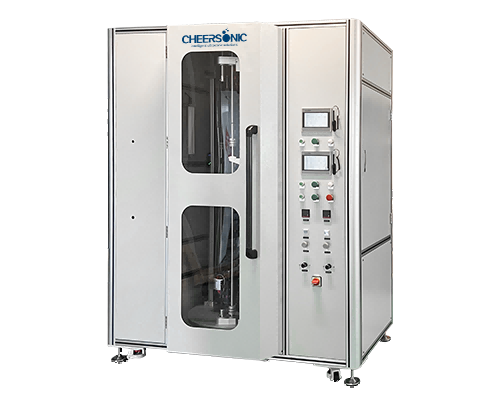
From the structural characteristics of filamentous biosensors, the size accuracy requirements for their core detection unit are extremely high. The width of this type of filamentous component is about 0.5 millimeters, which is only about half the diameter of a human hair, and the overall length is about 7 millimeters, roughly equivalent to the width of the edge of a regular nail cover. This slender structure requires the spraying equipment to have extremely fine atomized particles to avoid deformation or coating accumulation caused by excessive droplets, and also requires precise control of the spraying range to prevent the coating from covering non detection areas. Specifically, the spraying operation requires a dual requirement of “full coverage+length limitation”: on the one hand, the outer surface of the filamentous sensor from the tip should be sprayed 360 degrees without dead angles to ensure that the coating evenly wraps around the component, avoiding the influence of local leakage on the adsorption and signal transmission of biomolecules; On the other hand, the spraying range needs to be strictly controlled within the length range extending from the tip to 5 millimeters, and the remaining end area of about 2 millimeters needs to be kept uncoated. This area will serve as the connection end with the circuit module in the future. If covered with a coating, it will cause a decrease in conductivity and even lead to connection failures between sensors and external devices.
To meet the stringent requirements mentioned above, ultrasonic spraying equipment incorporates multiple precise control mechanisms in its process design. Firstly, the equipment adopts high-frequency ultrasonic atomization technology to convert coating materials (mostly nanoscale slurries containing bioactive substances, such as antibody modified nanoparticles, enzyme preparations, etc.) into fine droplets with a diameter of 5-10 microns. The uniformity error of the droplets is controlled within ± 5%, which can ensure that the coating forms a thin film with consistent thickness on a filamentous surface with a width of 0.5 millimeters (usually the coating thickness is required to be 1-5 microns), and can avoid coating defects caused by droplet aggregation. Secondly, the equipment is equipped with a multi station synchronous clamping device, which fixes each wire sensor with a flexible fixture to ensure that 150-200 or 300-400 components remain parallel and evenly spaced during the spraying process, avoiding collisions or positional deviations that may affect the spraying accuracy. At the same time, the spraying robot arm of the equipment can preset the movement trajectory and speed through the program, combined with real-time calibration of the optical positioning system, to ensure that the spraying range accurately stays at a length of 5 millimeters, and the positioning error does not exceed ± 0.1 millimeters.
From the perspective of industry application value, the batch processing capability and precise control characteristics of this equipment effectively solve the two core pain points in the production of filamentous biosensors: firstly, the traditional spraying equipment has insufficient processing capacity per time (usually only able to process 20-50 pieces per time), resulting in long production cycles and high unit costs. However, this equipment improves processing efficiency by 3-8 times through multi station design, greatly shortening the production cycle; Secondly, traditional spraying is prone to problems such as “end accumulation” and “side leakage”, with a pass rate usually below 85%. However, ultrasonic spraying combined with full coverage technology can increase the product pass rate to over 98%, while reducing waste of bioactive coating materials – due to the precise attachment of atomized particles to the surface of components, the material utilization rate is increased by 40% compared to traditional spraying, significantly reducing production costs.
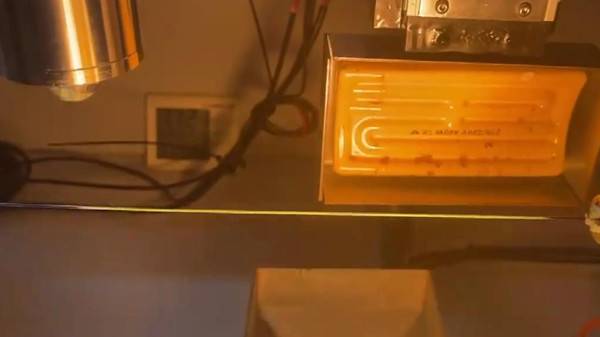
In addition, the equipment has good process adaptability and can adjust the atomization pressure, spraying temperature, and drying rate according to the material of the filamentous biosensor (such as quartz fiber, metal coated polymer wire, etc.) to avoid coating detachment or performance degradation caused by material differences. In actual production, the equipment can also be linked with the preceding filamentous component forming process and the subsequent coating curing and performance testing process to form an automated production line, further improving production efficiency and product consistency, providing equipment support for the widespread application of biosensors in fields such as point of care testing (POCT) and rapid monitoring of environmental pollutants.
About Cheersonic
Cheersonic is the leading developer and manufacturer of ultrasonic coating systems for applying precise, thin film coatings to protect, strengthen or smooth surfaces on parts and components for the microelectronics/electronics, alternative energy, medical and industrial markets, including specialized glass applications in construction and automotive.
Our coating solutions are environmentally-friendly, efficient and highly reliable, and enable dramatic reductions in overspray, savings in raw material, water and energy usage and provide improved process repeatability, transfer efficiency, high uniformity and reduced emissions.
Chinese Website: Cheersonic Provides Professional Coating Solutions
