
Anticoagulant Coating for Interventional Devices
Anticoagulant Coating for Interventional Devices – Ultrasonic Coating – Cheersonic
According to the different frictional properties, the frictional problems involved in cardiovascular devices can be mainly classified into the following three categories:
1. Mechanical friction and wear generated by internal moving parts of the equipment;
2. Fluid friction caused by blood flow passing through the surface of the instrument;
3. Interface friction between the device and human soft tissue during implantation or normal function.
Among them, the fluid friction generated by blood flow on the surface of the implant may activate abnormal coagulation mechanisms and induce thrombosis, which poses an important challenge to the design and application of cardiovascular devices.
There are currently two main anticoagulation strategies for coagulation reactions caused by contact between the implant surface and blood: one is to block the coagulation pathway, and the other is to promote the normalization of tissue function around the device.

Blocking the coagulation pathway
This strategy is mainly achieved through surface coating technology, including drug coatings and biologically inert coatings. Drug coating is the process of immobilizing anticoagulant drugs on the surface of medical devices, directly regulating the coagulation and complement systems, and reducing inflammatory reactions; Biological inert coatings inhibit blood activation by reducing the interaction between the surface and blood components.
Common anticoagulant drugs include heparin, thrombomodulin, and hirudin. Heparin, as a key anticoagulant, has a pentasaccharide sequence that can bind to antithrombin, significantly enhancing its inhibitory efficiency on coagulation factors. Thrombomodulin activates protein C to inactivate key coagulation factors, thereby blocking thrombin production.
Biological inert coatings cover both organic and inorganic types. For example, albumin coating can effectively reduce fibrin adhesion and platelet activation; Polyethylene glycol can repel protein adsorption by constructing a linear polymer brush; Bipolar ionic materials such as phosphatidylcholine polymers can significantly inhibit protein adhesion and platelet activation. In addition, although polydopamine does not directly anticoagulate, it has good biocompatibility and surface adaptability. Inspired by nature, the injection of liquid porous surface technology achieves blood component repulsion and surface self-healing by fixing perfluorocarbon liquid.
In inorganic inert coatings, carbon based materials such as diamond-like carbon and pyrolytic carbon are widely used in ventricular assist devices and heart valves due to their hydrophobicity, smoothness, and good biocompatibility.
Promote the normalization of tissue function around the instrument
This strategy aims to simulate the natural structure and function of vascular endothelium to enhance blood compatibility.
For example, pre seeding endothelial cells on the surface of the instrument can effectively inhibit thrombus formation and intimal hyperplasia. The discovery of endothelial progenitor cells further promotes the development of rapid self endothelialization. In addition, extracellular matrix components such as fibronectin and collagen, as well as specific factors such as CD34 antibodies, are also used to guide endothelial cell adhesion and proliferation. The titanium dioxide coating also shows the potential to promote endothelial cell behavior.
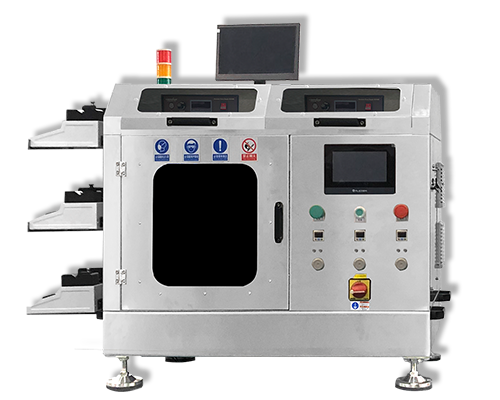
Ultrasonic spraying technology is showing great advantages in the preparation of anticoagulant coatings for implantable medical devices such as vascular stents and artificial heart valves. Compared with traditional spraying, it utilizes high-frequency sound wave energy to break down the liquid medicine into micrometer sized uniform droplets, achieving precise and controllable coating application.
This technology ensures that anticoagulant drugs (such as heparin) form ultra-thin, uniform, and dense films on complex surfaces of the device, greatly improving the consistency and quality of the coating. This not only effectively improves the biocompatibility and anticoagulant effect of the device, but also significantly reduces the use of expensive drugs and saves production costs.
In addition, the “soft fog” characteristic of ultrasonic spraying avoids potential damage to the coating structure and drug activity caused by high pressure, ensuring drug efficacy. Its highly automated process also ensures stability and repeatability between batches, fully meeting the strict GMP production requirements for medical devices.
In summary, the ultrasonic spraying machine provides an efficient, precise, and economical ideal solution for the preparation of high-performance anticoagulant coatings for implantable medical devices, and is an important process for promoting the development of high-end medical devices.
About Cheersonic
Cheersonic is the leading developer and manufacturer of ultrasonic coating systems for applying precise, thin film coatings to protect, strengthen or smooth surfaces on parts and components for the microelectronics/electronics, alternative energy, medical and industrial markets, including specialized glass applications in construction and automotive.
Our coating solutions are environmentally-friendly, efficient and highly reliable, and enable dramatic reductions in overspray, savings in raw material, water and energy usage and provide improved process repeatability, transfer efficiency, high uniformity and reduced emissions.
Chinese Website: Cheersonic Provides Professional Coating Solutions