
Coating PEM Membrane
The process task of uniformly coating specific precious metal catalytic materials on the surface of proton exchange membrane (PEM) requires the use of ultrasonic coating equipment. This process involves using chloroiridic acid n-butanol solution as the coating liquid, coating it onto a specific size of titanium plate substrate, and meeting multiple strict experimental and technical indicators. The following are specific experimental requirements and corresponding process design instructions:
Substrate specifications and processing requirements
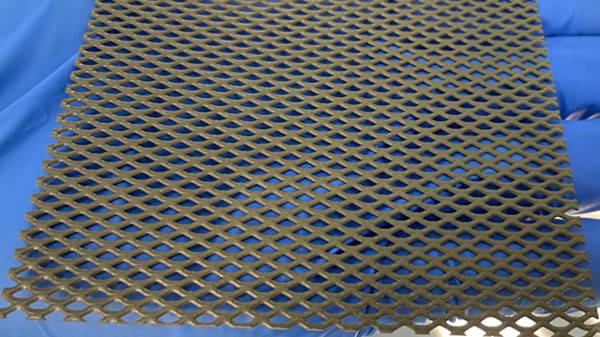
The substrate used in the experiment is titanium plate, with two specific size specifications: 1 mm × 319 mm × 1550 mm and 6 mm × 235 mm × 1550 mm. The titanium plate needs to undergo sufficient surface cleaning and activation treatment before coating to ensure good adhesion and uniformity of the coating. As it is commonly used as a conductive and supporting component in PEM related devices, surface flatness, cleanliness, and chemical stability have a significant impact on the coating effect and need to be controlled during the process.
Characteristics and requirements of coating liquid
The coating liquid used is a solution formed by dissolving iridium chloride in n-butanol, which has strong acidity and a pH value of less than 2. Therefore, attention should be paid to corrosion prevention and operational safety during storage, transportation, blending, and coating processes. It is recommended that the equipment liquid system adopt acid resistant design to avoid metal ion contamination and material deterioration. Meanwhile, n-butanol is a volatile organic solvent, and it is necessary to control the environmental temperature, humidity, and process atmosphere reasonably to prevent solvent evaporation from causing changes in solution concentration, which in turn affects coating stability and consistency.
Coating uniformity requirements
The coating process requires a highly uniform distribution of precious metals, with a deviation of less than 5% in the overall film thickness or unit area of precious metal loading. This indicator has a critical impact on the consistency of device performance and the reliability of the final product. To achieve this goal, it is necessary to systematically debug and optimize multiple parameters of the ultrasonic coating machine, including but not limited to ultrasonic vibration frequency, amplitude, nozzle movement speed, liquid supply rate, substrate preheating temperature, and drying conditions. Suggest exploring the process window through the preliminary DoE (experimental design) system and conducting multiple repeated validations on a pilot scale.
Design for minimizing precious metal losses
Given that chloroiridic acid is a high-value precious metal raw material, the coating system must be designed with the key principle of minimizing precious metal loss. Efficient utilization of materials should be achieved through both equipment design and process strategy. Specific measures that can be taken include:
– Adopting a closed-loop liquid supply system can achieve the recovery and reuse of residual liquid materials;
– Optimize the nozzle structure and atomization effect to avoid excessive spraying or splashing;
– Set up precise metering pumps and real-time liquid film thickness monitoring systems to achieve precise control of coating amount;
– Reasonably design the coating area and catch tray structure, collect and handle dripping liquid materials;
– Standardize cleaning and maintenance procedures to reduce precious metal losses caused by equipment residue.
Equipment functions and configuration suggestions
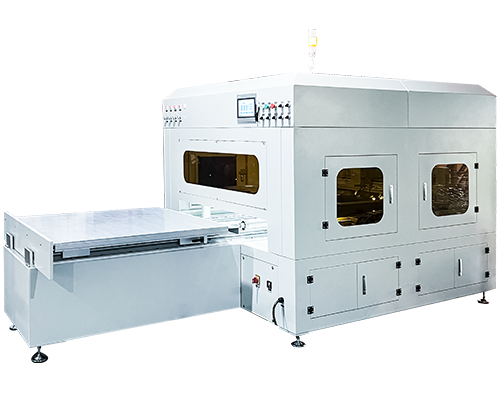
The selected ultrasonic coating equipment should have high-precision motion control capability and support uniform coating of large-area substrates. The equipment needs to be compatible with the handling of acidic liquids, including corrosion-resistant infusion tubing, nozzles, and recovery devices. It is strongly recommended to equip an online film thickness monitoring or machine vision inspection system for real-time judgment of coating uniformity and timely adjustment of process parameters. In addition, the coating environment should have temperature and humidity control and solvent emission management functions to improve process repeatability and operational safety.
In summary, this experiment places high demands on the coating process in terms of material properties, equipment performance, and process control. By selecting appropriate ultrasonic coating technology and combining it with refined process design and real-time monitoring methods, efficient and uniform coating of PEM membrane surface can be achieved while maximizing the control of precious metal loss, meeting the needs of project research and development and later mass production.
About Cheersonic
Cheersonic is the leading developer and manufacturer of ultrasonic coating systems for applying precise, thin film coatings to protect, strengthen or smooth surfaces on parts and components for the microelectronics/electronics, alternative energy, medical and industrial markets, including specialized glass applications in construction and automotive.
Our coating solutions are environmentally-friendly, efficient and highly reliable, and enable dramatic reductions in overspray, savings in raw material, water and energy usage and provide improved process repeatability, transfer efficiency, high uniformity and reduced emissions.
Chinese Website: Cheersonic Provides Professional Coating Solutions