Alkoxysilanol Solution Containing Hydrochloric Acid
1. Core Component Analysis
- Alkoxysilanol: This is the main component of the solution. It is a partial hydrolysis product of alkoxysilane.
* The general formula of alkoxysilane is: R‘-Si(OR)₃, where R’ is typically an organic functional group (such as methyl, vinyl, amino, or epoxy), and OR is an alkoxy group (such as methoxy -OCH₃, ethoxy -OC₂H₅).
* Hydrolysis reaction: R‘-Si(OR)₃ + H₂O → R‘-Si(OR)₂(OH) + ROH
* The resulting R‘-Si(OR)₂(OH) is alkoxysilanol. It possesses both silanol (-Si-OH) and silanoloxy (-Si-OR) groups that can react further. - A small amount of hydrochloric acid: This is a key additive, usually added in the form of dilute hydrochloric acid or hydrogen chloride gas. Its functions are multifaceted:
* Catalyst: It catalyzes the initial hydrolysis of alkoxysilanes, accelerating the formation of silanols.
* Condensation catalyst: Its more important function is to catalyze the condensation reaction between silanols.
* Stabilizer: Under certain conditions (low concentration and low temperature), acids can inhibit condensation, stabilize silanol solutions, and extend their shelf life.

2. Chemical Reactions in the System
This solution is a dynamic equilibrium system, with two main reactions occurring:
a) Hydrolysis:
-Si-OR + H₂O ⇌ -Si-OH + ROH (alcohol)
Hydrochloric acid provides H⁺, acting as an acid catalyst to accelerate this reversible reaction.
b) Condensation:
This is the process of forming Si-O-Si silanol bonds (i.e., silyl-ether bonds), which form the basis of the silicone resin and silica gel network. There are two main pathways:
* Condensation between silanols: -Si-OH + HO-Si- → -Si-O-Si- + H₂O
* Condensation between silanols and alkoxy groups: -Si-OH + RO-Si- → -Si-O-Si- + ROH
The effect of hydrochloric acid: H⁺ protonates the silanol group, forming the more reactive -Si-OH₂⁺, making it more susceptible to nucleophilic attack by the oxygen atom of another silanol group, thereby greatly accelerating the condensation reaction.
3. The Key Role and Balance of Hydrochloric Acid
The concentration of hydrochloric acid and environmental conditions (temperature, moisture) determine the fate of the solution:
- Low-concentration hydrochloric acid + low-temperature/anhydrous storage:
* Hydrochloric acid primarily acts as a stabilizer. It protonates the silanol groups, reducing hydrogen bonding between silanols and temporarily “protecting” the highly reactive -Si-OH groups, thereby inhibiting the slow condensation reaction and extending the shelf life of the solution. This type of solution is often referred to as an acid-stabilized silanol solution. - Catalytic amounts of hydrochloric acid + changes in external conditions (heating, addition of water, exposure to air):
* Once applied and exposed to increased moisture from the air or heated, the catalytic effect of hydrochloric acid becomes dominant.
* It rapidly catalyzes the condensation reaction, cross-linking the molecules and forming a three-dimensional network structure.
* The end result may be the formation of a gel or a solid, transparent silicone resin.
4. Main Applications
Due to their properties, these solutions are primarily used in:
- Adhesives and sealants: Particularly for bonding inorganic materials (glass, metal, ceramics) to organic materials (plastics, rubber). Silanols cure under acid catalysis, forming a strong Si-O-Si network and Si-O-M (M represents a substrate atom) chemical bonds with the adherend surface.
- Surface treatment agents and primers:
* Glass fiber treatment: Improves the interfacial bonding between glass fiber and resins (such as epoxy resins).
* Mineral filler treatment: Used in the plastics and rubber industries to modify the surface of fillers such as silica and calcium carbonate to improve their dispersibility and compatibility in organic phases.
* Metal surface corrosion protection: Forms a hydrophobic, transparent protective film. - Coating additive: Acts as an adhesion promoter, improving the adhesion of coatings to substrates.
- Silicone resin prepolymer: Serves as an intermediate in the synthesis of specific silicone resins. Final curing is triggered by heating or acid neutralization during application.
5. Safety and Handling Precautions
- Corrosiveness: Contains hydrochloric acid and is therefore acidic and corrosive. Avoid contact with skin and eyes. Wear appropriate protective equipment (gloves, goggles) when handling.
- Volatility: The system contains alcohol (a hydrolysis byproduct) which may be volatile and flammable.
- Storage: The system must be sealed and stored in a cool, dry place to prevent moisture ingress that could cause premature gelation. Avoid contact with alkaline materials.
- Cure Control: The cure rate and final properties are very sensitive to the hydrochloric acid content and ambient humidity, requiring precise control.
Summary
Alkoxysilanol solutions containing a small amount of hydrochloric acid are controlled, reactive precursor systems. Hydrochloric acid plays a dual role: as a stabilizer during storage and as an efficient curing catalyst during use. It catalyzes the formation of Si-O-Si networks and is widely used in applications requiring strong adhesion, surface modification, and high-performance curing. It is one of the key chemicals in the development of organic-inorganic hybrid materials.
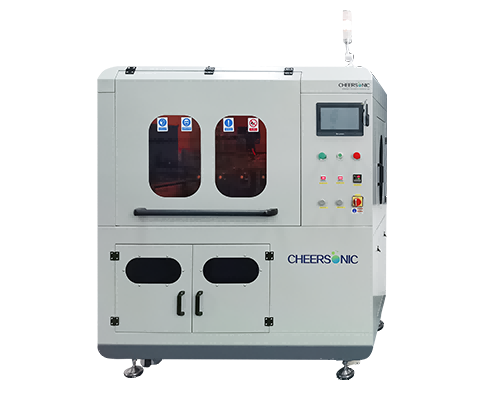
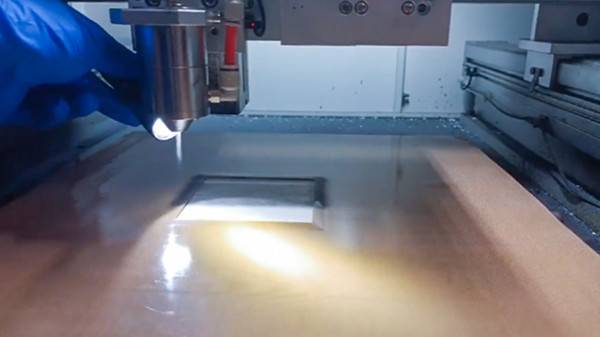
When using an ultrasonic sprayer to coat an alkoxysilanol solution containing a small amount of hydrochloric acid, the core principles are “corrosion prevention, hydrolysis control, process stability, and safety.” Prioritizing acid resistance of equipment contact components, controlling the hydrolysis rate, optimizing coating quality through low-pressure atomization and precise temperature control, and ensuring HCl gas protection, the process achieves uniform, highly adherent silane coatings, commonly used in applications such as metal corrosion protection and glass coating.
About Cheersonic
Cheersonic is the leading developer and manufacturer of ultrasonic coating systems for applying precise, thin film coatings to protect, strengthen or smooth surfaces on parts and components for the microelectronics/electronics, alternative energy, medical and industrial markets, including specialized glass applications in construction and automotive.
Our coating solutions are environmentally-friendly, efficient and highly reliable, and enable dramatic reductions in overspray, savings in raw material, water and energy usage and provide improved process repeatability, transfer efficiency, high uniformity and reduced emissions.
Chinese Website: Cheersonic Provides Professional Coating Solutions
