
Comprehensive Analysis of Guidewire Coating Process
Comprehensive Analysis of Guidewire Coating Process: Core Technologies, Application Challenges, and Future Trends
Guidewire is the core component of interventional medical devices (such as cardiovascular, neurological, and urological interventions), and its surface coating directly determines the biocompatibility, lubricity, antithrombotic, antibacterial, and service life of the guidewire. The wire coating process is the process of forming a functional thin film on the surface of wire substrates (mostly stainless steel, nickel titanium alloys) through specific techniques, which requires a balance between “performance standards” and “clinical safety”. The core is to achieve a strong bond, uniform coverage, and long-lasting functional stability between the coating and substrate.
The core objective of wire coating process
Before designing the coating process, it is necessary to clarify the core clinical requirements for guide wires, which directly determine the functional positioning of the coating:
- Biocompatibility: Avoid immune rejection or cytotoxicity between the coating and human tissue/blood;
- Low friction lubricity: reduces the resistance of the guide wire in the lumen of blood vessels, ureters, etc., and reduces tissue damage;
- Antithrombotic properties: prevent blood from clotting and forming clots on the surface of guide wires (especially cardiovascular intervention guide wires);
- Antibacterial properties: reduce the risk of local infection caused by surgical guide wires (such as urological guide wires);
- Corrosion resistance and wear resistance: Protect the substrate (such as nickel titanium alloy) from being corroded by body fluids, avoiding coating detachment and particle pollution.
Core process flow of wire coating
The guide wire coating needs to go through five key steps of “pretreatment preparation curing post-treatment testing”, and each step requires strict control of parameters to ensure coating quality:
1. Substrate pretreatment: Ensure a strong bond between the coating and the substrate
The surface of guide wire substrates (stainless steel, nickel titanium alloy) usually contains oil stains, oxide layers, or impurities. If not treated, it can lead to poor coating adhesion and easy detachment. The core of this stage is to clean the surface and enhance surface activity. Common methods include:
- Chemical cleaning: First, use alkaline solution (such as sodium hydroxide solution) to remove surface oil stains, then use acidic solution (such as nitric acid) to remove the oxide layer on the substrate surface, and finally use deionized water ultrasonic cleaning to ensure that there are no chemical reagent residues on the surface;
- Physical roughening: By sandblasting (using fine quartz sand), electrolytic polishing, or laser micro engraving, micro nano level rough structures (roughness Ra controlled at 0.1-1 μ m) are constructed on the surface of the substrate to increase the contact area between the coating and the substrate and enhance the initial bonding ability;
- Surface activation: By using plasma treatment (such as oxygen plasma) or silane coupling agent modification, active groups such as hydroxyl (- OH) and amino (- NH ₂) are introduced on the surface of the substrate to enhance the chemical bonding ability between the substrate and the coating material, further improving the adhesion of the coating.
2. Coating preparation: Select the process based on material characteristics
Coating preparation is the core process, which requires selecting suitable coating techniques based on the physical and chemical properties of coating materials (such as polymers, metals, ceramics) to ensure uniform coating and controllable thickness (usually 0.1-10 μ m). The common processes are as follows:
- Dip coating method: Fully immerse the pre treated guide wire into the coating solution, then slowly pull the guide wire at a uniform speed, and use the surface tension of the solution to naturally form a thin film on the surface of the guide wire. This process is suitable for hydrophilic polymers (such as PVP, PEG) and heparin materials. Its advantages include simple equipment structure, low production cost, and the ability to adapt to uniform coating of long and thin guide wires; However, the limitation is that the coating thickness is difficult to accurately control and is easily affected by factors such as pulling speed and solution viscosity.
- Traditional spraying method: the coating slurry (such as PTFE lotion) is atomized into tiny particles through a high-pressure spray gun, and then the atomized particles are sprayed onto the guide wire surface to form a coating. This process is suitable for materials such as fluoropolymer (PTFE) and wear-resistant ceramics, and has the advantages of controllable coating thickness and suitability for large-area coating; However, bubbles are easily generated during the atomization process, and strict control of the atomization particle size is necessary to avoid coating defects.
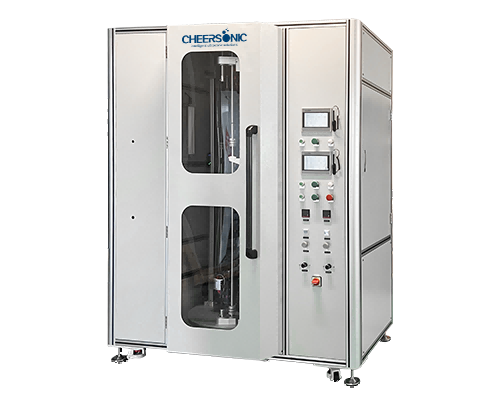
- Ultrasonic spraying method: As an advanced technology of spraying process, its core is to achieve atomization and coating of coating slurry through high-frequency mechanical vibration (15-120kHz). Firstly, the coating slurry (such as heparin solution, nano silver antibacterial slurry) is transported to the ultrasonic atomization head at a constant flow rate (0.1-5mL/min) through a precision peristaltic pump. The piezoelectric ceramic transducer inside the atomization head converts electrical energy into high-frequency mechanical vibration, causing the slurry to form a “micrometer level liquid film” at the tip of the atomization head and tear into uniform droplets (particle size 5-50 μ m). Finally, with the assistance of inert gas (such as nitrogen), the droplets are directionally transported to the surface of the uniformly rotating guide wire (rotation speed 500-2000r/min) to achieve low kinetic energy precise deposition. This process is applicable to heat sensitive materials (such as heparin), antibacterial materials containing nanoparticles (such as nano silver paste) and low viscosity lubricating materials (such as modified PTFE lotion). It has the advantages of high coating uniformity (thickness deviation ≤ 5%), strong adhesion (30-50% higher than traditional spraying), high material utilization rate (waste rate<10%), and no high-temperature damage; But it is not suitable for high viscosity (>1000cP) or slurries containing large particles (>100nm), which can easily cause clogging of the atomizing head.
- Physical Vapor Deposition (PVD): In a vacuum environment, coating materials (such as TiN, DLC) are converted into gas or plasma states through sputtering, evaporation, and other methods, and then these particles are deposited onto the surface of the wire to form a coating. This process is suitable for materials such as diamond-like carbon coatings (DLC) and metal nitrides. The coating has high density, strong adhesion to the substrate, and excellent wear resistance; But the equipment cost is high, making it more suitable for small batch high-precision production scenarios.
- Chemical Vapor Deposition (CVD): A gaseous precursor (such as methane) is introduced into a reaction chamber, and the precursor undergoes a chemical reaction on the surface of the wire substrate to form a solid coating (such as DLC, silicon carbide). This process is suitable for materials such as diamond-like carbon (DLC) coatings and silicon carbide, with good coating uniformity and the ability to cover complex shapes of guide wires; But the reaction needs to be carried out in a high-temperature environment, which may affect the mechanical properties of the substrate (such as the shape memory effect of nickel titanium alloy).
- Sol gel method: coating precursor (such as hydroxyapatite sol) is coated on the surface of the guide wire, and then the precursor is transformed into gelled coating through drying, sintering and other steps. This process is suitable for materials such as bioceramics (hydroxyapatite) and antibacterial coatings, and has the advantages of easy control of coating composition and good biocompatibility; However, during the sintering process, the coating is prone to shrinkage and cracking due to water evaporation.
- Chemical grafting method: It is necessary to first activate the surface of the guide wire substrate (such as plasma treatment), and then directly graft functional molecules (such as heparin, antimicrobial peptides) onto the surface of the substrate through specific chemical reactions to form a coating. This process is suitable for materials such as antithrombotic coatings (heparin) and antibacterial coatings (antimicrobial peptides). The coatings are tightly bound to the substrate, are not easily detached, and have long-lasting functionality; But the reaction conditions are strict, requiring strict control of parameters such as temperature and light exposure (such as avoiding light and maintaining a constant temperature environment).
3. Curing/Drying: Ensure stable adhesion of the coating
The coated layer needs to be cured or dried to remove solvents and enhance structural stability. The specific method should be selected according to the characteristics of the coating material:
- Thermal curing: Suitable for thermoplastic polymers (such as PTFE), the coated guide wire is heated in a 150-300 ℃ oven to melt and solidify the coating, enhancing structural stability;
- Ultraviolet (UV) curing: suitable for coatings containing photosensitizers (such as hydrophilic polymers), by irradiating with UV light with a wavelength of 200-400nm, polymerization reactions are initiated inside the coating to achieve rapid curing (time from a few seconds to a few minutes);
- Electron beam (EB) curing: suitable for heat sensitive coatings (such as heparin coatings), using the energy of the electron beam to initiate cross-linking reactions of coating molecules, without the need for high temperature environments, with high curing efficiency;
- Freeze drying: Suitable for aqueous sol coatings (such as hydroxyapatite sol), it directly removes the moisture inside the coating in a low-temperature vacuum environment, avoiding the shrinkage of the coating caused by traditional drying.
4. Post processing and testing: Ensure quality meets standards
- Post treatment: Remove defects such as burrs and bubbles on the coating surface by sanding with fine sandpaper or polishing with a polishing wheel; For guide wires with high performance requirements, a secondary coating method of “bottom layer+functional layer” can be used. First, the bottom layer is coated to enhance adhesion, and then the functional layer is coated to achieve specific performance (such as anti thrombosis and lubrication).
- Quality inspection: It is a key link to ensure clinical safety and should cover the following core indicators:
– Coating thickness detection: Use a laser thickness gauge or scanning electron microscope (SEM) to measure the coating thickness, ensuring uniform thickness (error ≤ 10%);
– Adhesion test: Evaluate whether the coating has peeled off through the grid method (using a blade to draw a cross grid on the coating surface) or tensile test, requiring adhesion of ≥ 5MPa;
– Biocompatibility testing: testing the toxicity of the coating to cells through cell toxicity tests (such as MTT assay), detecting the impact on blood through hemolysis tests (requiring hemolysis rate ≤ 5%), evaluating immune reactions through sensitization tests, and verifying the biological safety of the coating;
– Functional testing: lubricity is measured using a friction coefficient measuring instrument (with a requirement of friction coefficient ≤ 0.1), antithrombotic properties are evaluated through clotting time testing, and antibacterial properties are verified through inhibition zone testing to ensure that the coating meets functional standards.

Common types of wire coating and process selection
The functional requirements for guide wire coatings vary in different clinical scenarios, and targeted matching of coating materials and preparation processes is needed
- Lubricating coating: Typical materials include PTFE (polytetrafluoroethylene) and PEG (polyethylene glycol), with preferred immersion coating, traditional spray coating, or ultrasonic spray coating methods. It is mainly used for cardiovascular and ureteral guide wires, reducing the resistance of the guide wire in the cavity through low friction characteristics and lowering the risk of tissue damage;
- Antithrombotic coating: Typical materials include heparin and low molecular weight heparin, preferably using chemical grafting or a combination of “immersion coating+UV curing” process. It is applied to coronary artery guide wires and dialysis catheter guide wires to prevent blood clotting and thrombus formation on the guide wire surface through the anticoagulant properties of heparin;
- Biocompatible coating: typical materials are hydroxyapatite and titanium based coating, preferably sol gel method and physical vapor deposition (PVD), which are suitable for orthopedic intervention guide wire and long-term implantation guide wire, and reduce the immune rejection of human body to the coating through good biocompatibility;
- Wear resistant/corrosion-resistant coatings: Typical materials include diamond-like carbon coatings (DLC) and TiN (titanium nitride), with physical vapor deposition (PVD) and chemical vapor deposition (CVD) being preferred. They are applied to nerve intervention guide wires (which require repeated pushing) to extend the service life of the guide wires through high wear resistance and corrosion resistance, avoiding substrate corrosion by body fluids;
- Antibacterial coating: Typical materials include silver ions and antimicrobial peptides, with preferred immersion coating, chemical grafting, or ultrasonic spraying methods. It is suitable for urological and abdominal intervention guide wires, and reduces the risk of local infection during surgery through the antibacterial effect of silver ions or antimicrobial peptides.
Key technical challenges of wire coating process
- Uniform coating of fine diameter guide wire: The diameter of the guide wire is usually 0.1-1mm. Traditional spraying methods are prone to the problem of “thick at both ends and thin in the middle” due to the difficulty in controlling the atomization range. High precision immersion coating (controlling the pulling speed of 0.1-1mm/s) or circular PVD equipment, ultrasonic spraying method (accurately controlling the atomization range and guide wire speed) should be used to ensure uniform coating coverage;
- Balance of adhesion between coating and substrate: Nickel titanium alloy substrate has shape memory effect, which is prone to deformation during bending. If the elasticity of the coating is insufficient, it is easy to crack. Process control (such as controlling the hardness of DLC coating at 10-20GPa) or substrate pretreatment (such as plasma activation) is needed to improve the elasticity while ensuring the performance of the coating and avoiding bending cracking;
- Functional durability: Some coatings (such as lubricating coatings) are prone to wear or detachment under body fluid erosion, and require “multi-layer coating+cross-linking modification” (such as adding nanoparticles to PTFE coatings to enhance adhesion) to improve durability and ensure stable performance of the coating throughout the surgery;
- Consistency of large-scale production: In batch production, fluctuations in parameters such as temperature, humidity, and coating speed (such as changes in UV curing irradiation intensity) can easily lead to differences in coating quality between batches. Therefore, it is necessary to establish an automated production system (such as a constant temperature and humidity workshop and real-time parameter monitoring device), strictly control the range of process parameter fluctuations, and ensure batch consistency.

Development Trends
- Multi functional composite coating: Develop multi-layer composite coatings such as “lubrication+antithrombotic+antibacterial” to meet complex clinical needs (such as low friction, antithrombotic, and anti infection performance required for nerve intervention guide wires), improve the adhesion of each layer through interlayer interface modification, and avoid delamination and detachment;
- Nano coating technology: incorporating nanoparticles (such as nano silver and nano hydroxyapatite) into the coating to enhance coating performance – for example, the antibacterial efficiency of nano silver antibacterial coating is 5-10 times that of traditional silver coating, and nano hydroxyapatite coating can further enhance biocompatibility;
- Green process: Develop low solvent, low-energy coating technologies, such as water-based PVD (using water as a dispersing medium) and room temperature CVD (reducing reaction temperature), to reduce solvent evaporation and energy consumption in the production process, and reduce environmental pollution;
- Intelligent responsive coating: Develop temperature/pH responsive coatings, such as those that automatically release antibacterial or anticoagulant agents in acidic environments at body temperature (37 ℃) or lesion sites, further enhancing clinical applicability and treatment accuracy.
In summary, the wire coating process is an interdisciplinary field of “materials science, mechanical engineering, and biomedical”, which requires precise matching of materials and processes according to clinical needs, while ensuring safety and reliability through strict quality control. It is one of the core technologies involved in the research and development of medical devices.
About Cheersonic
Cheersonic is the leading developer and manufacturer of ultrasonic coating systems for applying precise, thin film coatings to protect, strengthen or smooth surfaces on parts and components for the microelectronics/electronics, alternative energy, medical and industrial markets, including specialized glass applications in construction and automotive.
Our coating solutions are environmentally-friendly, efficient and highly reliable, and enable dramatic reductions in overspray, savings in raw material, water and energy usage and provide improved process repeatability, transfer efficiency, high uniformity and reduced emissions.
Chinese Website: Cheersonic Provides Professional Coating Solutions
