
Applications of PI Proton Exchange Membranes
Proton exchange membranes, particularly perfluorosulfonic acid (PFSA) proton exchange membranes, are widely used in various fields due to their high proton conductivity, chemical stability, mechanical strength, and low fuel permeability. However, regarding the specific term “PI proton exchange membrane,” since PI is not typically used to refer directly to the material of a proton exchange membrane, the following discussion will focus on the application areas of proton exchange membranes, rather than specifically referring to PI proton exchange membranes. However, it is worth noting that PI, as a high-performance material, has a wide range of applications in electronics, aerospace, and other fields, though not directly as a proton exchange membrane material.
Major applications of proton exchange membranes include:
Proton exchange membrane fuel cells:
A proton exchange membrane fuel cell (PEMFC) is a power generation device that converts the chemical energy of hydrogen and oxygen into electricity, heat, and other reaction products through an electrochemical reaction.
As the core material of a PEMFC, the PEM separates hydrogen and oxygen and transfers protons.
Proton exchange membrane fuel cells (PEMFCs) offer advantages such as zero pollution, high energy conversion efficiency, high power density, low emissions and heat radiation, and minimal noise pollution. Therefore, they are widely used in transportation (e.g., fuel cell vehicles), stationary power generation (e.g., home fuel cell systems), and portable power sources.
Water Electrolyzer:
As the core component of the membrane electrode (MEA) in a water electrolyzer, the PEM significantly reduces the distance between the cathode and anode, improving electrolysis efficiency and hydrogen purity.
The PEM also supports the catalyst, and its performance directly determines the performance and lifespan of the water electrolyzer.
Proton exchange membrane water electrolysis for hydrogen production features a small footprint, easy integration with renewable energy, a wide load range, and a fast startup response time. This makes it particularly suitable for green hydrogen production from hydropower, wind power, and solar power.
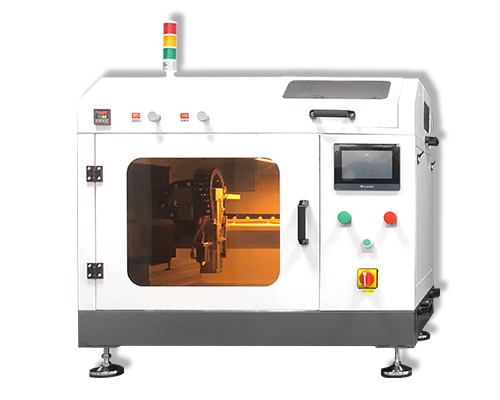
Ultrasonic spraying of PI proton exchange membrane has outstanding advantages and is suitable for core scenarios such as fuel cells. It atomizes PI slurry into 5-30 micron uniform droplets through high-frequency vibration at 20-150kHz, forming a dense coating without pinholes or accumulation on the substrate surface, effectively ensuring the proton conductivity and gas barrier properties of the membrane. The coating thickness is precise and controllable (0.5-10 microns), meeting the design requirements of different power devices. The material utilization rate exceeds 90%, significantly reducing the waste of expensive PI materials. During spraying, there is no high-speed airflow impact to avoid damaging the membrane substrate. It is suitable for flexible or rigid substrates, has strong process stability, and can improve the chemical resistance and mechanical strength of the membrane, helping to enhance the life and reliability of fuel cells.
About Cheersonic
Cheersonic is the leading developer and manufacturer of ultrasonic coating systems for applying precise, thin film coatings to protect, strengthen or smooth surfaces on parts and components for the microelectronics/electronics, alternative energy, medical and industrial markets, including specialized glass applications in construction and automotive.
Our coating solutions are environmentally-friendly, efficient and highly reliable, and enable dramatic reductions in overspray, savings in raw material, water and energy usage and provide improved process repeatability, transfer efficiency, high uniformity and reduced emissions.
Chinese Website: Cheersonic Provides Professional Coating Solutions