
What is Spray Catalyst?
Spray Catalyst
Concept: Spray catalyst is the process of evenly coating a substrate surface with a catalytic substance using specialized spraying equipment and methods. These catalysts can accelerate chemical reactions and have important applications in a wide range of fields.
How it works: During the spraying process, the catalyst, in the form of tiny particles, is contained within the spray material and sprayed onto the substrate surface using a spray gun or other equipment. Components such as the binder in the spray material help the catalyst particles adhere to the substrate, forming a catalytically active coating. When reactants come into contact with the catalyst-coated substrate, the catalyst reduces the activation energy of the reaction, facilitating the reaction and thereby increasing its rate and efficiency.
Applications:
Environmental Protection: For example, in waste gas treatment, spraying catalysts onto supports such as honeycomb ceramics can catalytically combust harmful substances in exhaust gases, such as carbon monoxide and hydrocarbons, converting them into harmless carbon dioxide and water.
Chemical Industry: In chemical reactors, spray catalysts can improve reaction selectivity and conversion rates, reduce reaction temperatures and pressures, and conserve energy and raw materials. For example, catalysts are widely used in industries such as ammonia synthesis and petrochemicals.
Surface treatment: Catalysts can be sprayed onto the surfaces of materials such as metals, ceramics, and plastics to impart new properties. For example, spraying certain catalysts can improve corrosion resistance and wear resistance.
Spraying Methods:
Air spraying: This is one of the most common spraying methods. Compressed air is used to atomize the catalyst coating into tiny particles, which are then sprayed onto the substrate surface. This method is simple to operate, low-cost, and suitable for substrates of various shapes and sizes. However, air spraying has a relatively low paint utilization rate and can cause environmental pollution.
High-pressure airless spraying: A high-pressure pump is used to pressurize the catalyst coating, which is then passed through the nozzle of a spray gun into a high-speed jet and directly onto the substrate surface. This method has a high paint utilization rate, excellent spraying results, and is suitable for spraying large areas. However, high-pressure airless spray equipment is expensive and has high maintenance costs.
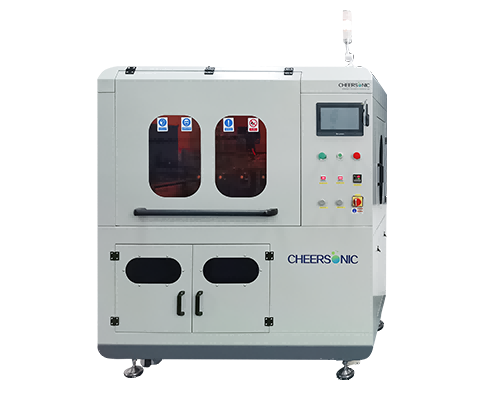
Ultrasonic spraying: Ultrasonic spraying has a high paint utilization rate and good spray uniformity, making it suitable for applications requiring high spray quality. Ultrasonic precision spraying machine has unique high-tech functions, which can achieve more uniform, thinner, and controllable thin film coating. This device is widely used in the field of fine coating preparation, mainly applied in industries such as fuel cell proton exchange membrane spraying, thin film solar cells, nano modified material spraying, glass coating, etc.
About Cheersonic
Cheersonic is the leading developer and manufacturer of ultrasonic coating systems for applying precise, thin film coatings to protect, strengthen or smooth surfaces on parts and components for the microelectronics/electronics, alternative energy, medical and industrial markets, including specialized glass applications in construction and automotive.
Our coating solutions are environmentally-friendly, efficient and highly reliable, and enable dramatic reductions in overspray, savings in raw material, water and energy usage and provide improved process repeatability, transfer efficiency, high uniformity and reduced emissions.
Chinese Website: Cheersonic Provides Professional Coating Solutions