
Key Material Binder for Lithium-ion Batteries
In the precise construction of lithium-ion batteries, binders play a crucial and irreplaceable role. It tightly combines active substances, conductive agents, and current collectors through physical and chemical interactions, constructing a stable framework for electrodes. Its core mission is to ‘buffer the volume changes of active substances during charging and discharging processes’. Taking graphite negative electrode as an example, repeated insertion and extraction of lithium ions can cause particle expansion and contraction. If the bonding force is insufficient, the active material is prone to delamination, leading to rapid decline in battery capacity and significant decrease in cycling performance.
A certain water-based adhesive, with its unique molecular structure, can form strong physical adsorption and chemical bonding with graphite particles, and establish a persistent connection with the current collector. This binding mechanism is like multi anchor fixation, which can maintain the integrity of the electrode structure even in intense electrochemical reactions.
Although the binder only accounts for about 1% -2% of the total material of the battery, it directly dominates the cycle life and safety performance of the battery. Experiments have shown that batteries using high-performance binders exhibit significantly better retention of active materials and significantly reduced decay rates after thousands of cycles compared to conventional systems.
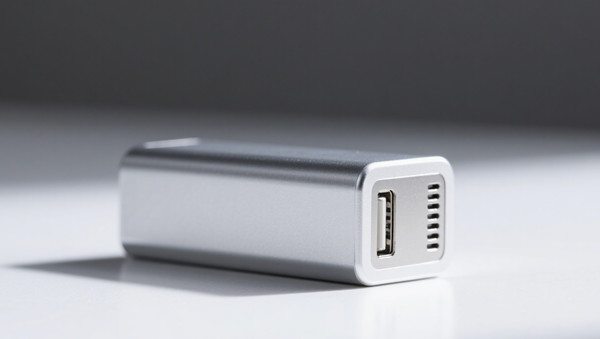
From the perspective of environmental evolution, the development of lithium battery binders has undergone a transition from organic solvent systems to water-based systems. At present, mainstream products can be divided into two categories: oil-based adhesives represented by PVDF, and water-based adhesives represented by SBR/CMC combinations.
PVDF, as the most widely used positive electrode oil-based binder, has excellent oxidation resistance and thermal stability, but its synthesis and coating rely on N-methylpyrrolidone (NMP) as a solvent. NMP is not only expensive, but also has certain toxicity and pollution, and has extremely strict requirements for humidity control in the working environment. In addition, PVDF is prone to degradation when wet and may swell in the electrolyte. It reacts with lithium metal at high temperatures and releases heat, posing a safety hazard.
In contrast, the water-based bonding system composed of SBR and CMC is more in line with the trend of green manufacturing. SBR is a lotion copolymerized by styrene and butadiene in the aqueous phase. It has a typical core-shell structure: the core enhances the cohesive strength, and the shell is rich in hydrophilic groups to improve compatibility. In practical applications, CMC plays a role in dispersion and thickening, ensuring that the slurry is uniform and not layered; SBR endows the polarizer with good flexibility and bonding strength, avoiding powder loss after drying. This system hardly releases volatile organic compounds (VOCs), making it more suitable for increasingly stringent environmental requirements.
Currently, the new generation of adhesive technology is driving battery performance breakthroughs in the following three directions:
– Low temperature performance improvement
A certain type of rubber based adhesive exhibits excellent flexibility and chain activity in low-temperature environments, enabling batteries to maintain high capacity output at -20 ℃. Compared with traditional materials, the capacity retention rate is increased by 10% -20%, effectively supporting the operation of electric vehicles and energy storage devices in cold regions.
– Adapt to high expansion electrodes
With the promotion of silicon-based negative electrodes, active materials with a volume expansion rate of over 300% have high requirements for the bonding layer. Traditional bonding systems are difficult to cope with, so new types of adhesives such as polyacrylic acid (PAA) are becoming practical, maintaining structural stability through strong and tough interfaces.
– Solvent free/dry electrode process
To eliminate the cost and environmental burden caused by solvent use, solvent-free processes have become a research and development hotspot. For example, some fiber-reinforced polymer binders can be combined with mechanical processing to form self-supporting electrode films, eliminating the need for drying and solvent recovery processes. This technology not only reduces energy consumption, but also increases the loading of active substances, thereby improving battery energy density.
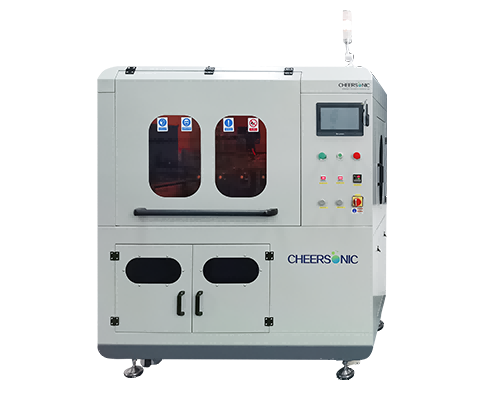
Ultrasonic coating is an emerging technology for preparing battery electrodes, which uniformly coats the slurry on the surface of the current collector through ultrasonic vibration. This technology utilizes the cavitation and capillary effects generated by high-frequency mechanical waves to achieve high-precision atomization and distribution control of the slurry, forming extremely thin and uniform coatings. Compared with traditional coating methods, ultrasonic coating can effectively reduce agglomeration, avoid scratches, improve coating consistency and interface contact quality, and is particularly suitable for high-precision preparation of thick electrodes and multi-layer composite structures in high-energy density batteries. In addition, this technology also has multiple advantages such as high slurry utilization rate, low operating energy consumption, and adaptability to water-based and solvent based systems, providing a reliable process path for the manufacturing of next-generation high-performance lithium batteries.
About Cheersonic
Cheersonic is the leading developer and manufacturer of ultrasonic coating systems for applying precise, thin film coatings to protect, strengthen or smooth surfaces on parts and components for the microelectronics/electronics, alternative energy, medical and industrial markets, including specialized glass applications in construction and automotive.
Our coating solutions are environmentally-friendly, efficient and highly reliable, and enable dramatic reductions in overspray, savings in raw material, water and energy usage and provide improved process repeatability, transfer efficiency, high uniformity and reduced emissions.
Chinese Website: Cheersonic Provides Professional Coating Solutions