Electrolytic Water Hydrogen Production Ultrasonic Sprayer
The electrolytic water hydrogen production ultrasonic sprayer is a key equipment that deeply integrates ultrasonic spraying technology with the electrolytic water hydrogen production process. It is mainly used to prepare high-performance electrode coatings and catalyst layers, significantly improving electrolysis efficiency and reducing costs. The following analysis will be conducted from the aspects of technical principles, application scenarios, core advantages, and industry practices:
Technical principles and core functions
1. Ultrasonic atomization mechanism
The equipment atomizes catalyst solution or slurry into micrometer sized droplets (particle size 0.5-40 microns) through high-frequency ultrasonic vibration (usually 20-100kHz), using cavitation effect to break particle agglomeration and ensure uniform dispersion of sprayed materials. For example, the UAC series equipment of Cheersonic can uniformly load platinum catalyst on the electrode surface through patented nozzle technology, increasing the utilization rate of precious metals from 30% in traditional methods to 90%.
2. Precision coating control
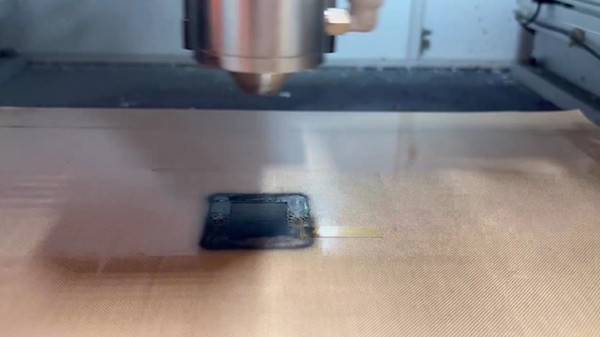
By combining the XYZ three-axis servo motion system and laser positioning technology, the equipment can accurately control the coating thickness (ranging from nanometers to tens of micrometers) with a thickness error of less than 5%. For example, some equipment supports the preparation of functional films by spray pyrolysis method through vacuum adsorption heating plates and high-temperature hot tables (up to 800 ° C) to meet the complex needs of different electrolyzers (such as PEM, AEM).
3. Material compatibility and environmental characteristics
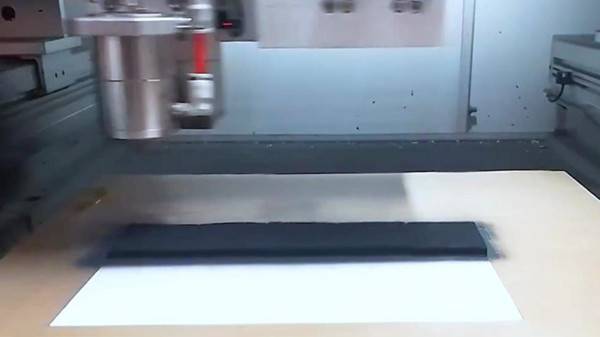
It can handle various materials such as carbon black ink, PTFE adhesive, ceramic slurry, etc., and supports online dispersion and stirring of suspensions to avoid solid precipitation during the spraying process. At the same time, the material utilization rate is greater than 95%, far exceeding the 20-30% of traditional two fluid spraying, significantly reducing precious metal waste and environmental pollution.

Key application scenarios
1. Proton exchange membrane (PEM) electrolysis cell
Preparation of catalyst layer: Uniformly spray precious metal catalysts such as platinum and iridium on the surface of Nafion membrane to reduce hydrogen evolution (HER) and oxygen evolution (OER) overpotentials, thereby improving electrolysis efficiency by 15% -20%.
Bipolar plate coating: By spraying corrosion-resistant coatings (such as carbon based composite materials) or conductive reinforcement layers, contact resistance is reduced and gas diffusion efficiency is optimized to improve overall system performance.
2. Alkaline anion exchange membrane (AEM) electrolysis cell
– Membrane material modification: Spray nano ion conductors (such as indium tin oxide) on the surface of AEM to enhance the conductivity of hydroxide ions and improve the stability of the membrane in strongly alkaline environments.
Application of non precious metal catalysts: Based on the characteristics of AEM that can use non precious metal catalysts such as nickel and manganese, the equipment can accurately control the coating porosity and active site distribution, making the electrolysis energy consumption close to the international advanced level.
3. Adaptation to large-scale production
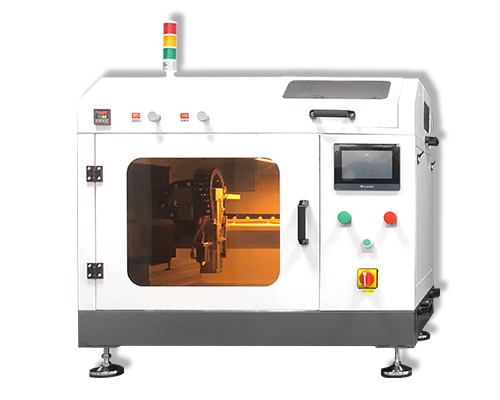
Industrial grade equipment (such as the UAC6000XL) supports large-area spraying of 1.2 meters by 1.2 meters, adapting to the mass production needs of mainstream enterprises. The annual production capacity of a single device can reach millions of square meters of membrane electrodes.
Core technological advantages
1. Breakthrough in both efficiency and cost
Half of precious metal usage: Traditional spraying methods suffer from severe platinum loss due to material splashing, while ultrasonic spraying can reduce precious metal usage by more than 50% while maintaining high catalytic activity.
– Energy consumption reduction: Uniform catalyst distribution increases the current density of the electrolytic cell, reducing energy consumption by 10% -15%. For example, after adopting this technology in a PEM electrolytic cell, hydrogen production energy consumption decreased to below 4.2 kWh/Nm ³.
2. Process stability and reliability
– Anti clogging design: The ultrasonic nozzle continuously vibrates during the spraying process to prevent the slurry from drying and clogging, and the maintenance cycle is extended by more than three times.
Batch consistency: Through a closed-loop feedback system and intelligent parameter preset, ensure that the performance fluctuations of different batches of products are less than 3%, meeting the requirements of industrial mass production.
3. Environmental friendliness
The spraying process is solvent-free and the equipment is equipped with an integrated exhaust system, which can effectively collect harmful gases (such as fluoride) and comply with environmental standards such as EU RoHS.
Industry Practice and Typical Cases
1. Laboratory research and development scenarios
Some desktop devices are widely used in universities and research institutions, such as the nickel iron layered double hydroxide (LDH) catalyst prepared by the Tsinghua University team using this type of device, which achieved a current density of 500mA/cm ² in an alkaline electrolysis cell with a cell voltage of only 1.65V.
2. Industrial application benchmark
The UAC8000 equipment of Cheersonic has been mass-produced and applied in a large-scale hydrogen energy project in China. The annual production capacity of a single device reaches 500000 square meters of membrane electrodes, supporting an electrolytic cell system efficiency of over 75% and reducing costs by 30%.
3. International technical benchmarking
Internationally, some equipment has shown outstanding performance in the AEM electrolysis cell field, with its sprayed anion exchange membrane coating capable of withstanding high temperatures of 600 ° C, suitable for high-end scenarios such as solid oxide electrolysis cells (SOEC).
Future Development Trends
1. Material innovation
With breakthroughs in the research and development of non precious metal catalysts, such as transition metal sulfides and carbon based composite materials, equipment will be upgraded towards high viscosity slurry spraying to support more complex material systems.
2. Multi technology collaboration
Developing composite coating preparation processes by combining atomic layer deposition (ALD), 3D printing, and other technologies, such as spraying a nano catalyst layer on the electrode surface first, and then depositing a protective layer through ALD to extend its service life.
Summary
The ultrasonic sprayer for hydrogen production through electrolysis of water has become the core equipment for promoting the large-scale application of hydrogen production technology through precision coating control, high material utilization rate, and process stability. Its successful practice in PEM and AEM electrolysis cells has verified significant advantages in improving efficiency, reducing costs, and environmental friendliness. With the advancement of materials science and intelligent manufacturing technology, this device will play a greater role in the field of renewable energy hydrogen production, helping to achieve global carbon neutrality goals.
About Cheersonic
Cheersonic is the leading developer and manufacturer of ultrasonic coating systems for applying precise, thin film coatings to protect, strengthen or smooth surfaces on parts and components for the microelectronics/electronics, alternative energy, medical and industrial markets, including specialized glass applications in construction and automotive.
Our coating solutions are environmentally-friendly, efficient and highly reliable, and enable dramatic reductions in overspray, savings in raw material, water and energy usage and provide improved process repeatability, transfer efficiency, high uniformity and reduced emissions.
Chinese Website: Cheersonic Provides Professional Coating Solutions