Purpose of Spray Coating Proton Exchange Membranes
Purpose and Advantages of Spray Coating Proton Exchange Membranes Precise Control of Membrane Thickness: Spray coating technology allows for precise control of membrane thickness. By adjusting spraying parameters such as spray speed, nozzle-substrate distance, and number of spray coats, a membrane of desired thickness can be achieved. This is crucial for optimizing the performance of proton exchange membranes in applications such as fuel cells, as membrane thickness directly impacts key factors such as proton conduction, gas permeation, and mechanical properties.
Excellent Uniformity: Proton membranes can be formed uniformly on complex substrate surfaces. For irregularly shaped electrodes or support structures, spray coating ensures consistent thickness and quality across the entire membrane surface. This helps improve performance consistency across the entire device and avoids performance degradation caused by localized membrane defects or unevenness.
High Material Utilization: Compared to traditional proton membrane fabrication methods (such as casting), spray coating technology allows for more precise application of material where it is needed, reducing material waste. This is particularly important for using expensive proton membrane materials (such as high-performance perfluorosulfonic acid resins), effectively reducing costs.
Preparatory work before spraying: Substrate treatment: The surface properties of the substrate significantly influence the adhesion and performance of the proton exchange membrane. Before spraying, the substrate must be cleaned and pretreated. For example, for electrode substrates used in fuel cells, a combination of chemical cleaning (such as using organic solvents, acidic or alkaline solutions) and physical cleaning (such as ultrasonic cleaning) can be used to remove surface oil, impurities, and oxides. Furthermore, surface modification of the substrate may be necessary, such as plasma treatment to increase surface roughness and the presence of reactive groups, to improve adhesion between the proton exchange membrane and the substrate.
Material selection and formulation: Selecting and formulating the appropriate proton exchange membrane material is crucial. Proton exchange membrane materials typically include perfluorosulfonic acid resins and polyimide (PI). For spraying, these materials must be prepared into suitable solutions or dispersions. For example, perfluorosulfonic acid resins can be dissolved in a suitable organic solvent (such as a mixed solvent of ethanol or isopropanol), with the addition of appropriate additives (such as plasticizers and dispersants) to improve the solution’s fluidity, stability, and sprayability. Spraying Process and Parameters: Common spraying methods include air spraying, electrostatic spraying, and ultrasonic spraying. Air spraying: Compressed air is used to atomize the proton membrane material solution and then sprayed onto the substrate. This method requires simple equipment, but the atomization effect and material utilization rate are relatively low.
Electrostatic spraying: By charging the proton membrane material solution, an electric field is formed between the substrate and the spray nozzle, causing the solution to be deposited onto the substrate in a targeted manner under the influence of the electric field. Electrostatic spraying achieves excellent atomization effect and uniformity, and improves the material’s adhesion to the substrate.
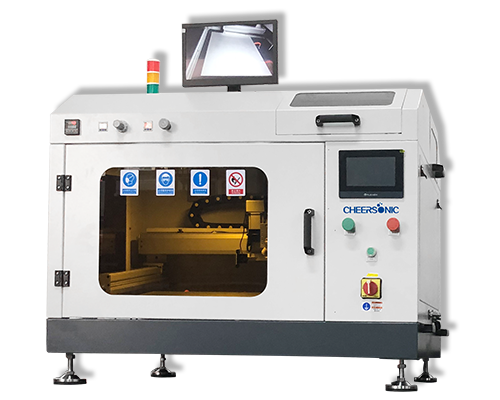
Ultrasonic spraying: Ultrasonic vibrations are used to atomize the solution, producing very fine and uniform droplets. Ultrasonic spraying can produce thinner and more uniform proton membrane coatings and is particularly suitable for applications with extremely high requirements for film thickness and uniformity.
Spraying Parameter Control: Spray Pressure: Different spray pressures affect the atomization degree and spray speed of the solution. Generally speaking, increasing the spray pressure can result in finer atomization of the solution, but excessive pressure can cause splashing and affect membrane uniformity.
Distance between the nozzle and the substrate: This distance directly affects droplet deposition and membrane thickness. A distance that is too close can lead to droplet accumulation, resulting in an unevenly thick film; a distance that is too far can cause droplets to dry or disperse unevenly before reaching the substrate, affecting membrane quality.
Spraying speed: The spraying speed determines the amount of material deposited on the substrate per unit time. An appropriate spraying speed ensures uniform membrane thickness while avoiding flow marks or dripping.
Post-spraying treatment and quality inspection: After spraying, post-processing steps may be required to enhance the performance of the membrane. For example, solvent-based membrane materials require drying to completely evaporate the solvent and form a stable membrane structure. In some cases, heat treatment or chemical treatment, such as cross-linking, may be necessary to enhance the mechanical properties and chemical stability of the membrane.
About Cheersonic
Cheersonic is the leading developer and manufacturer of ultrasonic coating systems for applying precise, thin film coatings to protect, strengthen or smooth surfaces on parts and components for the microelectronics/electronics, alternative energy, medical and industrial markets, including specialized glass applications in construction and automotive.
Our coating solutions are environmentally-friendly, efficient and highly reliable, and enable dramatic reductions in overspray, savings in raw material, water and energy usage and provide improved process repeatability, transfer efficiency, high uniformity and reduced emissions.
Chinese Website: Cheersonic Provides Professional Coating Solutions
