
Preparation of Protective Coatings for Integrated Circuits
In the highly integrated electronic age, the long-term reliable operation of integrated circuits (ICs) has surpassed simple technological pursuits and become a core proposition related to system vitality. The harsh and ever-changing external environment – ubiquitous moisture, corrosive chemical media, and high temperature stress – constantly challenges the physical and electrical integrity of chips. In this context, ultrasonic spraying technology stands out with its unique advantages, becoming a cutting-edge solution for precision construction of high-performance insulation and protective coatings on IC surfaces, creating a solid barrier for the long-term stable operation of electronic components.
Precision atomization: the core advantage of ultrasonic spraying
The core driving force of ultrasonic spraying equipment lies in its sophisticated physical mechanism. The high-frequency piezoelectric transducer inside the device converts electrical energy into high-frequency (usually in the range of 20kHz to 200kHz) mechanical vibration energy. This high-frequency vibration is transmitted to the tip of the nozzle, causing severe capillary wave oscillations in the liquid coating material (such as dielectric ink) flowing through it. When the oscillation energy exceeds the surface tension of the liquid itself, the material is instantly torn and dispersed, forming micron or even submicron sized atomized droplets with highly uniform and controllable particle size (typical size range is 10-50 microns). This non pneumatic atomization method brings revolutionary advantages: the extremely low spraying pressure greatly weakens the flight kinetic energy of droplets, effectively avoiding the impact damage of coating materials on fragile microcircuit structures; At the same time, the generated atomization field is highly uniform and stable, laying the physical foundation for the subsequent formation of ultra-thin, continuous, and defect free protective films on complex three-dimensional structure surfaces, which is an accuracy that traditional air pressure spraying or spin coating processes cannot achieve.
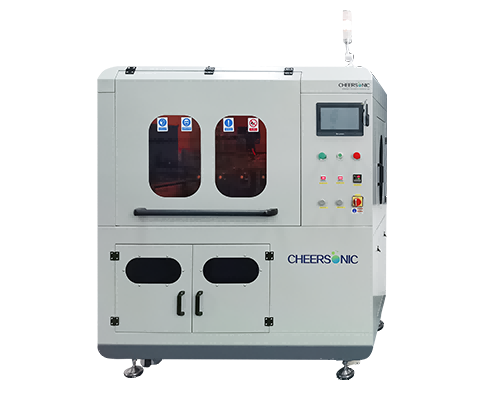
Shield of Protection: Scientific Selection of High Performance Dielectric Ink
The selection of coating materials is crucial to endow ICs with the ability to resist multiple environmental stress erosion. Modern protective systems typically use special dielectric inks based on high-performance resins (such as epoxy systems) that are precisely formulated. The value of such materials lies in their inherent multifunctional protective properties:
*Chemical Inert Fortress: The molecular structure of epoxy resin is dense, and after cross-linking and curing, it forms a highly stable three-dimensional network. The specific chemical groups on its molecular chains make it exhibit excellent resistance to common acidic and alkaline solvents, salt spray, and other corrosive media, just like coating IC with chemical inert armor.
*Moisture Barrier Great Wall: The cured coating has an extremely low water vapor transmission rate (WVTR), and its dense and pore free microstructure can effectively block the penetration of water molecules into the IC and metal interconnects in the environment, fundamentally preventing short circuits, leakage, and even corrosion failure caused by electrochemical migration and ion pollution.
*High temperature stability barrier: The carefully designed epoxy system has a high glass transition temperature (Tg) and excellent thermal oxidation stability, ensuring that the coating can maintain excellent insulation strength, adhesion, and physical form under continuous high temperature working environment or short-term thermal shock (such as lead-free soldering reflow process), without cracking, peeling, or performance degradation.
Craft precision control: building perfect protective barriers
Transforming high-performance materials into reliable protective layers relies on extreme control of ultrasonic spraying process parameters:
*Control of atomization accuracy: The coordinated optimization of vibration frequency and amplitude directly determines the droplet size distribution. Finer and more uniform droplets are the key to achieving ultra-thin (micrometer level) and seamless coating coverage.
*The art of uniform coverage: precise coordination of nozzle movement path, speed, and material flow, combined with controlled motion (such as rotation) of the substrate (chip carrier), ensures highly consistent and unobstructed deposition of atomized clouds on the surface of the IC and its complex topological structures such as pins, pads, and bumps, eliminating the “shadow effect”.
*Carving of film thickness and morphology: By adjusting the spraying frequency, residence time, and material solid content, nanometer level precision control of the final dry film thickness can be achieved. Uniform film thickness is the cornerstone for ensuring consistency between insulation performance and mechanical protection effectiveness.
*The key to solidification strengthening is to follow the precise thermal curing procedure (temperature curve) set by the material properties. Adequate and uniform curing promotes complete cross-linking of resin molecules, maximizing the coating’s density, adhesion, hardness, as well as the aforementioned chemical protection and dielectric properties.
Efficiency Enhancement: Multidimensional Enhancement of IC Reliability
The high-performance epoxy based protective coating, precisely constructed through ultrasonic spraying, provides comprehensive environmental defense for ICs
*Insulation reliability leap: The coating constructs a high resistance barrier between conductors, significantly improving surface insulation resistance (SIR), effectively suppressing leakage current and potential electrochemical migration (CAF, dendrite growth) under high voltage, ensuring circuit signal purity and long-term insulation safety.
*Terminator of environmental corrosion: Strong chemical resistance and moisture resistance enable ICs to withstand industrial air pollution, coastal salt spray, condensed water vapor, and even cleaning solvents, greatly extending their service life under harsh working conditions.
*Buffer layer for thermal mechanical stress: The coating not only withstands high temperatures, but also has a certain stress buffering ability, which helps to alleviate the thermal mechanical stress caused by the difference in coefficient of thermal expansion (CTE) between IC packaging materials and reduce the risk of interface delamination.
*The guardian of miniaturization: Ultrasonic spraying achieves excellent protection while precisely controlling the thickness of extremely thin coatings (as low as a few micrometers), perfectly meeting the strict space requirements of modern high-density and miniaturized IC packaging, avoiding the impact of excessive coating on heat dissipation or subsequent assembly processes.
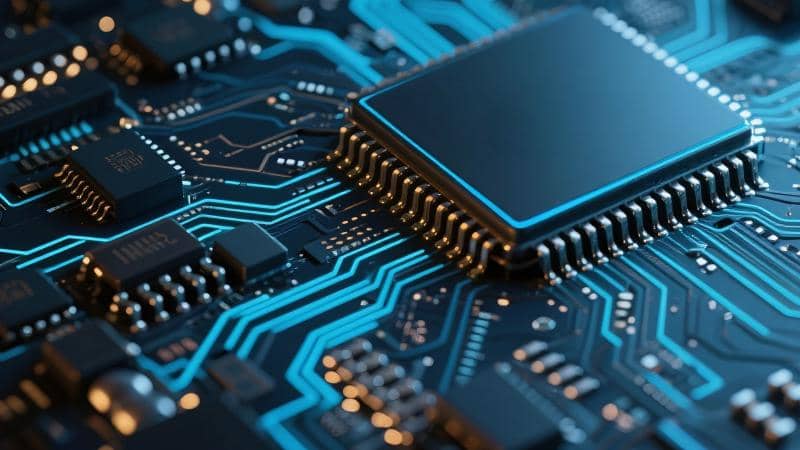
The deep application of ultrasonic spraying technology in the field of IC protective coatings perfectly integrates cutting-edge physical atomization technology with high-performance material chemistry. It surpasses the limitations of traditional processes and achieves ultra-thin, uniform, and high shape retention of protective coatings at the micro scale, building a solid and reliable environmental erosion defense line for integrated circuits in complex and increasingly harsh application scenarios. The continuous evolution of this precision manufacturing process will undoubtedly accompany the continuous development of electronic devices towards higher integration, wider application areas, and longer service life, becoming an invisible cornerstone supporting the reliability of modern electronic industry.
About Cheersonic
Cheersonic is the leading developer and manufacturer of ultrasonic coating systems for applying precise, thin film coatings to protect, strengthen or smooth surfaces on parts and components for the microelectronics/electronics, alternative energy, medical and industrial markets, including specialized glass applications in construction and automotive.
Our coating solutions are environmentally-friendly, efficient and highly reliable, and enable dramatic reductions in overspray, savings in raw material, water and energy usage and provide improved process repeatability, transfer efficiency, high uniformity and reduced emissions.
Chinese Website: Cheersonic Provides Professional Coating Solutions