
Ultrasonic Spraying for Injection Mold Release Agent Spraying
In the fiercely competitive injection molding industry, efficiency and quality are paramount. Mold release agents are crucial for ensuring the smooth release of plastic products from molds. The quality of their spraying process directly impacts production cycle time, cost control, and the final product’s appearance. While widely used, traditional air spraying is often associated with numerous drawbacks, such as material waste, uneven coating, and environmental pollution. The rise of ultrasonic spraying technology, with its unique advantages, is revolutionizing the precision and efficiency of injection mold release agent applications.
Pains of Traditional Spraying: Bottlenecks Needing to Be Addressed
- Low Efficiency and High Costs: Air spraying suffers from low atomization efficiency, resulting in a significant amount of release agent not being effectively deposited on the mold surface, resulting in waste of up to 50%-70% and high raw material costs.
- Uneven Coating and Fluctuating Quality: Coarse and unevenly distributed atomized particles can lead to uneven coating thickness on the mold surface, compromising mold release, causing surface defects (such as flow marks and uneven gloss), and even increasing the defective rate.
- Environmental and Health Hazards: Overspraying generates large amounts of aerosols and droplets, polluting the workshop environment, endangering workers’ respiratory health, and adding an additional burden to subsequent cleaning.
- Difficulty in Precision Control: The ability to achieve precise and uniform spraying is limited for complex mold structures (deep cavities, narrow gaps, and undercuts).
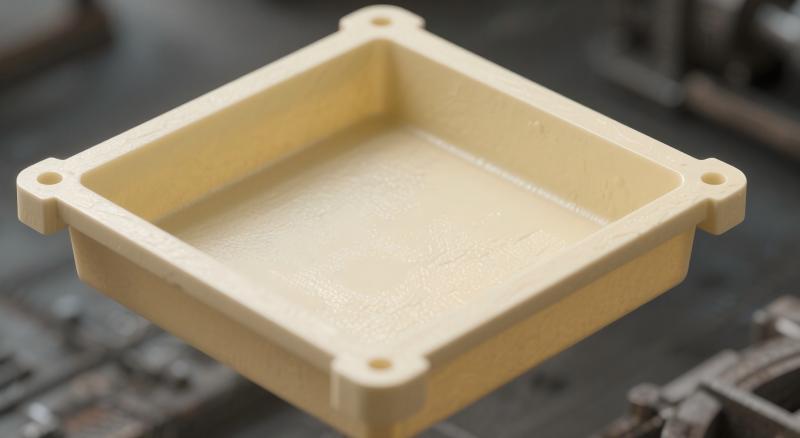
Ultrasonic Spraying: The Core Technology for Precision Atomization
Ultrasonic spraying technology cleverly harnesses the energy of high-frequency sound waves. Its core principles are:
1. High-Frequency Vibration: The piezoelectric transducer at the heart of the spraying equipment converts high-frequency electrical energy (typically in the 20kHz-120kHz range) into mechanical vibrations.
2. Capillary Wave Effect: These high-frequency vibrations are transmitted to the thin liquid film (release agent solution) at the nozzle tip, exciting the formation of stable standing capillary waves on its surface.
3. Fine Atomization: When the vibration energy exceeds the surface tension of the liquid, the liquid film breaks up at the wave crest, producing a highly uniform “mist cloud” of micron-sized droplets (typically in the 10-50 micron range).
4. Gentle Delivery: Using an extremely low-velocity carrier gas (or simply the droplets’ own momentum), these fine droplets are gently transported and deposited on the mold surface.
Empowering Injection Molding Release: The Outstanding Advantages of Ultrasonic Spraying
Ultrasonic spraying technology offers revolutionary benefits in injection mold release agent applications:
1. Extreme Cost Savings:
- Reducing mold release agent usage by up to 30%-70%, with atomization efficiency exceeding 90%, significantly reducing expensive release agent procurement costs.
- Reducing waste disposal and workshop cleaning costs associated with overspray.
2. Ultra-Thin and Uniform Coating for Enhanced Quality:
- Producing an ultra-thin, uniform, and dense coating at the nanometer to micrometer scale, perfectly covering every corner of the mold.
- Significantly improving mold release and eliminating defects such as sticking and scratching caused by uneven coating.
- Major improvements in the final plastic product’s appearance (gloss and texture clarity), minimizing surface defects and enhancing product quality.
3. Complex Molds, No-Blind-Angle Coverage:
- The fine mist droplets possess excellent followability, easily penetrating deep cavities, narrow gaps, fine textures, and undercuts, achieving uniform, no-blind-angle coverage unattainable with traditional spraying.
- This product is particularly suitable for release agent applications on molds with complex geometries, such as automotive interiors, precision electronic housings, and medical devices.

4. Green and Environmentally Friendly, Clean Production:
- Significantly reduces airborne droplets and aerosols, significantly improving the workshop working environment.
- Reduced VOC emissions (especially when using solvent-based release agents), complying with increasingly stringent environmental regulations.
- Reduced waste generation, lowering subsequent disposal costs and environmental impact.
5. Precise Controllability, Intelligent Integration:
- Precisely adjustable flow and atomization parameters ensure high batch-to-batch consistency.
- Easily integrates with automated production lines and robotic arms, enabling fully automatic, programmable, and highly repeatable precision spraying, enhancing smart manufacturing.
- The low-temperature atomization process does not destroy the active ingredients of the release agent.
Wide Applications: From precision parts to large components
Ultrasonic spray release agent technology has demonstrated its value in numerous applications:
- Automotive: Large, complex interior and exterior trim components such as bumpers, instrument panels, door panels, and grilles.
- Electronic and Electrical: Mobile phone/computer casings, connectors, and small precision components.
- Medical Devices: Syringes, catheter connectors, diagnostic equipment casings, and other products requiring high cleanliness and contamination-free performance.
- Packaging Industry: Thin-walled containers and bottle caps.
- Consumer Goods: Appliance housings, toys, and tool handles.
Future Outlook: Intelligent and Sustainable Development
With the advancement of Industry 4.0 and green manufacturing, ultrasonic spraying technology will continue to evolve:
- Smarter control systems: Integrating machine vision and real-time sensor feedback enables dynamic, adaptive optimization of the spraying process.
- Synergy with new release agents: Better adaptability to water-based and highly efficient, environmentally friendly release agents, promoting green processes throughout the entire process.
- Increased Integration: As a key module in intelligent injection molding units, it achieves deeper integration with mold temperature control and injection molding process parameters.
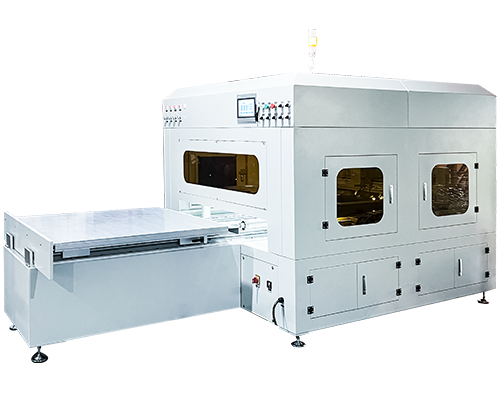
Ultrasonic spraying technology has revolutionized the application of injection mold release agents. Its revolutionary fine atomization principle addresses the core pain points of traditional spraying methods in terms of efficiency, cost, uniformity, coverage, and environmental friendliness. In today’s world dominated by precision manufacturing and sustainable development, this technology is no longer just a process optimization tool; it is also a key enabler for injection molding companies to enhance their competitiveness, achieve cost reduction and efficiency gains, and achieve a green transformation. With continued technological advancement and integration, ultrasonic spraying is poised to become an indispensable precision coating solution for high-value-added injection molding production.
About Cheersonic
Cheersonic is the leading developer and manufacturer of ultrasonic coating systems for applying precise, thin film coatings to protect, strengthen or smooth surfaces on parts and components for the microelectronics/electronics, alternative energy, medical and industrial markets, including specialized glass applications in construction and automotive.
Our coating solutions are environmentally-friendly, efficient and highly reliable, and enable dramatic reductions in overspray, savings in raw material, water and energy usage and provide improved process repeatability, transfer efficiency, high uniformity and reduced emissions.
Chinese Website: Cheersonic Provides Professional Coating Solutions
