
Circuit Coating
Hidden between delicate integrated circuits and components lies a crucial material: circuit coating. It’s not the core transistor or capacitor, but rather acts like a lubricant and protective layer in precision machinery, its thin film providing an indispensable barrier for the stable operation of electronic devices.
This core function lies in comprehensive protection. Electronic devices are constantly exposed to threats such as moisture, oxygen, contaminants, and even physical friction. Circuit coatings, particularly insulating protective materials like conformal coating (moisture-proof, salt spray-proof, and mildew-proof), densely coat PCBs and solder joints, creating a strong chemical and physical barrier. This effectively prevents short circuits caused by moisture intrusion, poor connections caused by oxidation, and poor heat dissipation caused by dust accumulation, significantly extending device life and reliability.
But their functions go far beyond this. Where insulation is needed, thin dielectric coatings (such as polyimide (PI)) coat conductors to prevent signal crosstalk. Where conductivity is essential, conductive coatings shine. From the silver nanoparticle inks that form flexible circuits to the transparent indium tin oxide films at the edges of touchscreens, these coatings precisely transmit current and signals with extremely low resistance. Furthermore, highly thermally conductive insulating coatings (such as polymers doped with ceramic particles) applied to processors or power modules act as “highways” for efficient heat transfer to heat sinks, protecting chips from overheating and damage even at extreme performance levels.

The application range is vast: Conformal coatings on mobile phone motherboards in consumer electronics silently protect against sweat; specialized coatings on sensors in automotive engine compartments must withstand extreme temperatures and oil contamination; and circuit coatings in aerospace equipment must withstand intense vibration and high vacuum environments. Industrial control, medical equipment, and even the emerging Internet of Things nodes all rely on their stable protection.
Future trends point towards intelligent and green development. Research is focusing on self-healing coatings—those that can heal even minor damage. Nanocoating technology is striving to achieve thinner, lighter, and stronger protection. Environmentally friendly water-based coatings are gradually replacing traditional solvent-based products. These advancements are enabling circuit coatings to continue to provide the underlying support for miniaturization, high reliability, and environmental friendliness in electronic devices.
Circuit coatings, though quietly hidden beneath components, are the true “unsung heroes” of modern electronics. Drawing on the wisdom of chemistry and materials science, they pave safe and efficient pathways for the flow of electricity and the signals that carry information, subtly shaping our reliable digital world.
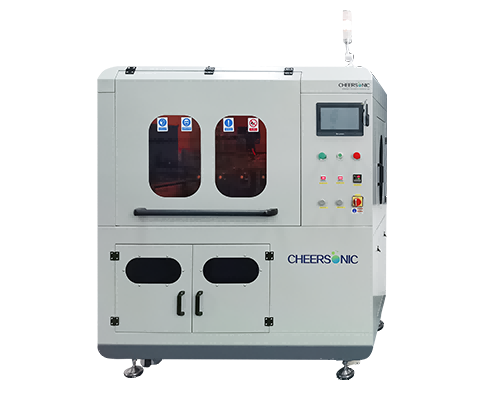
Ultrasonic spraying technology, with its uniform atomization and controllable coating quality, has become a key process for functional coatings such as insulation, conductivity, and protection in electronics manufacturing. Its core principle is to use high-frequency ultrasonic vibrations (typically 20-150kHz) to resonate the coating liquid on the surface of the atomizer, splitting it into tiny droplets with a diameter of 1-50μm. These droplets are then guided by a low-pressure airflow and evenly deposited on the circuit board surface to form a coating. Compared to traditional air spray or brush coating, this technology allows for precise control of coating thickness (down to 1μm) and a droplet distribution uniformity error of less than 5%, making it particularly well-suited for the delicate coating requirements of high-density circuit boards.
Core Application Scenarios
1. Insulation Coating
Circuit board conductors, solder joints, and exposed metal areas require insulation to prevent short circuits. Ultrasonic spraying atomizes insulating varnishes (such as polyimide and epoxy varnishes) into nano-sized droplets, forming a continuous, pinhole-free film (5-50μm thick) on the circuit board surface. Its advantages include uniform coverage even within chip pin gaps (<0.2mm) or on irregularly shaped structures, strong coating adhesion (<1% peeling rate in a 100-grid test), and a temperature resistance range of -55°C to 200°C, meeting the insulation requirements of automotive electronics and industrial control boards.
2. Conductive Coating
Flexible circuit boards and sensor electrodes require conductive traces or electrode coatings. Ultrasonic spraying can uniformly atomize conductive pastes (such as silver, copper, and graphene pastes). By controlling the spray path (in conjunction with a precision motion platform), it forms conductive patterns with line widths of less than 50μm on the substrate, with resistance deviations of less than 3%. Compared to traditional screen printing, it eliminates the need for screen production, making it suitable for small-batch, high-variety circuit prototyping. It also achieves a slurry utilization rate of up to 80% (compared to only 30-50% with traditional spraying), significantly reducing material waste.
3. Protective Coating
Circuit boards exposed to humid, dusty, and chemically corrosive environments (such as outdoor equipment and medical devices) require protective coatings. Ultrasonic spraying of conformal coatings (such as silicone rubber and acrylate) forms a dense film. Vibrational atomization ensures the coating completely coats component gaps and pin bases, achieving an IP67 protection rating. Furthermore, its low-temperature film-forming properties (no need for high-temperature curing) prevent damage to heat-sensitive components on circuit boards.
Technical Advantages
– Finely Controllable: Atomized droplet size can be adjusted via ultrasonic frequency (higher frequencies produce finer droplets). Combined with a computer-controlled spray path, coating thickness can be precisely controlled to ±0.5μm, meeting the micro-coating requirements of chip-level circuits.
– Broad Material Compatibility: Suitable for coatings with low viscosities (1-50cP) to medium viscosities (50-500cP), including water-soluble, solvent-based, and suspension-based coatings. This eliminates the need for excessive diluent addition, reducing volatile organic compound (VOC) emissions. – Damage-Free Spraying: Low-pressure airflow (0.1-0.3 MPa) drives atomized droplets, avoiding the impact damage of traditional high-pressure spraying on fragile circuits (such as flexible PCBs and thin copper foil), reducing the risk of circuit breakage.
– Efficient and Environmentally Friendly: High droplet utilization, minimal overspray, and the elimination of auxiliary materials such as flux simplify subsequent cleaning processes, aligning with the green production trend in electronics manufacturing.
Key Process Parameters
– Ultrasonic Frequency: Low frequencies (20-40 kHz) are suitable for medium- to high-viscosity coatings (such as thick-film conductive pastes), producing larger droplets (20-50 μm). High frequencies (80-150 kHz) are suitable for low-viscosity coatings (such as insulating varnishes), producing fine droplets of 1-10 μm and suitable for ultra-thin coatings.
– Spraying Distance and Speed: A distance of 10-30 mm from the circuit board is ideal (too close can lead to accumulation, too far can lead to dispersion). The nozzle travel speed (5-50 mm/s) determines the amount of coating deposited per unit area, and the thickness can be precisely controlled by adjusting the number of reciprocating strokes. – Paint viscosity: Pre-treatment is required to achieve the required process viscosity (for example, conductive silver paste is typically adjusted to 50-100 cP). Excessively high viscosity can lead to uneven atomization, while excessively low viscosity may cause sagging.
– Environmental Control: The spraying area must be kept clean (Class 1000 dust-free), with humidity controlled between 30-60% (to prevent moisture from affecting coating curing), and the temperature between 20-25°C to ensure coating stability.
Operational Precautions
– The atomizer head should be cleaned regularly (by flushing with solvent) to prevent paint residue from clogging the micropores and affecting atomization.
– For high-solids coatings (such as metal powder slurries), a stirring device should be installed to prevent particle settling and ensure a uniform coating composition.
– The curing process must be tailored to the coating’s characteristics (e.g., thermal or UV curing) to avoid cracking caused by excessively fast curing rates.
Ultrasonic spraying technology, with its precise atomization control and flexible process, provides an ideal solution for the high-performance and high-reliability requirements of circuit coatings. Its application is increasingly widespread in high-end electronics manufacturing, including 5G communications equipment, microsensors, and flexible electronics.
About Cheersonic
Cheersonic is the leading developer and manufacturer of ultrasonic coating systems for applying precise, thin film coatings to protect, strengthen or smooth surfaces on parts and components for the microelectronics/electronics, alternative energy, medical and industrial markets, including specialized glass applications in construction and automotive.
Our coating solutions are environmentally-friendly, efficient and highly reliable, and enable dramatic reductions in overspray, savings in raw material, water and energy usage and provide improved process repeatability, transfer efficiency, high uniformity and reduced emissions.
Chinese Website: Cheersonic Provides Professional Coating Solutions