
Flux Spraying
Flux spraying is a process that applies flux evenly to the soldering surface during the soldering process. The following are some key aspects of flux spraying:
1. Spraying Methods:
Ultrasonic Spraying: A piezoelectric ceramic transducer converts oscillating electrical energy with a frequency greater than 20kHz into mechanical energy, atomizing the flux. This is then sprayed through a pressure nozzle onto the object to be soldered. This method offers high spray accuracy and minimal overspray, is compatible with various flux types, and achieves good through-hole penetration, making it ideal for delicate soldering applications such as electronic components.
Silk Screen Spraying: A rotating air knife through a fine, high-density mesh screen sprays flux, creating a mist that is applied to the soldering surface. This method offers the advantage of a relatively uniform flux coating, but it requires certain properties, such as the flux’s viscosity, and the equipment is relatively complex.
Pressure Nozzle Spraying: Flux is directly ejected from a nozzle using pressure and air. This method is simple to operate and low-cost, but spraying uniformity can be relatively poor, and overspray or underspray of flux can occur easily. This requires precise control of pressure and nozzle parameters.
2. Process Parameter Settings:
Nozzle Selection and Settings:
The nozzle aperture affects the flux spray volume and spray coverage. The appropriate aperture should be selected based on the size and shape of the object being welded, as well as the type of flux. For example, for soldering small electronic components, a smaller nozzle aperture is recommended to ensure precise flux application to the weld. Larger nozzle apertures may be required for improved spraying efficiency.
Nozzle shape also affects spraying results. Common nozzle shapes include circular and fan-shaped. Circular nozzles are suitable for spot or small-area spraying, while fan-shaped nozzles can cover a larger area and are suitable for large welds.
Nozzle spacing should be set to avoid overlap, as this can cause excessive flux accumulation in certain areas, affecting weld quality. The distance between the nozzle and the object being welded must also be appropriate. Too close may result in overly concentrated flux spray, while too far may disperse the flux, reducing spraying effectiveness.
Controlling spray pressure and flow rate: Pressure and flow rate are key factors influencing flux spraying effectiveness. Excessive pressure causes the flux to spray too quickly, potentially impacting the object being welded and damaging the structure of the weld. Too low pressure prevents the flux from being fully atomized, affecting spray uniformity. Flow rate control is also crucial. Too high a flow rate wastes flux and may leave excessive residue on the weld. Too low a flow rate may not meet welding requirements.
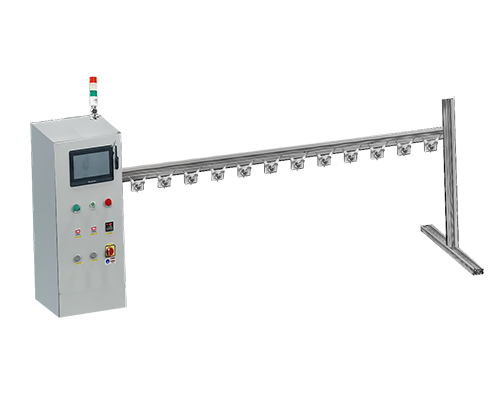
Conveyor speed: If flux spraying is performed on an assembly line, the conveyor speed must match the spraying speed. Too high a conveyor speed results in uneven flux spraying, while too low a speed can affect production efficiency. Therefore, the conveyor speed should be adjusted based on actual production conditions to ensure even flux spraying on the object being welded.
About Cheersonic
Cheersonic is the leading developer and manufacturer of ultrasonic coating systems for applying precise, thin film coatings to protect, strengthen or smooth surfaces on parts and components for the microelectronics/electronics, alternative energy, medical and industrial markets, including specialized glass applications in construction and automotive.
Our coating solutions are environmentally-friendly, efficient and highly reliable, and enable dramatic reductions in overspray, savings in raw material, water and energy usage and provide improved process repeatability, transfer efficiency, high uniformity and reduced emissions.
Chinese Website: Cheersonic Provides Professional Coating Solutions