Antibacterial Surgical Sutures: Coatings and Equipment
What Are Antibacterial Surgical Sutures? Antibacterial Mechanisms, Material Selection, and Ultrasonic Spray Coating Equipment
1. What Are Antibacterial Surgical Sutures?
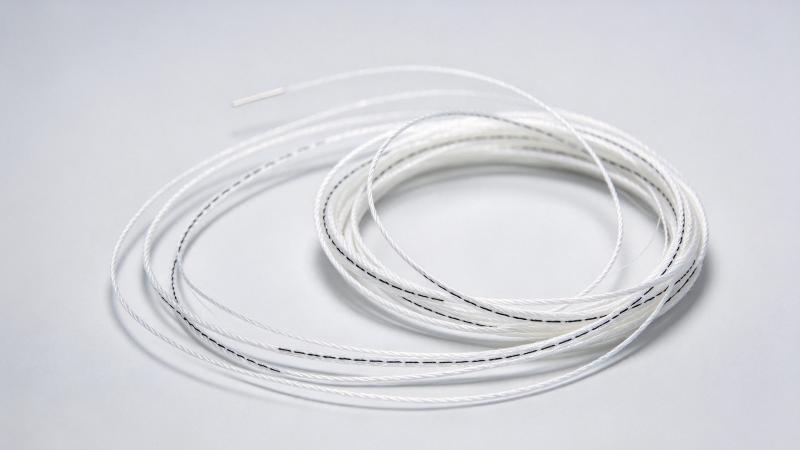
Antibacterial surgical sutures are medical devices designed to inhibit the growth of certain microorganisms through specific materials or surface treatments.
Compared with conventional surgical sutures, antibacterial sutures must not only meet tissue approximation and wound closure requirements but also demonstrate their intended antibacterial surface properties.
Surgical site infection (SSI) is an important complication that must be considered in surgical procedures.
Bacteria may adhere to the surfaces of implanted materials, including sutures, and form biofilms under certain conditions.
For this reason, sutures with antibacterial properties have become an area of medical device research and product development.
However, antibacterial sutures cannot replace appropriate surgical aseptic techniques, infection prevention measures, or necessary antimicrobial treatment.
2. How Do Antibacterial Sutures Work?
Antibacterial sutures typically incorporate active substances on their surfaces to inhibit the growth of certain bacteria under specified conditions.
One common technical approach is to form a polymer coating containing an antibacterial agent on the suture surface.
The coating may serve several functions:
- Retaining the antibacterial active ingredient on the suture surface.
- Controlling contact between the antibacterial agent and the surrounding environment.
- Influencing the release behavior of the antibacterial agent from the coating.
- Providing localized antibacterial activity under the intended conditions.
Antibacterial effectiveness depends on the type of agent, its loading, release behavior, target microorganisms, and operating environment.
The presence of an antibacterial ingredient in a coating does not, by itself, demonstrate that the final product reduces clinical infection rates.
3. Common Active Ingredients Used in Antibacterial Sutures
3.1 Triclosan
Triclosan is an organic compound with antibacterial activity.
It has been used as a surface treatment ingredient in certain commercially available antibacterial surgical sutures.
Triclosan can interfere with fatty acid synthesis in certain bacteria, thereby inhibiting bacterial growth.
However, its effectiveness varies among microorganisms, and its concentration, release level, and material safety must be evaluated.
3.2 Silver-Based Antibacterial Materials
Silver and certain silver-based materials have also been investigated for antibacterial surface treatments on medical devices.
Their mechanisms may involve interactions between silver ions and microbial cell structures or biological molecules.
However, silver release, cytotoxicity, and material compatibility require product-specific validation.
3.3 Other Antibacterial Materials
Research has also explored other organic antibacterial agents, antimicrobial polymers, and functional surface treatment technologies.
Different approaches vary in their antibacterial mechanisms, coating stability, and regulatory requirements.
4. What Performance Requirements Must Antibacterial Sutures Meet?
4.1 Mechanical Properties
Sutures must provide tensile strength, flexibility, and knotting performance appropriate for their intended use.
The coating must not cause unacceptable reductions in strength or damage to the suture surface.
4.2 Coating Stability
The coating must maintain the required integrity during packaging, transportation, suturing, and use.
Excessive coating detachment during passage through tissue may affect product performance.
4.3 Antibacterial Performance
Appropriate microbiological testing should be used to evaluate antibacterial activity according to the product’s intended application.
4.4 Biocompatibility
Because surgical sutures may come into direct contact with tissue, coating materials, active ingredients, and released substances require appropriate biological evaluation.
4.5 Sterilization Compatibility
The final sterilization method may affect the antibacterial agent, polymer coating, and suture substrate.
Therefore, manufacturers need to investigate changes in product performance before and after sterilization.
5. How Are Antibacterial Sutures Manufactured?
Antibacterial suture manufacturing generally involves substrate preparation, surface treatment, antibacterial coating deposition, drying, inspection, and subsequent packaging.
During the coating stage, manufacturers may investigate dip coating, spray coating, and other surface treatment methods.
For continuously manufactured sutures, coating equipment can be integrated with unwinding, tension control, and rewinding systems.
Different coating processes affect coating loading, liquid penetration, and drying behavior.
6. Ultrasonic Spray Coating Equipment for Antibacterial Sutures
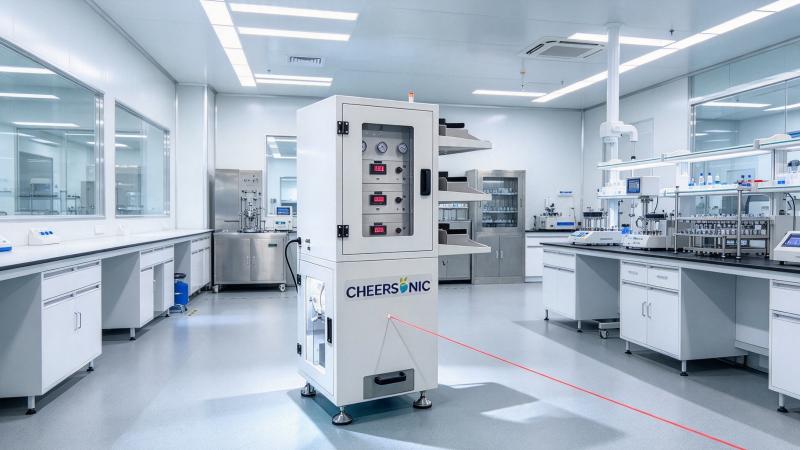
Ultrasonic spray coating equipment is a manufacturing tool that can be used to investigate precision antibacterial coatings.
Its operating principle involves using ultrasonic vibration to atomize a coating liquid into fine droplets, which are then directed toward the suture surface.
For triclosan-coated antibacterial sutures, triclosan can be incorporated into an appropriate coating formulation, subject to material compatibility, and deposited using ultrasonic spray coating equipment.
The equipment can be combined with a continuous thread-processing system to integrate suture unwinding, spraying, drying, and rewinding.
Potential advantages include precision liquid delivery, adjustable spray processing, and multiple thin-layer deposition passes.
Because sutures are narrow cylindrical substrates, practical manufacturing also requires optimization of multi-directional spraying, tension control, and droplet capture efficiency.
7. Development Trends in Antibacterial Suture Manufacturing
As medical device manufacturing technologies advance, antibacterial suture development focuses not only on antibacterial activity but also on material safety, suturing performance, and production consistency.
Automated coating equipment can provide a more controllable manufacturing platform for addressing these requirements, although final performance still depends on coating formulation and process validation.
Conclusion
Antibacterial surgical sutures combine materials science, surface coating technology, and medical device manufacturing.
Triclosan coating is one technical approach, while dip coating and ultrasonic spray coating are both potential manufacturing methods.
For companies developing antibacterial sutures, selecting suitable coating equipment and conducting sample coating tests are important steps toward establishing a reliable manufacturing process.