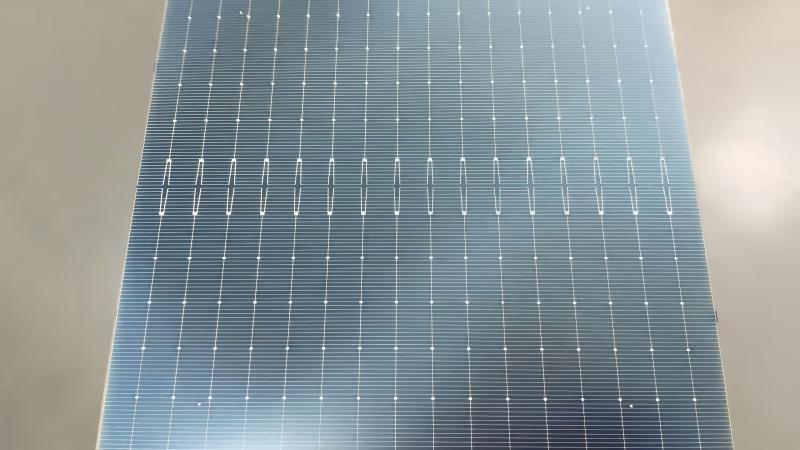
What Are All-Perovskite Triple-Junction Solar Cells?
What Are All-Perovskite Triple-Junction Solar Cells? An Introduction to Cutting-Edge Tandem Photovoltaics
Solar energy is a cornerstone of the clean energy system, and photovoltaic (PV) cells—the core medium for converting light into energy—are continuously evolving toward higher conversion efficiencies and lower manufacturing costs. Traditional single-junction PV cells face a theoretical efficiency ceiling; limited by material bandgaps, they cannot fully utilize the entire solar spectrum, resulting in significant photon energy loss as heat and hindering further efforts to reduce costs and boost efficiency. Against this backdrop, all-perovskite triple-junction solar cells have emerged as a promising frontier in PV technology. By employing a design that utilizes multiple sub-cells to absorb specific segments of the solar spectrum, they break through the efficiency limitations of single-junction cells.
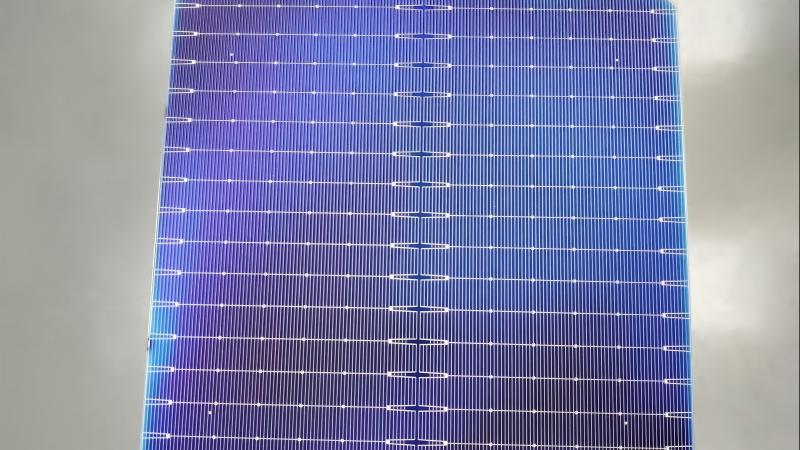
An all-perovskite triple-junction solar cell consists of three perovskite light-absorbing materials with distinct bandgaps stacked sequentially to form a device structure with three sub-cells connected in series. When sunlight strikes the cell surface, high-energy, short-wavelength photons are absorbed by the top wide-bandgap perovskite layer; medium-energy visible light is captured by the middle-bandgap layer; and low-energy, long-wavelength infrared photons are absorbed by the bottom narrow-bandgap layer. This stratified utilization of the solar spectrum—matching specific wavelength ranges to corresponding absorption layers—significantly reduces thermal energy loss. Compared to single-junction perovskite cells, all-perovskite triple-junction cells offer a higher theoretical conversion efficiency limit, opening up new avenues for the development of PV technology.
However, efficiently integrating three perovskite sub-cells involves more than just stacking materials. Triple-junction tandem devices face several technical challenges. The first is the **current-matching issue**: in a series configuration, the output current of the entire cell is constrained by the sub-cell generating the lowest current. Consequently, the photocurrents of the three sub-cells must be precisely matched; underperformance in any single layer drags down the overall output. The second challenge lies in the design of the intermediate interconnection layer. This layer facilitates charge recombination and conduction between adjacent sub-cells; it must simultaneously offer high optical transparency—to minimize parasitic light absorption—and excellent electrical conductivity, placing rigorous demands on thin-film fabrication processes. Furthermore, factors such as the crystalline quality of perovskite films with varying bandgaps, interfacial defects, and phase separation induced by ion migration directly impact the solar cells’ conversion efficiency and long-term operational stability.
The film fabrication process is a critical link in transitioning all-perovskite triple-junction solar cells from the laboratory to industrial production; ultrasonic spray coating is one such solution-based film-forming technique that holds immense application potential. This process utilizes high-frequency ultrasonic vibrations to atomize the perovskite precursor solution into micron-scale droplets of uniform size. A carrier gas then transports these droplets evenly onto the substrate surface, where solvent evaporation and annealing-induced crystallization transform them into dense, smooth perovskite functional films. Unlike traditional spin-coating—which is suitable only for small-area samples—ultrasonic spray coating accommodates large-format substrates and significantly improves material utilization, thereby reducing the consumption of expensive perovskite precursor materials. Moreover, the entire film-forming process can be conducted under atmospheric pressure and low temperatures, avoiding high-temperature damage to underlying sub-cells that have already been fabricated. This makes it well-suited for the sequential deposition of multiple layers in triple-junction cells and helps mitigate common large-area fabrication issues such as uneven film thickness and pinholes, offering a viable pathway for the mass production of all-perovskite triple-junction solar cells.
Of course, ultrasonic spray coating is not a flawless solution; parameters require continuous optimization for use in the mass production of all-perovskite triple-junction cells. These devices comprise over a dozen functional film layers—including light-absorbing layers, transport layers, and interconnection layers—each with distinct requirements regarding thickness, roughness, and crystallinity. Parameters such as ultrasonic frequency, spray rate, and substrate temperature must be fine-tuned for specific perovskite formulations (varying by bandgap) to prevent issues like droplet agglomeration and localized compositional shifts, thereby further enhancing the quality of the interfaces between the multiple film layers.
Regarding the materials themselves, there remain significant challenges to be overcome in the development of all-perovskite triple-junction solar cells. Wide-bandgap perovskite systems are prone to halide segregation; under illumination, compositional changes occur, leading to voltage loss. Conversely, narrow-bandgap perovskite systems are susceptible to oxidation, which exacerbates charge carrier recombination. Various interfacial defects cause significant recombination of photogenerated electron-hole pairs, thereby compromising output performance. Currently, the performance of small-area laboratory devices remains well below the theoretical limit, and their stability requires further verification and improvement.

In terms of application potential, all-perovskite triple-junction solar cells offer the advantages of high efficiency and a lightweight, thin profile. Beyond conventional ground-based photovoltaic power generation, they hold great promise for applications such as flexible photovoltaics and specialized power supply systems. As passivation technologies, interconnect layer materials, and solution-based fabrication processes continue to evolve—and large-area manufacturing techniques like ultrasonic spraying are further refined—key challenges regarding efficiency loss, long-term stability, and mass production are expected to be gradually resolved.
The development of the photovoltaic industry is fundamentally a process of pushing the limits of solar energy utilization. All-perovskite triple-junction solar cells represent a significant avenue of exploration in tandem photovoltaic technology. Although the technology is currently in a critical development phase and remains some distance from large-scale commercialization, continued breakthroughs in key technologies could drive down photovoltaic generation costs even further, thereby fostering the high-quality development of the clean energy industry.
About Cheersonic
Cheersonic is the leading developer and manufacturer of ultrasonic coating systems for applying precise, thin film coatings to protect, strengthen or smooth surfaces on parts and components for the microelectronics/electronics, alternative energy, medical and industrial markets, including specialized glass applications in construction and automotive.
Our coating solutions are environmentally-friendly, efficient and highly reliable, and enable dramatic reductions in overspray, savings in raw material, water and energy usage and provide improved process repeatability, transfer efficiency, high uniformity and reduced emissions.
If you have any technical questions, customization demands, or procurement inquiries about ultrasonic atomization nozzles, feel free to contact our professional sales and technical team for detailed parameters, customized solutions, and industry application support.
Email: market2@cheersonic.com