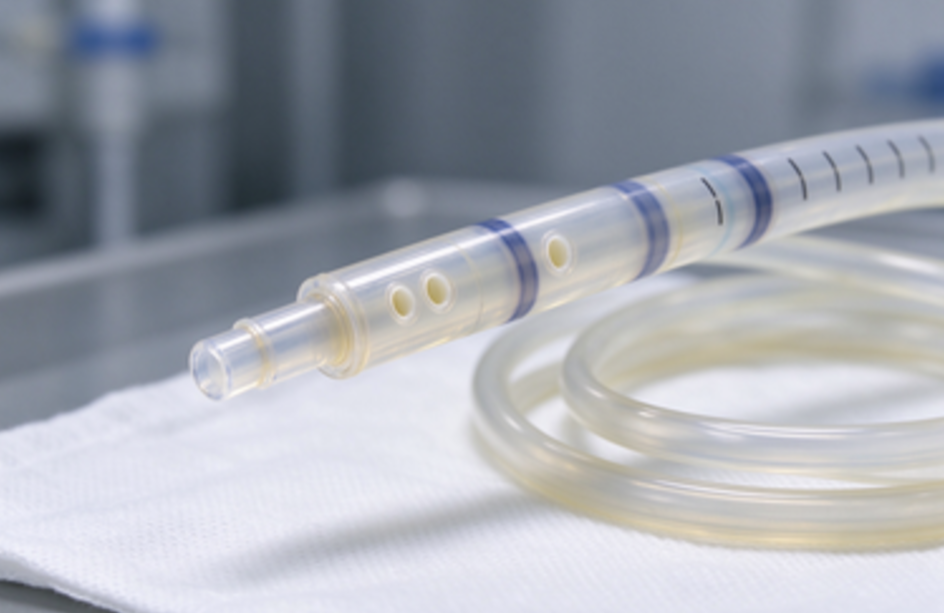
Study on coating process of nasal intestinal obstruction catheter
Study on coating process of nasal intestinal obstruction catheter
Nasal obstructive catheters are core minimally invasive devices for the clinical treatment of intestinal obstruction. With their advantages of non-invasive insertion, precise decompression, and assisted bowel movement, they are widely used for various simple and adhesive intestinal obstructions. The functional drug coating on the catheter surface is crucial to its clinical performance. It not only reduces insertion friction and minimizes damage to the nasal and intestinal mucosa, but also achieves core efficacy benefits such as antibacterial and anti-inflammatory effects, sustained-release drug delivery, and prevention of adhesions. Traditional dip-coating and pneumatic spraying processes suffer from uneven coating thickness, drug waste, coating peeling, and unstable drug efficacy, failing to meet the production standards of high-end medical catheters. Cheersonic ultrasonic spraying machine, relying on precision atomization spraying technology, can adapt to various medical-compliant coating materials, precisely controlling coating thickness and uniformity, providing a standardized and mass-production solution for the coating processing of nasal obstructive catheters.
Regarding the compatibility of drug coating types, the Cheersonic ultrasonic spraying machine is compatible with various functional coating materials required for clinical use of nasal intestinal obstruction catheters, conforming to medical production standards and covering four core coating systems: lubrication, antibacterial, anti-adhesion, and drug sustained release. Firstly, the hydrophilic lubricating coating, primarily composed of hydrogel, polyethylene glycol (PEG), and PVP materials, forms a moisturizing film on the catheter surface after spraying, significantly reducing the friction coefficient during catheter insertion via the nose and intestinal movement, effectively avoiding mucosal abrasion and tissue irritation, and improving patient comfort. Secondly, the medical antibacterial coating primarily uses medical-grade antibacterial polymer composite coatings, which are non-drug resistant, biocompatible, and can inhibit bacterial growth in the intestines after catheter insertion, reducing the risk of cross-infection, postoperative inflammation, and other complications.
Furthermore, there is the anti-adhesion functional coating. Addressing the high incidence of intestinal adhesions after intestinal obstruction surgery, a medical-grade anti-adhesion polymer coating forms a protective barrier in the area where the catheter contacts the intestinal tissue, reducing the probability of adhesion between the intestinal mucosa and the catheter/intestinal tissue, thus aiding in improved treatment and rehabilitation outcomes. Finally, there is the drug-release coating. Based on a drug-polymer composite system, it can carry anti-inflammatory, anti-swelling, and antispasmodic medical drugs. Through ultrasonic precision spraying, the drug is evenly adhered to the catheter’s target area, achieving long-lasting and uniform drug release, precisely targeting the lesion site, avoiding the side effects of systemic medication, and improving local treatment efficacy. Compared to traditional processes, ultrasonic spraying fully preserves drug activity, the coating is free of pinholes and agglomeration, and the material utilization rate exceeds 95%, significantly reducing the production cost of high-end medical coatings.

Precise control of coating thickness is a core indicator in the coating processing of nasal intestinal obstruction catheters, directly determining the catheter’s performance, safety, and lifespan. Cheersonic ultrasonic spraying machines achieve refined and adjustable control of coating thickness, fully complying with the YY/T 1898-2024 medical device industry standard. For coatings with different functions, the equipment can match corresponding thickness parameters: the optimal spraying thickness for hydrophilic lubricating coatings is 5-10μm. This thickness range ensures sufficient lubrication without narrowing the catheter diameter or affecting ventilation and decompression functions due to excessive coating thickness. The coating uniformity error can be controlled within ±1μm. Medical antibacterial coatings and anti-adhesion coatings are suitable for thicknesses of 8-15μm, with uniform and stable thickness, strong adhesion, and resistance to intestinal fluid flushing and instrument micro-movements. They are not prone to peeling or flaking with long-term use, continuously providing protection.
The drug-release coating is precisely controlled within the 10-20μm range. By precisely adjusting the spray flow rate, ultrasonic atomization power, and carrier gas flow rate, continuous thickness adjustment from the nanometer to the micrometer level is achieved, with a batch thickness error of ≤±5%. This allows for precise control of drug loading and release rate, matching the clinical treatment cycle. Simultaneously, the equipment employs a non-clogging ultrasonic nozzle design, supporting low-flow continuous and precise spraying. This enables selective spraying of the inner and outer walls of the catheter and the target area, avoiding resource waste caused by full-area spraying, and balancing the needs of small-batch sample development with industrial mass production.
In summary, the Cheersonic ultrasonic spraying machine, with its multi-category coating adaptability and high-precision thickness control, solves many pain points of traditional catheter coating processing, comprehensively improves the clinical quality and compliance of nasal intestinal obstruction catheters, and is the preferred equipment for medical precision catheter coating processing.