ultrasonic Spraying Iridium/Ruthenium-Iridium Titanium Anodes
ultrasonic Spraying Iridium/Ruthenium-Iridium Titanium Anodes
In core fields such as industrial electrochemistry, water treatment, electroplating, chlor-alkali industry, and water electrolysis for hydrogen production, iridium/ruthenium-iridium titanium anodes, as high-performance, shape-stable anodes, are gradually replacing traditional graphite and lead-based anodes, becoming a core component of modern electrochemical industry due to their excellent electrocatalytic activity, superior corrosion resistance, and ultra-long service life. Iridium/ruthenium-iridium titanium anodes use titanium as a base, achieving high performance through a coating of iridium and ruthenium-iridium mixed precious metal oxides. The quality of this coating directly determines the anode’s catalytic efficiency, corrosion resistance, and service life. Traditional spray coating processes are difficult to adapt to the precision coating requirements of precious metal coatings, easily resulting in uneven coating, peeling, and insufficient catalytic activity. Chifei ultrasonic spray coating machines, with their core advantages of high precision, low damage, and high adaptability, perfectly meet the spray coating needs of iridium/ruthenium-iridium titanium anodes, providing core equipment support for their high-performance preparation and large-scale mass production, helping enterprises overcome process bottlenecks and enhance product competitiveness.
The characteristics of iridium-based/ruthenium-iridium-titanium anodes and the stringent requirements of the electrochemical industry impose extremely stringent standards on the spraying process. Iridium-based coatings emphasize excellent corrosion resistance, while ruthenium-iridium hybrid coatings achieve a synergistic improvement in catalytic activity and stability. The core spraying requirements for both are concentrated in three main aspects: First, uniform and dense coatings require precise control of the precious metal coating thickness, typically between 0.5-5 μm with a deviation of ≤±0.2 μm and a uniformity of over 98%. Defects such as pinholes, bubbles, and slurry agglomeration must be avoided to ensure a tight bond between the coating and the titanium substrate, with a bonding strength ≥50 MPa, guaranteeing long-term stable operation of the anode in strong acid and alkali environments. Second, low-damage coating. Due to the special texture of titanium substrates, the spraying process must be gentle, non-impact, and without high temperatures to avoid damaging the passivation oxide layer on the titanium substrate surface, while preserving the catalytic activity of iridium and ruthenium, ensuring stable oxygen and chlorine evolution potentials at the anode, and reducing energy consumption. Third, precise and controllable coating. Selective coating is possible, adapting to titanium anode substrates of different sizes and shapes (sheets, tubes, mesh), precisely controlling the coating component ratio, and adapting to the needs of different scenarios such as water treatment, electroplating, and chlor-alkali industries, balancing precious metal utilization and anode performance. Traditional iridium/ruthenium-iridium-titanium anode coating processes (thermal decomposition coating, air spraying, and brush coating) have many shortcomings, making them unsuitable for the demands and large-scale production requirements of the high-end electrochemical industry. Thermal decomposition coating is complex and energy-intensive, with difficulty in precisely controlling coating thickness, leading to cracking and peeling, and resulting in low production efficiency. Air spraying relies on high-pressure airflow atomization, resulting in uneven droplet size, pinholes, and bubbles. High-pressure impacts can damage the passivation layer of the titanium substrate, and the utilization rate of precious metals is less than 40%, causing significant waste of valuable materials such as iridium and ruthenium, increasing production costs. Brush coating has poor uniformity and consistency, easily resulting in uneven coating thickness and blurred edges, failing to guarantee consistent anode catalytic activity. It is only suitable for small-batch R&D and is unsuitable for large-scale production.
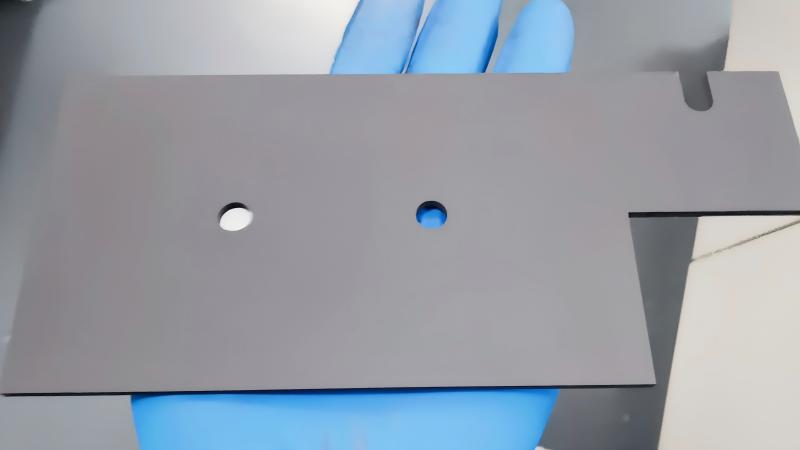
Chifei Ultrasonic Spraying Machine addresses the characteristics and coating pain points of iridium/ruthenium-iridium-titanium anodes. Utilizing high-frequency atomization technology, it has been specifically optimized and combined with key technical points of the electrochemical anode manufacturing industry to create a customized solution, completely breaking through the bottlenecks of traditional processes. The equipment converts industrial frequency electricity into a 40-150kHz high-frequency electrical signal via an ultrasonic generator. This signal is then converted into high-frequency mechanical vibration by a piezoelectric ceramic transducer. Utilizing the ultrasonic cavitation effect, the vibration deagglomerates particles in the precious metal slurry, forming uniform droplets of 0.1-5 micrometers from the iridium and ruthenium-iridium mixed slurry. Under low-pressure carrier gas guidance, the droplets gently deposit on the titanium substrate surface. The entire process is free of high-pressure impact and high-temperature generation, maximizing the preservation of the passivation oxide layer and catalytic activity of the precious metals. Simultaneously, it effectively eliminates defects such as pinholes, bubbles, and build-up, forming a dense, uniform, and highly adhesive high-quality precious metal coating. This perfectly meets the stringent coating requirements of iridium/ruthenium-iridium titanium anodes, helping to improve anode catalytic efficiency and corrosion resistance, and extend service life.
For the coating needs of iridium/ruthenium-iridium titanium anodes, Chifei ultrasonic spraying machines demonstrate four core advantages, helping companies improve mass production efficiency and quality. Firstly, the coating precision is extremely high, allowing for precise control of coating thickness and component distribution with a deviation of ≤±2% and uniformity exceeding 98%. This ensures consistent anodic catalytic activity and stable corrosion resistance, and allows for stable control of chlorine evolution potential at a current density of 5kA/m², achieving energy conservation and consumption reduction. Secondly, the low-damage coating utilizes low-pressure, gentle atomization technology to avoid damaging the titanium substrate and the catalytic activity of the precious metals, ensuring a strong bond between the coating and the substrate, reducing the risk of anode detachment, and meeting the high reliability requirements of the electrochemical industry. Thirdly, the material utilization rate is high, reaching over 95%, significantly reducing the waste of precious metals such as iridium and ruthenium, and significantly lowering production costs, meeting the needs of green and low-carbon production. Fourthly, it has excellent mass production adaptability, supporting automated continuous spraying and seamlessly integrating into large-scale iridium/ruthenium-iridium titanium anode production lines. It is adaptable to titanium anode substrates of different sizes and shapes, solving the problems of low efficiency, high loss, and poor consistency in traditional processes, and helping the anode industry achieve independent and controllable mass production.
Currently, Chifei ultrasonic spraying machines are widely used in spraying scenarios for iridium/ruthenium-iridium-titanium anodes, covering core areas such as water treatment, electroplating, chlor-alkali industry, and water electrolysis for hydrogen production. This helps companies solve the pain points of traditional spraying processes and achieve breakthroughs in anode coating quality improvement and mass production. As a leading company in the field of ultrasonic electronic equipment, Chifei Ultrasonic has been deeply involved in the electrochemical anode spraying field for many years, keeping abreast of industry technology trends and providing customized spraying solutions. These solutions cover the entire process, including equipment selection, process parameter optimization, and precious metal slurry adaptation, helping customers fully leverage the core advantages of iridium/ruthenium-iridium-titanium anodes. In the future, Chifei Ultrasonic will continue to optimize equipment performance to meet the upgrading needs of iridium/ruthenium-iridium-titanium anodes towards higher catalytic efficiency, longer lifespan, and lower costs, injecting strong momentum into the localization and high-quality development of the electrochemical industry.
About Cheersonic
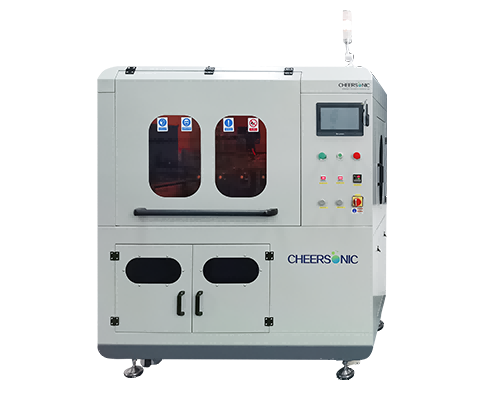
Cheersonic is the leading developer and manufacturer of ultrasonic coating systems for applying precise, thin film coatings to protect, strengthen or smooth surfaces on parts and components for the microelectronics/electronics, alternative energy, medical and industrial markets, including specialized glass applications in construction and automotive.
Our coating solutions are environmentally-friendly, efficient and highly reliable, and enable dramatic reductions in overspray, savings in raw material, water and energy usage and provide improved process repeatability, transfer efficiency, high uniformity and reduced emissions.
Chinese Website: Cheersonic Provides Professional Coating Solutions