
sprayed porous titanium gas diffusion layer PEM electrolyzer
sprayed porous titanium gas diffusion layer PEM electrolyzer
I. Product Overview
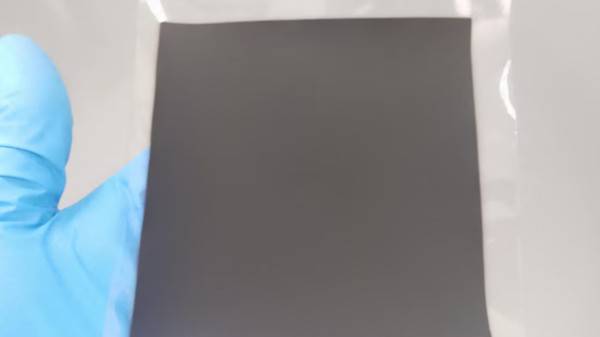
Ultrasonic spraying of porous titanium gas diffusion layers is a core functional component of proton exchange membrane (PEM) electrolyzers. Primarily applied to the anode side, it plays crucial roles in gas diffusion, mass transport, conductive connections, and structural support. In PEM water electrolysis for hydrogen production, the mass transfer efficiency, structural stability, and interfacial adhesion on the anode side directly determine the electrolysis device’s efficiency, operational stability, and lifespan. The porous titanium gas diffusion layer prepared by ultrasonic spraying is perfectly suited for high-precision, high-load electrolysis environments, combining excellent mass transfer performance with a compact structure.
Traditional carbon-based gas diffusion layers are unsuitable for the complex operating conditions of PEM electrolyzer anodes. They readily undergo oxidation reactions in acidic and alkaline electrolytic media, generating carbon dioxide and carbonate ions respectively, leading to rapid material failure and device performance degradation. However, sintered porous titanium materials formed by ultrasonic spraying completely overcome the limitations of carbon-based materials. Leveraging the corrosion resistance of titanium and its unique porous sintered structure, they are suitable for various acid and alkaline electrolytic conditions. Furthermore, their smooth surface structure allows for close adhesion to membrane electrolysis components, effectively optimizing the electrical contact between the anode catalyst layer and the bipolar plates and current collectors. This significantly reduces interfacial contact resistance and minimizes catalyst shedding and loss, laying the foundation for efficient and stable operation of the electrolyzer.
II. Core Performance Advantages
Leveraging mature ultrasonic spraying molding technology and precise sintering preparation techniques, porous titanium gas diffusion layers exhibit multiple performance advantages compared to traditional diffusion materials, comprehensively optimizing the overall performance of PEM electrolyzers:
1. High conductivity and stability, extending the lifespan of catalytic materials: It can maintain stable high conductivity under long-term electrolysis conditions, without the oxidation failure problem of carbon-based materials, effectively protecting the membrane electrode catalytic materials, significantly extending the service life of core components, and reducing equipment operation and maintenance costs.
2. Improve the reliability of electrochemical devices: The material has a dense and uniform structure and is resistant to electrochemical corrosion. It can be adapted to continuous and high-frequency electrolysis operation, avoiding the defects of traditional materials that are prone to aging and failure, and significantly improving the overall operational stability and reliability of PEM electrolyzers.
3. Low contact resistance, suitable for high current density conditions: The flat interface structure greatly optimizes the bonding effect with the membrane electrolysis component, effectively reduces the interface contact resistance, and can support stable operation at high current density. Under the condition of 4A/cm², the working voltage can be controlled within 1.8V, and the electrolysis efficiency is significantly improved.
4. Flexible fit, protecting ultra-thin proton exchange membranes: The material surface is smooth and delicate, without sharp protrusions, which can effectively avoid wear and compression damage to the proton exchange membrane. It is especially suitable for ultra-thin proton exchange membrane applications, ensuring the integrity and operational stability of the membrane module.
5. Uniform air permeability and optimized gas discharge efficiency: The ultrasonic spraying combined with sintering process creates a uniform and controllable pore size distribution, which can quickly discharge the gas generated by the reaction on the anode side, avoiding problems such as mass transfer obstruction and uneven local pressure caused by gas stagnation and accumulation, and continuously ensuring high material transport efficiency.
III. Core Technical Parameters
The ultrasonic spraying process for porous titanium gas diffusion layers is mature and its parameters are controllable. It can be standardized for mass production and supports personalized customization. The core performance parameters are as follows, which can meet the adaptation requirements of PEM electrolytic cells of different specifications:
1. Thickness specifications: The general thickness range is 0.03~0.3mm, including 0.03mm, 0.05mm, 0.08mm, 0.1mm, and 0.15mm.
Standard sizes include 0.25mm and 0.3mm; custom thicknesses are available upon request.
2. Pore size and porosity: Average pore size is controlled between 5μm and 15μm, and porosity is stable between 40% and 50%. The pore structure is uniform and regular, balancing air permeability and structural strength.
3. Dimensional accuracy: Supports customization of any size, and the cutting tolerance can be controlled within ±2%, adapting to the assembly accuracy requirements of various electrolytic cells.
4. Surface roughness: The surface roughness Ra value is 1μm~5μm, the surface is flat and smooth, and the interface bonding effect is guaranteed.
5. Mechanical properties: Tensile strength > 50MPa, compression deformation < 3% under 80MPa pressure, high mechanical strength and strong resistance to deformation, suitable for long-term high-pressure assembly and operation conditions.
IV. Optimization Technology for Conductive Coatings of Precious Metals
To address the issue of titanium materials easily forming a titanium dioxide passivation layer in high-potential electrolytic environments, which affects long-term conductivity stability, ultrasonically sprayed porous titanium gas diffusion layers can be used in conjunction with precious metal coating modification processes. Through precise coating treatment, the corrosion resistance and long-term working stability of the material can be further improved.
Currently, the mainstream approach uses platinum and other precious metal coatings, with coating thickness controllable from 50nm to 200nm and a thickness tolerance precisely controlled within ±10%. The coating is formed through a special process, resulting in a surface free of pinholes, a uniform and dense coating, and strong adhesion to the titanium substrate, making it resistant to peeling and flaking. This modified process can suppress the formation of a passivation layer from the source, continuously ensuring the conductivity of the material and significantly improving the operational stability of PEM electrolyzers under high-intensity, long-cycle conditions, making it suitable for industrial continuous hydrogen production scenarios.
V. Application Summary
Ultrasonic spraying of porous titanium gas diffusion layers, with its core advantages such as corrosion resistance, high conductivity, low resistance, uniform gas permeability, and strong adaptability, perfectly solves the inherent defects of traditional carbon-based diffusion layers, making it the preferred core material for PEM electrolyzer anodes. Combined with precise and controllable preparation processes and precious metal coating modification technology, this material can effectively improve electrolysis efficiency, extend equipment lifespan, and reduce operation and maintenance costs. It is suitable for various scenarios, including laboratory research and development, small and medium-sized equipment, and large-scale industrial hydrogen production, demonstrating extremely high application value and promising prospects in the field of hydrogen energy production.
About Cheersonic
Cheersonic is the leading developer and manufacturer of ultrasonic coating systems for applying precise, thin film coatings to protect, strengthen or smooth surfaces on parts and components for the microelectronics/electronics, alternative energy, medical and industrial markets, including specialized glass applications in construction and automotive.
Our coating solutions are environmentally-friendly, efficient and highly reliable, and enable dramatic reductions in overspray, savings in raw material, water and energy usage and provide improved process repeatability, transfer efficiency, high uniformity and reduced emissions.
If you have any technical questions, customization demands, or procurement inquiries about ultrasonic atomization nozzles, feel free to contact our professional sales and technical team for detailed parameters, customized solutions, and industry application support.
Email: market2@cheersonic.com