
Fabrication of TiO₂ Photoanodes and Electrolyte Layers
Fabrication of TiO₂ Photoanodes and Electrolyte Layers | Spray-coating TiO₂
In the field of research, development, and manufacturing of novel solar cells, the precision and controllability of fabrication processes directly determine cell performance and future prospects for industrialization. Ultrasonic spray coating, an advanced thin-film deposition method, is increasingly becoming a key technology for manufacturing high-performance dye-sensitized solar cells—particularly their core components, the titanium dioxide (TiO₂) photoanode and the electrolyte layer—due to its unique advantages in producing large-area, uniform thin films.
Principles of ultrasonic spray coating and its advantages over traditional methods
The core of ultrasonic spray coating technology lies in using high-frequency acoustic energy to convert a liquid precursor into extremely fine, uniform atomized droplets. The operating principle involves converting a high-frequency electrical signal into mechanical vibration at the same frequency via a piezoelectric transducer; this vibration is transmitted to the nozzle, generating a powerful acoustic field at its tip. As the liquid flows through this region, it is shattered by the acoustic energy into micron-scale droplets, forming a stable, low-velocity “mist-like” jet.
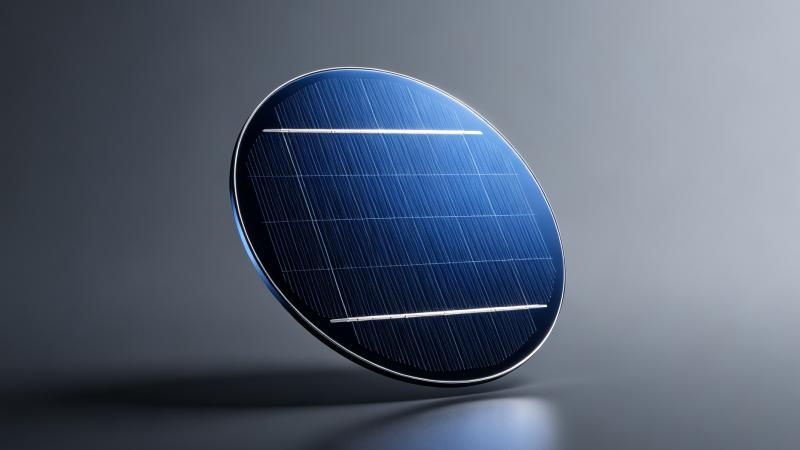
This principle grants ultrasonic spray coating incomparable advantages over traditional methods such as drop-casting, spin-coating, or doctor-blading:
1. Superior film uniformity and consistency: When preparing large-area substrates, traditional spin-coating often results in variations in film thickness and morphology between the edges and the center. In contrast, ultrasonic spray coating utilizes program-controlled nozzle movement to deposit material via line-by-line scanning. This ensures a film with highly consistent thickness, density, and porosity across the entire substrate—a factor crucial for maintaining uniform performance across individual cell units.
2. Extremely high material utilization efficiency: Spin-coating typically causes over 90% of the material to be flung off the substrate during high-speed rotation, resulting in significant waste. Ultrasonic spraying is a directed deposition technique in which the vast majority of atomized droplets are precisely delivered to the substrate surface. Material utilization rates can exceed 85%, a significant advantage for reducing the production costs associated with expensive dyes or electrolytes.
3. Excellent process controllability: By precisely adjusting parameters such as ultrasonic power, liquid flow rate, nozzle movement speed, substrate temperature, and the number of spraying passes, the microstructure of the thin film can be finely “sculpted.” Precise, digitally controlled, and reproducible regulation of film thickness, porosity, and surface roughness is achievable.
4. Good adaptability to complex substrates and porous structures: The droplets generated by ultrasonic spraying travel at low velocities and possess low kinetic energy, effectively preventing the erosion or damage of fragile, pre-formed nanoporous structures (such as sintered TiO₂ layers). Additionally, the technique ensures excellent coverage on substrates with complex shapes or microstructures.
Precision Process for Fabricating TiO₂ Photoanodes via Ultrasonic Spraying
The TiO₂ photoanode serves as the “heart” of a dye-sensitized solar cell; its microstructure directly determines the amount of dye molecule adsorption and the efficiency of electron transport. Fabricating this layer using ultrasonic spraying is a multi-step, precision process.
First, a stable TiO₂ nanoparticle slurry must be prepared. Nanoparticles of a specific crystal phase (typically anatase) are uniformly dispersed in a suitable solvent (such as anhydrous ethanol or isopropanol). Small amounts of a binder (e.g., ethyl cellulose) and a surfactant are added to prevent particle agglomeration and ensure the slurry’s rheological properties are suitable for ultrasonic atomization.
The spraying process takes place in a clean environment. The slurry is loaded into a syringe pump connected to an ultrasonic nozzle. Under programmed control, the nozzle performs a reciprocating scan over the conductive glass substrate (e.g., FTO) at a constant speed and fixed distance. Each pass deposits an extremely thin layer of TiO₂ nanoparticles. Subsequently, the substrate is placed on a mild heating plate to allow for rapid solvent evaporation and the temporary immobilization of the particles. This “spray-dry” cycle is repeated dozens or even hundreds of times until the preset film thickness is achieved. This layer-by-layer construction method allows the operator to precisely control the final film thickness and facilitates the formation of a multi-layered, highly porous nano-network structure. This structure vastly increases the specific surface area, laying the foundation for the subsequent adsorption of a large number of dye molecules.
Once all layers have been sprayed, the entire substrate is placed in a muffle furnace for programmed-temperature sintering. The high-temperature treatment serves three purposes: first, to completely remove organic solvents and additives from the paste; and second, to establish robust ohmic contacts—both between TiO₂ nanoparticles and between the particles and the conductive glass substrate—thereby creating efficient electron transport pathways.
Innovative Application of Ultrasonic Spraying in Electrolyte Layer Deposition
The electrolyte is a critical component for transporting holes (or ions) within the battery; its uniform filling is essential for ensuring efficient and stable operation. Traditional liquid electrolyte injection methods are prone to bubble formation and uneven filling, and they present sealing challenges. In contrast, ultrasonic spraying technology offers an ideal solution for the uniform deposition of solid or quasi-solid electrolytes.
For quasi-solid or polymer gel electrolytes, the precursor solution typically contains polymer monomers, ionic conductors (such as iodide salts), redox couples (such as I⁻/I³⁻), and solvents. Ultrasonic spraying enables the uniform deposition of this solution into the porous network of the dye-adsorbed TiO₂ photoanode and into the space between it and the counter electrode.
During the spraying process, fine droplets penetrate deep into the nanoscale pores of the TiO₂ film via capillary action, achieving deep and uniform filling. Subsequently, methods such as UV or thermal curing are used to polymerize the precursor solution *in situ* into a gel network, firmly locking the ionic conductors within. This results in a quasi-solid electrolyte layer characterized by high ionic conductivity and resistance to leakage. This approach effectively resolves issues related to liquid electrolyte leakage and evaporation, significantly enhancing the long-term stability of the battery.
Process Parameter Optimization and Future Outlook
To fully realize the potential of ultrasonic spraying, a series of key process parameters must be systematically optimized:
* Slurry/Solution Properties: Solids content, viscosity, surface tension, and solvent volatility must be precisely tuned to ensure effective atomization and high-quality film formation.
* Ultrasonic Parameters: Ultrasonic frequency and power determine the size and distribution of atomized droplets, directly influencing the film’s density and roughness.
* Motion Parameters: Nozzle movement speed, scanning path spacing, and spray height collectively determine the lateral uniformity of the film.
* Environmental Parameters: Substrate temperature, chamber temperature, and airflow conditions affect the solvent evaporation rate, thereby influencing droplet spreading, penetration, and drying kinetics on the substrate surface.
Looking ahead, the integration of ultrasonic spraying technology with roll-to-roll manufacturing processes offers immense potential for industrialization. Its characteristics—high efficiency, uniformity, and low material waste—make it ideally suited for the continuous, large-scale production of dye-sensitized solar cells on flexible substrates. With a deeper understanding of the process and the introduction of closed-loop control systems, ultrasonic spraying technology is poised to drive the widespread adoption of dye-sensitized solar cells in emerging fields such as building-integrated photovoltaics and indoor light energy harvesting.
About Cheersonic
Cheersonic is the leading developer and manufacturer of ultrasonic coating systems for applying precise, thin film coatings to protect, strengthen or smooth surfaces on parts and components for the microelectronics/electronics, alternative energy, medical and industrial markets, including specialized glass applications in construction and automotive.
Our coating solutions are environmentally-friendly, efficient and highly reliable, and enable dramatic reductions in overspray, savings in raw material, water and energy usage and provide improved process repeatability, transfer efficiency, high uniformity and reduced emissions.
If you have any technical questions, customization demands, or procurement inquiries about ultrasonic atomization nozzles, feel free to contact our professional sales and technical team for detailed parameters, customized solutions, and industry application support.
Email: market2@cheersonic.com