
Analysis of Sprayed Organic Thin Films
Analysis of Sprayed Organic Thin Films – Cheersonic
1. Definition and Principle
Definition: Sprayed organic thin film is a process in which organic materials, in liquid form, are uniformly deposited onto a substrate surface using spraying equipment to form a thin organic film. These organic materials can be polymers, small organic molecules, or mixtures thereof, and the film thickness is typically in the nanometer to micrometer range.
Principle: The spraying process is primarily based on fluid dynamics and physicochemical processes. Organic materials are dissolved or dispersed in a suitable solvent to form a spray liquid. This liquid is atomized into tiny droplets using a spray gun or other spraying device, utilizing compressed air or other power sources. These droplets collide, spread, and fuse on the substrate surface. As the solvent evaporates, the organic material gradually solidifies to form a thin film. For example, when spraying polymethyl methacrylate film, PMMA is dissolved in an organic solvent such as toluene. When the atomized droplets reach the substrate, the toluene evaporates, and the PMMA molecules aggregate to form a continuous film.
2. Types of Sprayed Materials
Polymer Materials: This is the most common material for sprayed organic thin films. For example, polyvinyl alcohol can be used to prepare thin films with good hydrophilicity and biocompatibility, and can be applied in fields such as drug delivery carriers and biosensors; polystyrene has good optical and processing properties and is often used to prepare optical thin films and insulating layers for electronic devices.
Organic small molecule materials: Some organic small molecules can form thin films through self-assembly. For example, some organic dye molecules can form thin films with specific optical properties on the substrate surface under suitable conditions, and are used in display devices, photochemical sensors, etc.
Composite materials: Combining different organic materials or organic and inorganic materials can produce thin films with multiple properties. For example, spraying carbon nanotubes combined with polymers can improve the electrical and mechanical properties of the thin film, and can be used to prepare flexible electronic devices.
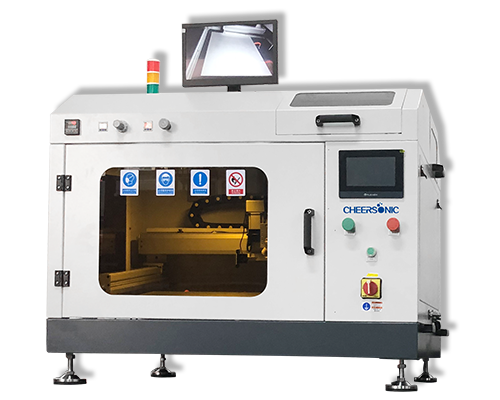
3. Spraying Equipment and Process Parameters
Spraying Equipment:
Spray Gun Types: Common spray guns include air spray guns, high-pressure airless spray guns, and electrostatic spray guns. Air spray guns atomize liquids using compressed air, offering simple operation and suitability for various viscosities of sprayable liquids. High-pressure airless spray guns spray liquids at higher pressures, providing excellent atomization and are suitable for high-viscosity materials. Electrostatic spray guns utilize electrostatic forces to charge droplets, facilitating better adsorption and distribution on grounded substrates, and are commonly used for coatings requiring high precision and uniformity.
Liquid Supply System: This includes the storage tank, piping, and nozzles, ensuring a stable supply and uniform atomization of the sprayable liquid. For high-viscosity or solid-particle-containing sprayable liquids, the supply system design must consider preventing clogging and sedimentation.
Process Parameters:
Spray Pressure and Flow Rate: Spray pressure determines the degree of droplet atomization and spray speed. Insufficient pressure leads to incomplete atomization and excessively large droplets, affecting film uniformity; excessive pressure may cause splashing, wasting material and impacting the surrounding environment. Flow rate controls the amount of material sprayed onto the substrate per unit time and needs to be adjusted based on factors such as substrate area, required film thickness, and spray speed.
Spraying distance and angle: The spraying distance is generally between 10 and 30 cm. If the distance is too close, the droplets will not have enough time to fully atomize before reaching the substrate, easily forming an uneven, thick coating. If the distance is too far, excessive solvent evaporation during droplet flight may prevent proper spreading and the formation of a continuous film. The spraying angle is usually kept perpendicular to the substrate to ensure uniform droplet distribution on the substrate surface.
Substrate temperature and ambient humidity: Substrate temperature affects the solvent evaporation rate and droplet spreading. Appropriately increasing the substrate temperature can accelerate solvent evaporation, which is beneficial for rapid film formation. However, excessively high temperatures may cause the solvent to evaporate instantly, solidifying the droplet surface and preventing proper spreading. Ambient humidity has a significant impact on some moisture-sensitive spraying materials and processes. High humidity environments may cause the film to absorb excessive moisture, affecting its performance.
About Cheersonic
Cheersonic is the leading developer and manufacturer of ultrasonic coating systems for applying precise, thin film coatings to protect, strengthen or smooth surfaces on parts and components for the microelectronics/electronics, alternative energy, medical and industrial markets, including specialized glass applications in construction and automotive.
Our coating solutions are environmentally-friendly, efficient and highly reliable, and enable dramatic reductions in overspray, savings in raw material, water and energy usage and provide improved process repeatability, transfer efficiency, high uniformity and reduced emissions.
Chinese Website: Cheersonic Provides Professional Coating Solutions