
Ultrasonic Coating Machine for Bronchial Occlusion Balloons
Types of Drug Coatings for Bronchial Occlusion Balloons and the Advantages of Cheersonic Ultrasonic Coating Machines
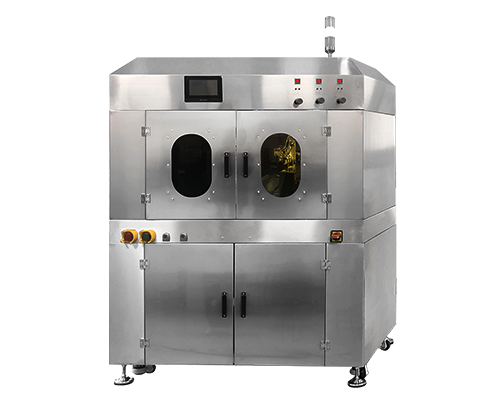
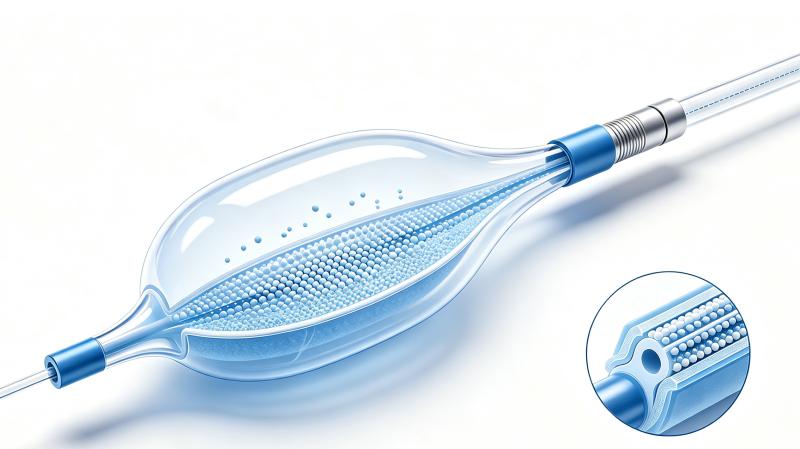
Bronchoalve occlusion balloons are core minimally invasive devices in thoracic surgery and interventional pulmonology, used to isolate the affected lung and prevent reflux of sputum and blood. The functional drug coating directly determines the intraoperative anti-infection, anti-inflammatory, and postoperative airway mucosal repair effects. There are numerous drug coating formulations available for occlusion balloons on the market. Traditional dip coating and high-pressure pneumatic spraying processes struggle to balance coating uniformity, drug activity, and protection of the balloon’s flexible substrate. Cheersonic Ultrasonic Medical Coating Equipment offers a customized precision coating solution for bronchial occlusion balloons, compatible with all types of drug coating systems. It solves industry pain points such as uneven coating thickness, high drug loss, balloon deformation, and easy coating peeling in traditional processes, providing a stable and compliant coating preparation solution for the large-scale production of interventional occlusion devices.
I. Mainstream Drug Coating Types for Bronchial Occlusion Balloons
Based on clinical needs and medical biomaterial standards, occlusion balloon drug coatings are divided into four main categories, suitable for different surgical scenarios:
Anti-inflammatory and Anti-proliferative Drug Coatings:The core drugs are primarily rapamycin and paclitaxel, combined with biodegradable polymeric carriers such as PLGA and polycaprolactone. These are mainly used for interventional occlusion of lung tumors and airway stenosis, inhibiting excessive proliferation of airway smooth muscle and reducing the risk of postoperative airway scarring and stenosis. The coating requires uniform dispersion of drug microcrystals with minimal error in drug loading per unit area to avoid local drug concentration irritation of the airway mucosa.
Antibacterial and Anti-infective Drug Coatings: Primarily composed of heparin, vancomycin, chitosan, and polylysine composite coatings, these coatings block airway bacteria and sputum contamination during surgery, reducing the probability of post-occlusion lung infection. The coating balances antibacterial activity with hydrophilic lubrication properties, requiring an ultra-thin, continuous, and pinhole-free design to prevent bacterial concealment.
Hydrophilic Lubricating Composite Coating: Based on PVP and polyvinyl alcohol, a small amount of anti-inflammatory drug is mixed to form a composite coating. This reduces frictional damage during balloon delivery via the airway, minimizing intraoperative coughing and mucosal abrasion, while providing both lubrication and short-term local drug delivery.
Biodegradable Sustained-Release Composite Coating: Utilizing phospholipids, collagen, and gelatin as biocarriers to carry small-molecule anti-inflammatory drugs, the coating slowly degrades within the airway, achieving long-term local drug delivery without the risk of polymer residue. It is suitable for long-term indwelling occlusion balloons in minimally invasive surgery.
Various coating solutions vary greatly in viscosity, drug particle size, and thermal stability. Traditional spraying equipment is prone to problems such as nozzle clogging, coating buildup, and drug inactivation. However, the Cheersonic ultrasonic spraying system is compatible with all types of formulations, including low-viscosity drug solutions, high-viscosity polymer suspensions, and drug-containing microcrystalline slurries.
II. Core Advantages of Cheersonic Ultrasonic Spray Coating Machine for Applying Various Drug Coatings
Uniform and Controllable Coating, Adaptable to the Folded and Curved Surfaces of Occlusion Balloons
The equipment utilizes high-frequency ultrasonic atomization to atomize the drug solution into uniformly sized microdroplets. Combined with a 360° rotating balloon fixture, coating thickness deviation is controlled within ±5%. Coating coverage in the folded and gripped area of the balloon is 30% higher than with pneumatic spraying, eliminating creases, edge buildup, and pinhole defects. Various anti-inflammatory and antibacterial composite coatings can achieve uniform drug application throughout the entire area, ensuring a stable and consistent drug release rate during surgery.
Low-Temperature Cold Atomization, Complete Preservation of the Bioactivity of Various Drugs
Unlike high-temperature baking spraying processes, there is no high-temperature or high-pressure airflow impact throughout the process. The atomization process causes no thermal damage, preventing the degradation and inactivation of sensitive drugs such as paclitaxel, peptides, and proteins. The performance of antibacterial coatings and biodegradable biological carriers remains intact, perfectly adapting to the production needs of all heat-sensitive drug coatings.
Drug utilization rate exceeds 90%, significantly reducing the cost of expensive raw materials.
The directional deposition atomization mode has virtually no splashing or overspray. Compared to the 30% material utilization rate of dip coating and the 40% of pneumatic spraying, ultrasonic spraying can save a significant amount of expensive raw materials such as rapamycin and paclitaxel. Mass production of tens of thousands of occlusion balloons can save hundreds of thousands in raw material costs, while also reducing drug mist pollution in cleanrooms, meeting the GMP cleanroom production standards for medical devices.
The process is gentle and non-destructive, protecting the PEBAX and nylon flexible balloon substrates.
The impact force of ultrasonic droplets is only 1/10 of that of a pneumatic spray gun. There is no high-pressure airflow compressing the balloon, preventing deformation, swelling, or cracking of thin-walled occlusion balloons. The balloon’s elasticity and burst mechanical properties are fully preserved. Processing ultra-thin occlusion balloons will not damage the substrate, making it suitable for mass production of all sizes of bronchial occlusion balloons.
Digitally adjustable, one-click switching for mass production of multiple coating formulations
The PLC intelligent control system precisely regulates the liquid supply, atomization frequency, and spraying displacement speed. Coating thickness is freely adjustable from nanometer to micrometer levels. It can quickly switch between anti-inflammatory, antibacterial, and lubricating composite coating production programs, ensuring high consistency in drug loading between batches and meeting the stringent repeatability requirements of medical device registration testing.
The diversification of drug coating systems for bronchial occlusion balloons continuously increases the demands for coating process precision, biosafety, and mass production stability. Cheersonic ultrasonic medical spraying equipment is compatible with all mainstream occlusion balloon drug coating formulations on the market. It addresses the shortcomings of traditional processes from multiple dimensions, including coating uniformity, drug activity protection, production cost, substrate protection, and clean production. It is the standardized and preferred equipment for the preparation of coatings for respiratory interventional occlusion devices, helping medical companies create high-performance, highly compliant bronchial occlusion balloon products.
About Cheersonic
Cheersonic is the leading developer and manufacturer of ultrasonic coating systems for applying precise, thin film coatings to protect, strengthen or smooth surfaces on parts and components for the microelectronics/electronics, alternative energy, medical and industrial markets, including specialized glass applications in construction and automotive.
Our coating solutions are environmentally-friendly, efficient and highly reliable, and enable dramatic reductions in overspray, savings in raw material, water and energy usage and provide improved process repeatability, transfer efficiency, high uniformity and reduced emissions.
If you have any technical questions, customization demands, or procurement inquiries about ultrasonic atomization nozzles, feel free to contact our professional sales and technical team for detailed parameters, customized solutions, and industry application support.
Email: market2@cheersonic.com
