
Balloon Catheter Coating System for R&D and Process Develop
Ultrasonic Balloon Catheter Coating System for R&D and Process Development: From Formulation Screening to Prototype Production
1. Why Does Drug-Coated Balloon Development Require Dedicated Coating Equipment?
For companies developing drug-coated balloons, early-stage research involves more than drug selection.
It also includes coating formulation, balloon material compatibility, deposition processes, and quality testing methods.
Even when the same drug formulation and balloon material are used, different spraying and drying conditions may produce coatings with different structures and properties.
Therefore, research equipment should support controlled parameter adjustment and comparison of experimental results.
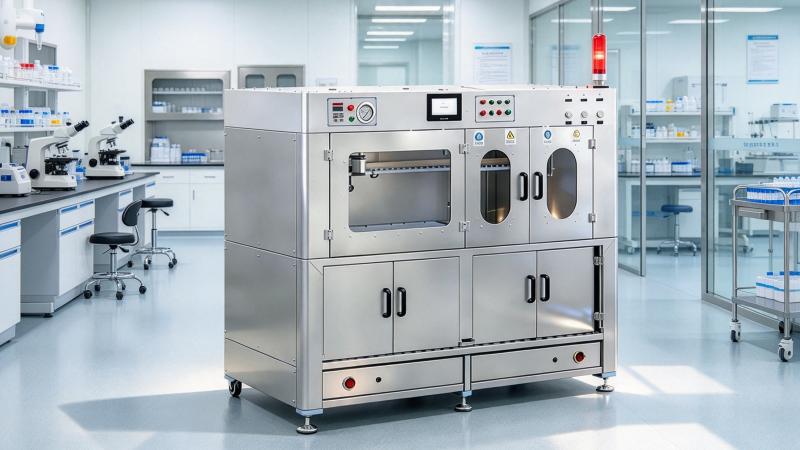
An Ultrasonic Balloon Catheter Coating System can serve as a precision coating platform during drug-coated balloon development.
Its purpose is not simply to increase coating speed, but to help engineers understand the relationship between coating processes and product quality.
2. What Tasks Must Be Completed During R&D?
2.1 Drug Coating Formulation Screening
Researchers may need to compare different drug concentrations, excipient compositions, and solvent systems.
Different formulations may exhibit different atomization, wetting, film formation, and drying behavior.
Ultrasonic spray coating trials can help determine whether these formulations can form acceptable coatings on balloon surfaces.
2.2 Coating Process Development
Once a candidate formulation has been identified, spray coating parameters must be investigated.
Typical parameters include:
- Liquid delivery rate.
- Nozzle-to-balloon distance.
- Balloon rotation speed.
- Axial nozzle scanning speed.
- Number of spray passes.
- Drying conditions after each coating pass.
Through planned experiments, researchers can identify which parameters have the greatest influence on coating quality.
2.3 Coating Process Optimization
Process optimization generally aims to improve repeatability while meeting product design requirements.
For example, engineers may investigate ways to reduce drug loading variation across the balloon or minimize undesirable coating accumulation.
However, optimization objectives must remain consistent with the actual functional requirements of the product.
A more visually uniform coating does not necessarily provide better drug transfer.
2.4 Prototype Production
Once the process reaches an acceptable level of stability, researchers may need to prepare a batch of comparable samples for material analysis, bench testing, or other development evaluations.
Prototype production emphasizes sample consistency and process documentation rather than industrial manufacturing speed.
3. How to Establish a Drug-Coated Balloon Development Workflow
A five-stage development process is recommended.
Stage 1: Define Product Design Objectives
First, identify the target balloon specifications, drug system, and intended coating characteristics.
Important information may include:
- Balloon length and diameter.
- Balloon surface material.
- Target drug loading.
- Intended coating region.
- Drug and excipient composition.
- Subsequent simulated-use and functional testing requirements.
These factors influence fixture design, coating coverage, and testing plans.
Stage 2: Confirm Formulation Sprayability
Before conducting full balloon coating trials, investigate whether the formulation is compatible with the selected ultrasonic nozzle.
Key observations include:
- Stable liquid delivery.
- Acceptable spray formation.
- Nozzle blockage or liquid accumulation.
- Compatibility with equipment materials.
- Acceptable stability of the drug and formulation components.
If the formulation cannot be atomized consistently, formulation or equipment compatibility issues should be addressed before further process development.
Stage 3: Conduct Balloon Coating Trials
Mount representative balloon samples using an appropriate rotation mechanism.
Investigate different coating conditions through relative movement between the nozzle and balloon.
Initial trials can use a limited number of parameter combinations to observe coating coverage and drying behavior before expanding the experimental range.
Stage 4: Analyze Coating Quality
Depending on development objectives, evaluate drug loading, coating distribution, surface morphology, and mechanical stability.
For paclitaxel-based coatings, drug solid-state properties and particle shedding may also require attention.
Stage 5: Confirm Process Repeatability
After identifying a candidate process, perform repeated experiments using multiple independent samples.
Compare drug loading, coating distribution, and other critical quality attributes across samples.
Prototype production should proceed only after repeatability has been demonstrated to meet project requirements.
4. How Can Design of Experiments Improve Coating Process Development?
During R&D, changing liquid delivery rate, rotation speed, scanning speed, and drying conditions simultaneously can make it difficult to determine which factor is responsible for a change in coating quality.
Design of Experiments (DoE) provides a structured approach for investigating process variables.
4.1 Select Critical Process Parameters
For example:
- Liquid delivery rate.
- Balloon rotation speed.
- Axial scanning speed.
- Number of spray passes.
- Drying conditions.
4.2 Define Response Variables
For example:
- Average drug loading.
- Drug loading variability.
- Coating coverage.
- Surface defects.
- Particle shedding.
- Drug retention or transfer under simulated-use conditions.
4.3 Establish Relationships Between Parameters and Quality
Experimental data can be analyzed to identify influential parameters and interactions.
For example, increasing liquid delivery may increase the theoretical amount of deposited material but may also alter the wet coating state.
Increasing the number of spray passes may increase loading while potentially rewetting previously deposited material.
Therefore, changes in individual parameters do not always produce linear responses.
4.4 Select a Candidate Process Window
Use experimental results to identify parameter ranges that meet project requirements.
The selected process window should be confirmed through independent repeat experiments rather than a single group of successful samples.
5. Special Considerations in Balloon Catheter Coating R&D
5.1 Balloon Geometry
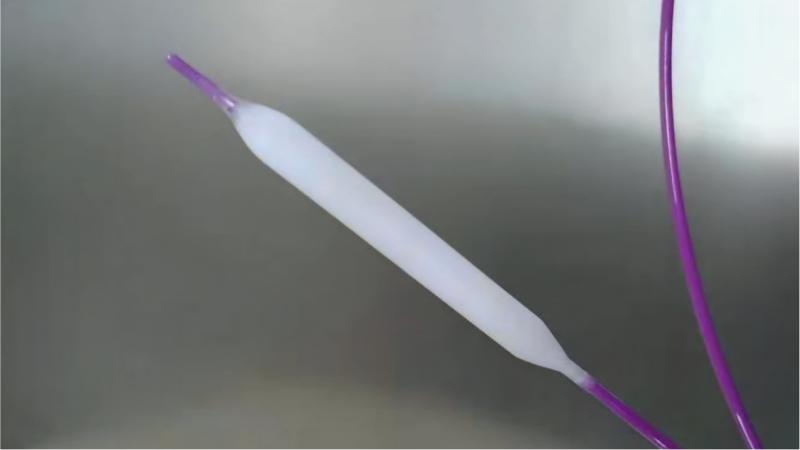
Balloons have curved surfaces, shoulders, and end regions.
Coating coverage and drying behavior may differ across these areas.
5.2 Balloon Material Compatibility
Some solvents may affect balloon polymer materials.
Therefore, coating formulation and balloon substrate compatibility must be evaluated together.
5.3 Balloon Folding State
Depending on the manufacturing stage, balloons may be inflated, folded, or maintained in another defined configuration.
These states influence accessible surface area, coating distribution, and subsequent mechanical behavior.
The coating state must be selected according to the product design.
5.4 Drying Process
Drug and excipient solid-state properties may be influenced by drying.
Drying conditions should be optimized with consideration of drug stability and balloon material compatibility.
5.5 Simulated-Use Conditions
Development samples should be tested under conditions relevant to their intended use.
For example, researchers may evaluate the effects of balloon delivery, inflation, and withdrawal on coating quality.
6. What Functions Should an R&D Ultrasonic Spray Coating System Include?
Precision Liquid Delivery and Parameter Control
Supports investigation of different coating solution delivery conditions.
Programmable Balloon Rotation
Provides control over circumferential coating coverage.
Programmable Axial Movement
Supports investigation of coating distribution along the balloon length.
Adjustable Nozzle Position
Accommodates different balloon sizes and spray distances.
Interchangeable Fixtures
Supports different balloon catheter specifications.
Process Data Recording
Preserves experimental parameters for comparison and traceability.
Safety Protection
Appropriate protective measures and exhaust ventilation should be provided according to the hazards associated with the drug and solvent system.
For R&D applications, equipment flexibility and repeatability are often more important than maximum production speed.
7. From R&D to Prototype Production
A drug-coated balloon project may progress through the following stages:
Formulation Screening → Spray Feasibility → Process Parameter Development → Coating Quality Evaluation → Process Optimization → Repeatability Confirmation → Prototype Preparation
Each stage should have clearly defined evaluation criteria.
As a project progresses from laboratory samples to prototype production, additional considerations include batch records, equipment condition, cleaning controls, and consistency of testing methods.
If the equipment will eventually be used for regulated production, appropriate quality management, equipment qualification, and process validation systems will also be required.
8. Cheersonic Ultrasonic Balloon Catheter Coating System for R&D
For companies developing drug-coated balloons, Cheersonic can discuss ultrasonic spray coating R&D equipment configurations based on balloon specifications, drug formulations, and experimental requirements.
Potential research applications include:
- Paclitaxel-based balloon coating formulation screening.
- Process studies involving different drug loadings.
- Optimization of balloon coating uniformity.
- Development of multiple thin-layer spray processes.
- Investigation of drying effects on coating quality.
- Small-batch prototype preparation.
Learn more about Cheersonic coating equipment solutions:
https://cheersonic-liquid.com/en/ultrasonic-coating-equipment-solutions/
Conclusion
The primary value of an Ultrasonic Balloon Catheter Coating System during R&D is its ability to provide controllable, adjustable, and repeatable drug coating deposition conditions.
Through appropriate experimental design and coating quality analysis, researchers can progressively establish relationships between formulation, spraying parameters, and product performance.
For customers focused on R&D, process development, optimization, and prototype production, ultrasonic spray coating is a technical approach worth evaluating through representative sample trials.
