
How Ultrasonic Spray Coating Enables Controlled Drug Deposition on Cardiovascular Devices
How Ultrasonic Spray Coating Enables Controlled Drug Deposition on Cardiovascular Devices: Paclitaxel Balloons and Limus-Based Coronary Stents
1. Why Do Cardiovascular Medical Devices Require Controlled Drug Coatings?
In the development of drug-coated cardiovascular medical devices, the coating process must do more than deposit a drug onto a surface.
The resulting coating must meet specific requirements for drug loading, distribution, stability, and drug release or transfer.
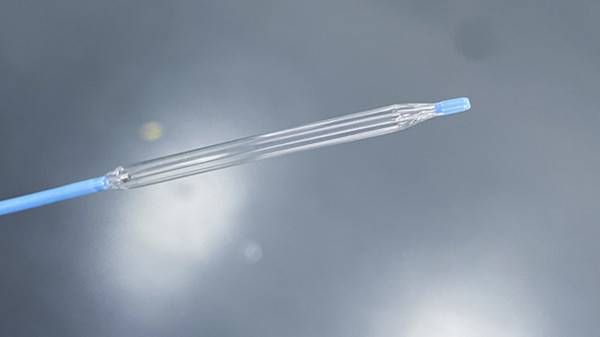
Typical products include drug-coated balloons (DCBs) and drug-eluting stents (DESs).
Although both devices incorporate drug coatings, they differ significantly in structure, drug delivery mechanism, and manufacturing requirements.
Drug-coated balloons are generally designed to transfer drug during a relatively short period of contact with the target tissue.
Drug-eluting stents are typically designed to provide a defined drug release profile after implantation.
Therefore, the same coating formulation, manufacturing process, and quality evaluation approach cannot automatically be applied to both devices.
2. What Is Controlled Drug Coating Deposition?
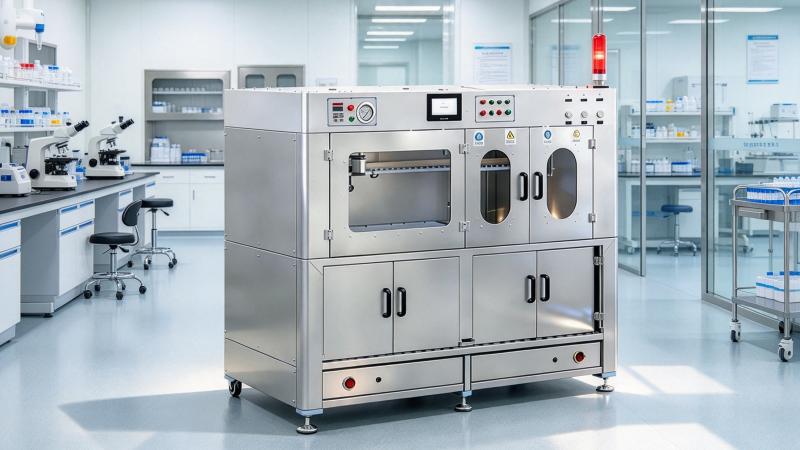
Controlled deposition refers to managing coating solution delivery, atomization, deposition location, and drying through equipment and process parameters.
The objective is to improve manufacturing repeatability and help the resulting coating meet predefined design requirements.
In ultrasonic spray coating, key variables may include:
- Coating solution composition and concentration.
- Liquid delivery rate.
- Ultrasonic atomization conditions.
- Nozzle-to-device distance.
- Device rotation speed.
- Axial nozzle scanning speed.
- Number of spray passes.
- Coating environment and drying conditions.
These parameters collectively influence how the coating liquid is distributed on the device surface.
However, stable equipment settings do not automatically demonstrate accurate drug dosing.
Actual drug loading must be confirmed using appropriate analytical methods.
3. Paclitaxel-Based Balloon Catheter Coating Technology
3.1 Why Is Paclitaxel Used in Drug-Coated Balloon Development?
Paclitaxel is an antiproliferative drug that has been incorporated into certain drug-coated balloon products.
In these devices, developers aim to maintain appropriate coating stability on the balloon surface and achieve the intended drug transfer under defined contact conditions.
The safety and clinical effectiveness of a particular product must be evaluated according to its design, indication, and supporting evidence.
They cannot be inferred from the presence of paclitaxel alone.
3.2 Why Is Paclitaxel Coating More Than Simply Spraying a Drug?
A paclitaxel-based balloon coating may contain the drug together with excipients or other functional components.
These ingredients may influence coating adhesion, dried-film microstructure, and drug transfer behavior.
During development, researchers need to consider:
- Drug-solvent compatibility.
- Interactions between paclitaxel and excipients.
- Drug solid-state properties after drying.
- Coating coverage on the balloon surface.
- Drug loss during device delivery.
- Coating changes during balloon inflation.
- Particle shedding and drug transfer.
3.3 Potential Role of Ultrasonic Spray Coating
For formulations demonstrated to be suitable for atomization, ultrasonic spray coating can be used to investigate drug deposition on balloon surfaces through controlled liquid delivery and rotational scanning.
Multiple thin-layer spray passes may also be evaluated as alternative deposition strategies.
However, ultrasonic spray coating should not be assumed to improve drug transfer efficiency or reduce particle shedding without supporting experimental evidence.
4. Limus-Based Coronary Drug-Eluting Stent Coating Technology
4.1 What Are Limus-Based Drugs?
Limus-based drugs include a group of pharmacologically related compounds, such as sirolimus and everolimus.
These drugs are used in certain drug-eluting stent coating systems.
However, individual limus-based drugs differ in their physicochemical properties, formulation compatibility, and release requirements.
4.2 How Does Stent Coating Differ from Balloon Coating?
Coronary stents typically have complex mesh-like structures composed of multiple struts.
The coating must cover the intended stent surfaces while controlling deposition differences at strut edges, connectors, and other geometric features.
For polymer-containing drug-eluting stents, developers must also investigate drug distribution within the polymer and the resulting release behavior.
4.3 Typical Stent Coating Challenges
Coating coverage: Different locations on the stent struts may receive different amounts of coating.
Local accumulation: Droplets may produce uneven deposits at edges or connecting regions.
Coating bridging: Unwanted coating may form across the open spaces between adjacent struts.
Mechanical durability: Crimping, delivery, and expansion can expose the coating to mechanical stress.
Drug release: Drug-polymer composition, coating thickness, and microstructure may influence the release profile.
4.4 Application of Ultrasonic Spray Coating
By combining stent rotation, nozzle movement, and precision liquid delivery, researchers can investigate how coating parameters affect drug distribution.
For complex geometries, spray direction, coverage strategy, and device fixtures may require adjustment.
Whether ultrasonic spray coating can achieve the required coverage on a particular stent must be confirmed through coating trials and appropriate inspection methods.
5. How Does the Drug Coating Formulation Affect Ultrasonic Spray Coating?
The feasibility of ultrasonic spray coating depends not only on the equipment but also on the coating formulation.
Solvent System
Different solvents have different volatility, surface tension, and material compatibility characteristics.
Their compatibility with the nozzle, wetted components, balloon polymer, and stent substrate must be evaluated.
Drug Concentration
Drug concentration influences the amount of drug contained in each unit volume of coating solution.
However, actual drug loading also depends on deposition efficiency and drying behavior.
Polymers and Excipients
Some stent coatings contain polymer carriers, while balloon coatings may use different excipient systems.
These components can influence viscosity, wetting, film formation, and final drug release or transfer characteristics.
Drug Stability
Researchers must determine whether the drug undergoes unacceptable degradation or other changes during formulation preparation, spraying, or drying.
6. How Should Drug Coating Quality Be Evaluated?
6.1 Drug Loading
Measure the actual amount of drug on the device using an appropriate analytical method.
6.2 Coating Uniformity
Evaluate drug coating distribution across different locations on the device.
6.3 Coating Morphology
Investigate surface roughness, local accumulation, cracks, and other defects.
6.4 Coating Adhesion and Mechanical Stability
Depending on the device, evaluate the effects of delivery, folding, crimping, or expansion.
6.5 Drug Release or Transfer
Drug-eluting stents and drug-coated balloons require evaluation methods appropriate to their intended drug delivery mechanisms.
6.6 Particle Shedding
For balloon coatings in particular, particle release under simulated-use conditions and associated risks should be investigated.
7. Value of Ultrasonic Spray Coating in Process Development
For customers developing both paclitaxel-coated balloons and limus-based drug-eluting stents, an ultrasonic spray coating platform can support research into different drug coating systems.
However, this does not mean that the same validated process can be used directly for both devices.
A reasonable development strategy is to establish separate:
- Balloon coating process windows.
- Stent coating process windows.
- Drug loading analytical methods.
- Coating mechanical performance tests.
- Drug transfer or release evaluation procedures.
The equipment provides controlled deposition capabilities, while final device performance depends on the complete drug, material, and device design.
Conclusion
Ultrasonic spray coating equipment can serve as a precision deposition tool for drug-coated cardiovascular medical device development.
For paclitaxel-coated balloons, major research areas include drug loading, coating uniformity, delivery stability, and drug transfer.
For limus-based coronary drug-eluting stents, key considerations include coating coverage on complex structures, mechanical durability, and drug release.
Cheersonic can discuss ultrasonic spray coating processes and equipment configurations according to the customer’s device geometry, drug formulation, and development objectives.
Learn more about Cheersonic coating equipment solutions:
https://cheersonic-liquid.com/en/ultrasonic-coating-equipment-solutions/
