Comparison of 2D Material Coating Methods on Copper Foil: Doctor Blade, Slot-Die, Spin Coating, and Ultrasonic Spray Coating
1. How Is 2D Material Coating on Copper Foil Different from Conventional Anode Coating?
In conventional lithium-ion battery manufacturing, anode slurries typically contain active materials, conductive additives, binders, and solvents.
The slurry is deposited onto copper foil using an appropriate coating process, followed by drying, calendering, and other manufacturing steps.
However, 2D material surface modification projects may have different objectives.
Customers may want to deposit small amounts of graphene, graphene oxide, or MXene onto copper foil to form a thin functional layer rather than a complete anode active material coating.
This means that coating technologies designed for relatively thick electrode slurries may not always be the most suitable options for low-solid-content 2D material dispersions.
2. Doctor Blade Coating
Doctor blade coating is commonly used in battery materials laboratories.
The process controls the gap between a blade and the substrate to form a wet coating film on copper foil.
2.1 Advantages
The equipment is relatively straightforward and suitable for laboratory research and screening certain slurry formulations.
For coating liquids with appropriate viscosity and solid content, a controlled wet film can be produced.
2.2 Potential Challenges
When a 2D material dispersion has low solid content and a viscosity close to that of water, the wet film may flow and redistribute.
For extremely thin functional layers, the blade gap does not directly determine the final dry coating thickness.
Nanosheets may also aggregate or change their orientation during drying.
Therefore, the suitability of doctor blade coating depends on the rheological properties of the dispersion and the target coating mass per unit area.

3. Slot-Die Coating
Slot-die coating is commonly used for continuous precision coating.
The process uses metered liquid delivery and a coating head to form a continuous liquid film on a moving substrate.
3.1 Advantages
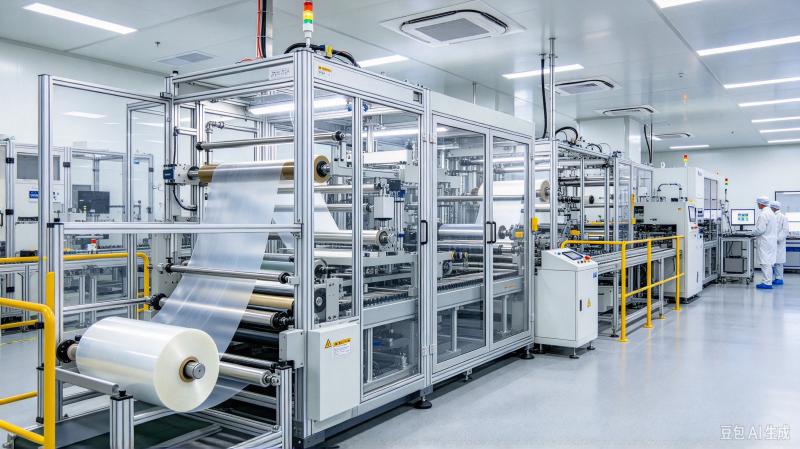
Slot-die coating is suitable for roll-to-roll manufacturing and can be integrated with continuous copper foil transport and drying systems.
With an optimized coating liquid, stable continuous coating can be achieved.
3.2 Potential Challenges
Low-solid-content 2D material dispersions may place demanding requirements on coating bead stability, flow control, and wetting conditions.
If the customer requires an extremely low coating mass per unit area, specialized optimization of the coating head, liquid delivery, and drying conditions may be necessary.
Nanosheet aggregation may also affect the stability of liquid delivery channels.
Slot-die coating therefore has industrial manufacturing potential, but not every 2D material aqueous dispersion can be used without process development.
4. Spin Coating
Spin coating typically involves dispensing a coating liquid onto a substrate and rotating the substrate at high speed to spread the liquid and remove excess material.
4.1 Advantages
Spin coating is suitable for small, relatively flat laboratory samples.
It can be used for rapid screening of certain thin-film formulations.
4.2 Limitations
A portion of the coating material may be expelled during rotation, affecting material utilization.
The coating result depends on solution viscosity, evaporation behavior, and substrate dimensions.
For wide, continuously moving copper foil, conventional spin coating is generally less convenient than roll-to-roll coating methods.
5. Conventional Pneumatic Spray Coating
Pneumatic spray coating can atomize 2D material dispersions and deposit them onto copper foil surfaces.
5.1 Advantages
The process is flexible and can accommodate a range of substrate dimensions and shapes.
5.2 Potential Challenges
Droplet characteristics, spray distribution, airflow impact, and overspray losses can affect coating quality.
If liquid accumulates locally on the copper foil, drying may produce stains, edge accumulation, or nanosheet aggregation.
For very thin functional coatings, liquid delivery stability and process repeatability require particular attention.
6. Ultrasonic Spray Coating
Ultrasonic spray coating uses high-frequency vibration at the nozzle to atomize a liquid, while a controlled gas flow directs the spray toward the substrate.
Unlike processes that rely primarily on high-pressure gas for atomization, ultrasonic spray coating allows atomization and spray transport to be optimized as related but distinct process functions.
6.1 Potential Advantages
Precision liquid delivery: Metering systems can be used to investigate low-flow-rate deposition.
Multiple thin-layer passes: Repeated scanning can gradually build up the target coating mass per unit area.
Localized coating capability: Programmable motion and spray paths can define the target coating region.
Automation integration: The process can be combined with sheet-based platforms or continuous copper foil transport systems.
6.2 Challenges That Must Be Addressed
2D material nanosheets may aggregate and affect atomization stability.
Nanosheet lateral dimensions, concentration, and rheological behavior may influence nozzle compatibility.
For wider copper foil substrates, spray pattern overlap, scan path uniformity, and drying consistency require optimization.
In addition, the amount of liquid delivered by the spray system is not equal to the amount deposited on the substrate. Material utilization efficiency must be measured.
7. Comparison of Different Coating Methods
| Coating Method | Suitable Research Applications | Main Advantages | Key Factors to Validate |
|---|---|---|---|
| Doctor Blade | Laboratory slurries with suitable viscosity | Simple process | Thin-film uniformity at low solid content |
| Slot-Die | Continuous coatings and roll-to-roll production | Continuous operation | Coating window and coating bead stability |
| Spin Coating | Small-area thin films | Convenient laboratory testing | Material utilization and substrate size limitations |
| Pneumatic Spray | Flexible surface coating | Broad application flexibility | Overspray, droplet behavior, and drying defects |
| Ultrasonic Spray | Precision functional thin films | Metered delivery and multiple thin-layer passes | Nanosheet atomization, deposition efficiency, and in-plane uniformity |
8. When Is Ultrasonic Spray Coating Worth Considering?
Ultrasonic spray coating trials may be particularly relevant when customers:
- Use relatively low-solid-content 2D material aqueous dispersions.
- Want to form thin functional layers on copper foil.
- Need to investigate different 2D material coating loadings.
- Want to reduce localized liquid accumulation.
- Need to compare the effects of different numbers of spray passes.
- Plan to evaluate continuous copper foil processing in the future.
However, if a customer already has a stable slot-die coating process and primarily requires high-throughput deposition of relatively thick slurry layers, ultrasonic spray coating may not offer a clear advantage.
9. How Should Different Coating Processes Be Evaluated?
Customers can compare different coating technologies using the same batch of 2D material dispersion and copper foil.
Recommended evaluation criteria include:
- Dry coating mass per unit area.
- Surface coverage.
- Thickness and uniformity.
- Nanosheet aggregation.
- Coating adhesion.
- Copper foil surface condition.
- Material utilization efficiency.
- Electrical properties after drying.
If the coating is intended for battery applications, appropriate electrochemical testing is also required.
Conclusion
The selection of a 2D material coating process for copper foil depends on dispersion characteristics, target film thickness, manufacturing configuration, and the intended battery application.
Doctor blade, slot-die, spin coating, and ultrasonic spray coating each have their own operating conditions and limitations.
For low-solid-content 2D material aqueous dispersions and precision functional thin films, ultrasonic spray coating is a candidate process worth evaluating experimentally.
Cheersonic can discuss ultrasonic spray coating trials and equipment configurations according to the customer’s copper foil dimensions, 2D material type, and coating objectives.
For more information about coating equipment solutions, visit: