Absorbable Surgical Sutures: Materials and Coatings
What Are Absorbable Surgical Sutures? Materials, Degradation Mechanisms, Surface Coatings, and Ultrasonic Spray Coating Applications
1. What Are Absorbable Surgical Sutures?
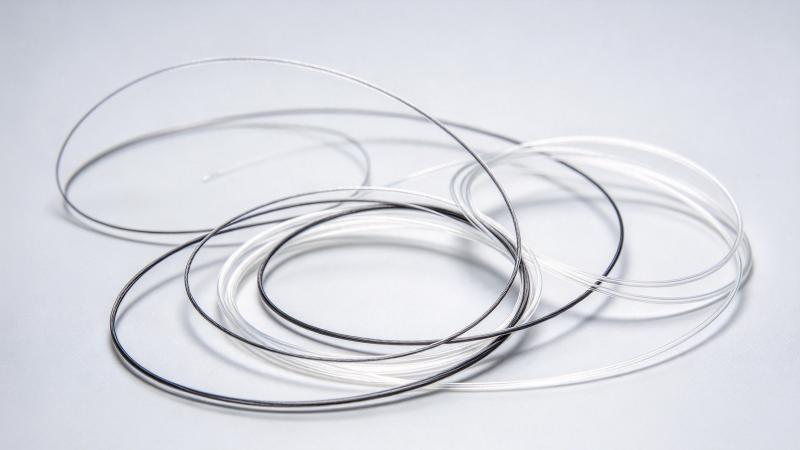
Absorbable surgical sutures are medical suturing materials designed to gradually degrade and be absorbed or metabolized within the human body.
Unlike certain nonabsorbable sutures that require removal at an appropriate time, absorbable sutures are generally used in tissue closure applications where long-term retention of the intact suture structure is unnecessary.
Their primary function is to provide mechanical support during a specific stage of tissue healing.
As the tissue gradually recovers, the mechanical strength of the suture changes, and the material progressively degrades over time.
It is important to distinguish between the time required for a suture to lose tensile strength and the time required for the material to be completely absorbed.
2. Common Materials Used in Absorbable Sutures
2.1 Polyglycolic Acid (PGA)
Polyglycolic acid is a degradable polymer used in certain absorbable surgical sutures.
PGA sutures are generally produced through polymer fiber processing and may have a braided structure.
2.2 Poly(lactic-co-glycolic acid) (PLGA) and Related Copolymers
Some absorbable sutures use copolymer systems derived from monomers such as lactic acid and glycolic acid.
By adjusting polymer composition and structure, manufacturers can obtain different mechanical properties and degradation behaviors.
2.3 Polydioxanone (PDO/PDS)
Polydioxanone is used to manufacture certain monofilament absorbable surgical sutures.
Different materials have different characteristics in terms of flexibility, strength retention, and degradation time.
2.4 Other Degradable Polymers
Some absorbable sutures may use other polymers or copolymer materials.
The specific material must be selected according to tissue healing requirements, handling performance, and product design.
3. How Do Absorbable Sutures Degrade?
Many synthetic absorbable sutures gradually degrade primarily through hydrolysis of their polymer chains.
After implantation, water interacts with the polymer and gradually breaks its molecular chains.
As degradation progresses, the molecular weight and mechanical properties of the material may decrease.
The subsequent processing of degradation products depends on the polymer’s chemical structure and physiological environment.
Factors affecting suture degradation may include:
- Polymer chemical composition.
- Molecular weight and crystallinity.
- Fiber diameter and structure.
- Environmental temperature and moisture.
- Local tissue conditions.
- Manufacturing and sterilization processes.
Therefore, actual strength retention cannot be determined solely from the material name.
4. Why Do Absorbable Sutures Need Surface Coatings?
Surface coatings on absorbable sutures do not necessarily provide antibacterial activity.
Some coatings are primarily designed to improve handling performance.
4.1 Reducing Surface Friction
Friction occurs when a suture passes through tissue.
Appropriate surface treatments may modify the frictional behavior between the suture and surrounding tissue.
4.2 Improving Knotting Performance
Coatings may influence suture sliding behavior, knotting feel, and knot security.
These properties must be balanced. Lower friction is not always better.
4.3 Modifying Surface Wettability
Different surface coatings can affect how sutures interact with liquids.
4.4 Introducing Antibacterial Functionality
Some absorbable sutures can incorporate antibacterial agents into surface coatings to achieve specific antibacterial design objectives.
Triclosan is one active ingredient that has been used in certain antibacterial suture products.
5. What Are the Challenges of Antibacterial Coating on Absorbable Sutures?
5.1 Solvent Compatibility with the Substrate
Different degradable polymers have different levels of solvent resistance.
Unsuitable solvents may cause suture swelling, surface changes, or reductions in mechanical properties.
5.2 Drying Temperature Limitations
Absorbable sutures may be sensitive to temperature.
Excessive processing temperatures or prolonged thermal exposure may alter polymer structure and performance.
5.3 Effects of Coatings on Degradation Behavior
A coating may change how moisture enters the suture, potentially affecting degradation.
Therefore, strength retention and degradation behavior should be compared before and after coating.
5.4 Differences Between Braided and Monofilament Structures
Braided sutures have complex fiber surfaces and interstitial spaces that may allow coating liquids to penetrate internally.
Monofilament sutures have relatively continuous surfaces but still require attention to circumferential uniformity and coating adhesion.
5.5 Control of Antibacterial Agent Loading
Antibacterial agent loading affects not only material consumption but also antibacterial effectiveness, release behavior, and safety.
Appropriate analytical methods must therefore be established to measure actual loading.
6. Antibacterial Coating Equipment for Absorbable Sutures
Absorbable suture coatings can be manufactured using dip coating, spray coating, or other validated methods.
For continuous production, equipment can integrate unwinding, tension control, coating, drying, and rewinding systems.
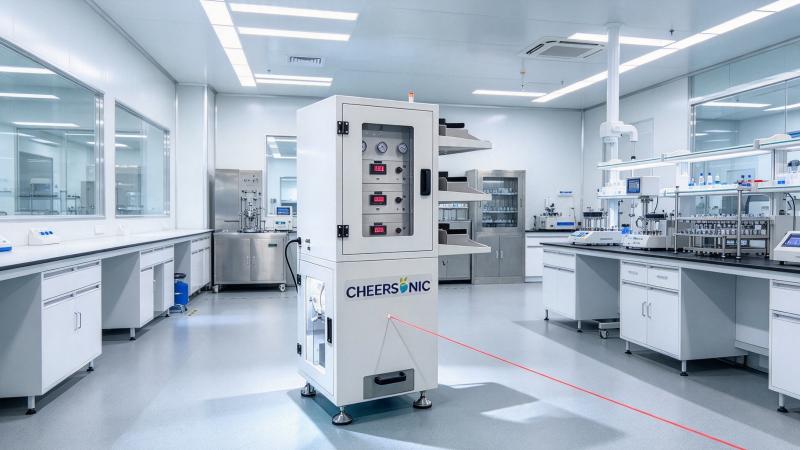
Ultrasonic Spray Coating Equipment for Antibacterial Sutures
Ultrasonic spray coating equipment uses precision liquid delivery and ultrasonic atomization to deposit coating solutions containing triclosan or other active ingredients onto absorbable suture surfaces.
The coating process can be developed according to suture diameter, monofilament or braided structure, target coating loading, and solvent system.
In continuous thread-processing mode, the suture passes through the spray region, enters a controlled drying station, and is then rewound.
To improve coating consistency, manufacturers can investigate multi-angle spraying, multiple thin-layer deposition passes, and online tension monitoring.
Whether ultrasonic spraying performs better than dip coating must be determined through actual sample testing of loading, uniformity, material utilization, and mechanical properties.
7. Development Trends in Absorbable Suture Manufacturing
Technological development in absorbable sutures involves material formulations, fiber processing, surface modification, and automated manufacturing.
For products with antibacterial functionality, manufacturers must also consider active ingredient release, material degradation, sterilization, and long-term stability.
Selecting appropriate coating equipment and establishing comprehensive quality control methods can support the development of absorbable suture coating processes.
Conclusion
Absorbable surgical sutures use degradable polymers to provide temporary mechanical support during tissue healing.
Surface coatings can improve handling properties or, after appropriate design and validation, introduce antibacterial functionality.
For companies planning to develop triclosan-coated absorbable sutures, ultrasonic spray coating equipment combined with continuous thread-processing systems offers a precision coating approach worth investigating.