
Implantable Cardiac Device Wire PI Coating
Cardiac Pacemakers and Implantable Cardiac Devices — The Technical Value of Polyimide-Insulated Platinum-Iridium Wires
1. Why Do Implantable Cardiac Devices Require Reliable Electrical Connections?
Cardiac implantable electronic devices (CIEDs) include pacemakers, implantable cardioverter-defibrillators, and other cardiac monitoring or therapeutic systems.
These devices use electrodes, conductive leads, and electronic control systems to detect cardiac electrical activity or deliver electrical stimulation.
Because some devices are designed for long-term implantation, their electrical connections must meet demanding reliability requirements.
Conductive components must transmit electrical signals while maintaining insulation outside their designated active regions.
2. Potential Applications of Platinum-Iridium Wires
Platinum-iridium alloys are used in selected medical electrode structures because of their electrochemical stability and corrosion resistance.
In implantable cardiac devices, platinum-iridium wires may be considered for specialized electrode structures, precision connections, or miniature conductive components.
However, conventional cardiac pacing leads do not necessarily use platinum-iridium wire as their primary conductor.
Many established designs use other metals or alloys.
Therefore, 80 μm platinum-iridium wires should be considered potential materials for specialized miniature components rather than standard conductors in all pacemaker leads.
3. Why Consider PI Insulation for Miniature Wires?
In space-constrained medical electronic systems, insulation materials must balance electrical performance with dimensional requirements.
Polyimide offers favorable dielectric properties and thin-film processing capabilities, making it a candidate material for certain miniature conductive components.
Applying a 5–10 μm radial PI coating to an 80 μm platinum-iridium wire produces a theoretical finished diameter of approximately 90–100 μm.
This structure may be suitable for selected precision electrical connections where compact dimensions are important.
However, long-term implantable cardiac devices operate in challenging environments.
Insulation materials must be evaluated for moisture exposure, mechanical fatigue, electrical aging, and interfacial stability.
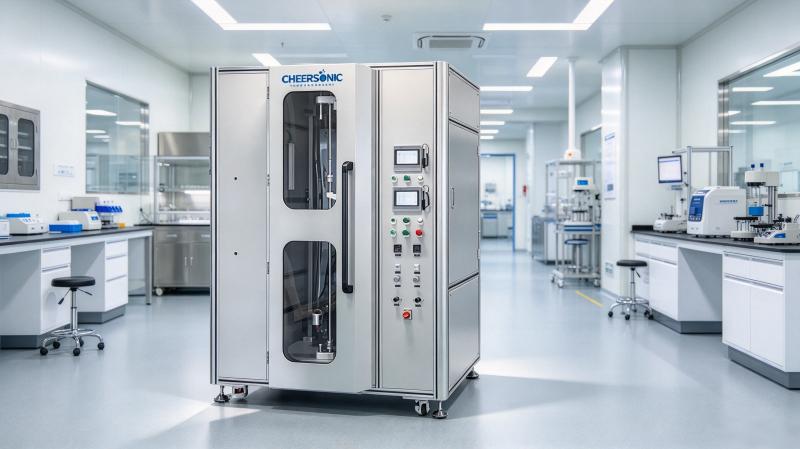
4. Ultrasonic Spray Coating of PI on 0.08 mm Platinum-Iridium Wires
Continuous ultrasonic spray coating can be investigated as a method of producing PI insulation on miniature platinum-iridium wires.
In this process, a precision wire transport system moves the 0.08 mm diameter platinum-iridium substrate through an ultrasonic spray region.
The ultrasonic nozzle atomizes a suitable PI solution and deposits fine droplets onto the metal surface.
To achieve a radial coating thickness of 5–10 μm, multiple thin coating passes with intermediate drying may be used.
Important process parameters include:
- Wire tension and movement stability.
- Spray nozzle distance and alignment.
- PI droplet deposition efficiency.
- Circumferential coating coverage.
- Coating shrinkage and interfacial stress during curing.
- Final electrical insulation and bending reliability.
After appropriate thermal treatment, the coating should be evaluated through cross-sectional inspection, dielectric testing, mechanical fatigue testing, and environmental aging studies.
For long-term implantable applications, additional medical material and device validation is essential.
5. Manufacturing Value of Continuous Ultrasonic Spray Coating
Continuous ultrasonic spray coating can integrate material delivery, atomization, wire transport, and drying into an automated manufacturing system.
For miniature wire development, potential benefits include improved process repeatability, controlled thin-film deposition, and reduced dependence on manual coating operations.
However, actual improvements in yield and production efficiency must be demonstrated through comparison with established coating technologies, including dip coating and wire enameling.
6. Future Development
As implantable cardiac devices become increasingly compact and integrated, miniature insulated electrical connections remain an area of technical interest.
The combination of platinum-iridium wires and PI insulation may provide an additional material option for selected high-precision medical electronic components.
Conclusion
Electrical insulation reliability is essential for the stable operation of implantable cardiac devices.
Developing ultrasonic PI coating processes for 80 μm platinum-iridium wires may support research into precision insulated interconnects, provided that the resulting components undergo comprehensive performance and safety validation.
