Microelectrode Array Polyimide Coating for BCI
Brain-Computer Interfaces and Microelectrode Arrays — Opportunities for Polyimide Coating on Ultra-Fine Platinum-Iridium Wires
1. Why Do Brain-Computer Interfaces Require Miniature Electrodes?
Brain-computer interface (BCI) technology explores methods of communication between the nervous system and external electronic devices.
Some BCI systems record neural activity through electrodes and use signal processing algorithms to extract relevant information.
Depending on the application, electrodes may be positioned on the scalp, on the brain surface, or near specific neural tissues.
In certain invasive or experimental microelectrode systems, electrode dimensions, spatial distribution, and signal acquisition performance are critical design considerations.
2. Platinum-Iridium Microwires in Microelectrode Arrays
A microelectrode array (MEA) consists of multiple electrode channels designed to record or deliver electrical signals at different locations.
Platinum-iridium wires can serve as conductive materials in certain microwire electrode array designs.
For example, platinum-iridium wires measuring 0.08 mm in diameter may be considered for selected miniature electrode structures.
However, their suitability for a particular brain implantation approach depends on electrode stiffness, geometry, tissue interaction, and clinical requirements.
When multiple conductive channels are arranged close together, insulation integrity becomes particularly important.
Unintended electrical connections between neighboring wires may affect signal quality and channel independence.
Therefore, microelectrode arrays require careful control of insulation thickness, uniformity, and defects.

3. How PI Coatings Support Microelectrode Manufacturing
Polyimide can be used as an insulating and structural material in certain microelectrode technologies.
On platinum-iridium microwires, PI coatings help electrically isolate non-active conductive surfaces while providing a foundation for subsequent electrode processing.
Potential functions include:
Reducing Unwanted Current Pathways
Insulation helps confine electrical interaction to designated electrode working regions.
Controlling Electrode Dimensions
Thin PI layers reduce the additional diameter introduced by insulation.
Supporting High-Density Structures
Reliable insulation can facilitate compact arrangements of multiple conductive channels.
Enabling Electrode Tip Processing
Selected insulation areas can be removed using suitable processing techniques to create exposed electrode sites.
Electrode performance also depends on electrode impedance, active surface area, tissue interfaces, and electronic system design.
4. Ultrasonic Spray Coating of PI on 80 μm Platinum-Iridium Microwires
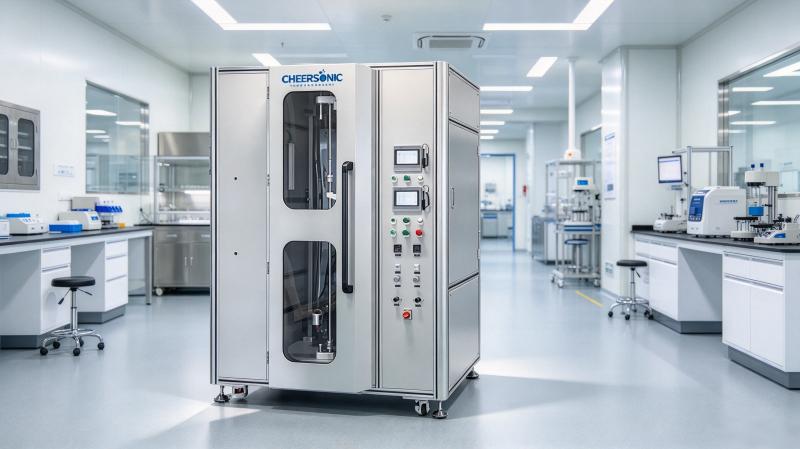
Ultrasonic spray coating can be explored as a continuous insulation process for ultra-fine platinum-iridium microwires.
For an 0.08 mm diameter platinum-iridium wire, the objective may be to deposit a PI coating with a radial thickness of 5–10 μm.
A precision wire transport system moves the substrate through the ultrasonic atomization region.
The ultrasonic nozzle converts the PI coating solution into fine droplets, which are directed toward the moving wire through controlled carrier gas.
Because the wire diameter is extremely small, single-direction spraying may not provide complete circumferential coverage.
Opposing spray nozzles, multiple spray angles, or offset coating stations can be investigated to improve uniformity.
After multiple thin coating passes, the PI insulation undergoes drying and curing appropriate to its chemical formulation.
Depending on the electrode design, localized conductive regions may then be created through precision cutting, laser processing, or other validated techniques.
The objective is to maintain reliable insulation over non-active surfaces without damaging the metal conductor.
5. Quality Control Requirements
Important quality parameters for microelectrode arrays include:
- PI coating thickness and circumferential uniformity.
- Insulation resistance between adjacent electrodes.
- Dimensional consistency of exposed electrode sites.
- Electrode impedance and electrochemical properties.
- Adhesion between PI and platinum-iridium.
- Insulation integrity after assembly and bending.
For implantable BCI applications, additional biocompatibility, tissue response, and long-term reliability evaluations are necessary.
6. Future Opportunities
As microelectrode manufacturing technologies advance, reliable multichannel signal transmission within limited space will remain an important engineering challenge.
Ultrasonic spray coating may offer an additional insulation manufacturing approach that can be integrated with microwire processing, localized insulation removal, and automated assembly.
Conclusion
In certain BCI and microelectrode array designs, platinum-iridium wires provide conductive pathways, while PI coatings electrically isolate non-active regions.
Continuous ultrasonic PI coating of 80 μm platinum-iridium microwires represents a potential manufacturing technology for precision microelectrode applications.