Microneedle Patch Coating
Microneedle Patch Coating | Ultrasonic Spray Coating | Cheersonic
Coated microneedle patches are the mainstream category of minimally invasive transdermal drug delivery patches. The core principle is to attach drugs and active ingredients to the needle tip and surface of solid microneedles through specialized processes, without loading drugs onto the patch substrate. When used, the microneedle punctures the stratum corneum of the skin, and the surface coating quickly dissolves, accurately releasing effective ingredients. It is suitable for transdermal delivery of vaccines, protein peptides, small molecule drugs, and medical beauty active substances, and has the advantages of minimally invasive, efficient, easy to absorb, and residue free.
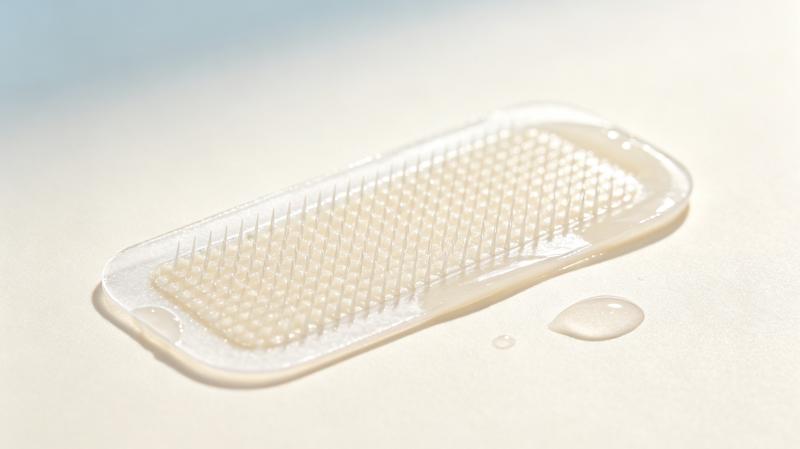
This category can be clearly distinguished from soluble microneedles: coated microneedles belong to surface drug loading, and drugs only adhere to the outer layer of microneedles; Soluble microneedles are used for embedding drugs, and the drugs are mixed inside the microneedle material. The process structure and drug release logic of the two are completely different.
Detailed explanation of mainstream coating processes
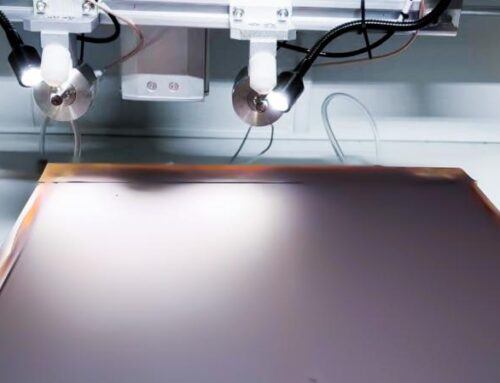
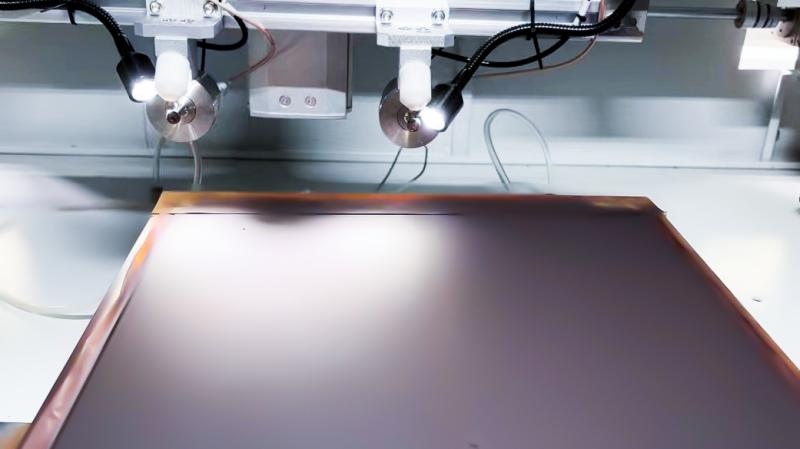
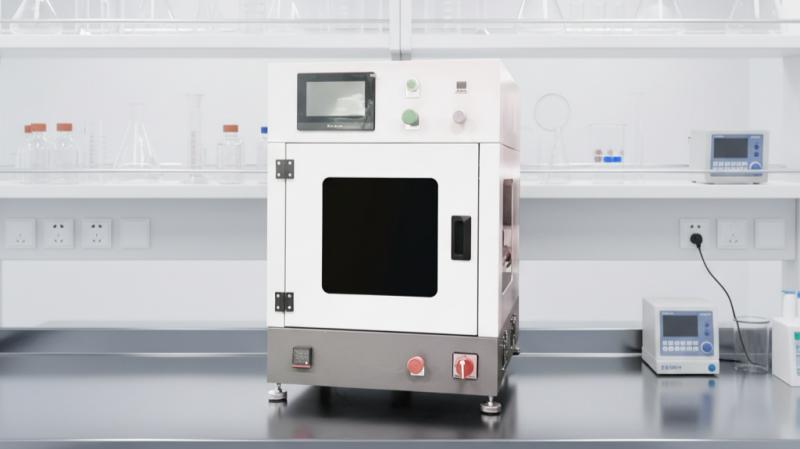
Ultrasonic spraying technology is currently the preferred solution for the research and mass production of microneedle patches. This process atomizes the drug solution into ultrafine and soft droplets through high-frequency vibration, coupled with a precision XYZ motion platform, which can achieve selective and precise coating of microneedle tips and bodies, effectively avoiding material accumulation on the surface mount substrate. The coating thickness can be precisely controlled at the nanometer to micrometer level, allowing for low-speed soft landing of droplets without damaging the structure of the microneedle tip. At the same time, it can maximize the protection of the biological activity of thermosensitive active substances such as vaccines and proteins. The overall material utilization rate is high, the batch consistency is good, and it is suitable for laboratory research and development, pilot testing, and large-scale production. It only requires simple formula adaptation based on the viscosity and solid content of the drug solution to achieve stable production.
Dip coating method is a commonly used simple process in laboratories, with low equipment cost, simple operation, and no need for complex equipment to complete the preparation of microneedle coatings. However, the overall accuracy is poor, and the drug solution is prone to accumulate on the surface mount substrate during coating, resulting in uneven drug loading and poor batch dose repeatability. It is only suitable for preliminary experimental research and development and cannot meet the accuracy requirements for commercial mass production.
The inkjet dot coating process has the characteristic of precise single point drug delivery, which can apply materials to a single microneedle point with high precision. But the production efficiency is extremely low, only suitable for small-scale, high-precision scientific research sample preparation, and completely unsuitable for industrial mass production of large-area microneedle arrays.
Traditional two fluid air spraying belongs to the conventional pressure atomization process, with strong equipment versatility. However, the spraying impact force is high and the phenomenon of overspray is severe, which not only causes a large waste of expensive drug raw materials, but also easily damages the fine microneedle tips with high-pressure airflow. The coating uniformity and selectivity are extremely poor, and it is currently not widely used for the preparation of drug loaded coatings for high-end microneedle patches.
Coating compatible materials
In terms of pharmaceuticals and active ingredients, it can be adapted to vaccine antigens, various protein and peptide drugs, small molecule therapeutic drugs, hyaluronic acid, recombinant collagen and other medical aesthetics and medicinal active ingredients. Film forming auxiliary materials can be selected from biocompatible materials such as HPMC, CMC, PVP, sodium alginate, hyaluronic acid, etc., mainly used to optimize the film forming effect of coatings, improve coating adhesion, and regulate the dissolution and slow release rate of active ingredients. The substrate has a wide range of adaptability and can be uniformly coated and processed for silicon microneedles, metal microneedles, PLA, PDMS polymer solid microneedle array patches.
Core process technology indicators
The core advantage is the selective coating effect, which can accurately achieve the priority loading of drugs on the needle tip, greatly reducing the waste of ineffective coatings and materials on the substrate. The adjustable range of coating thickness is wide, which can stably achieve uniform ultra-thin coatings from 100 nanometers to 10 micrometers. The process can strictly control the coefficient of variation of drug loading, ensuring uniform and stable drug loading for each batch and patch. The entire process can achieve low-temperature processing without high-temperature damage, and fully retain the original activity of biological agents and active proteins. The overall material utilization rate can reach over 80%, significantly reducing the loss of high-end API raw materials. At the same time, it can effectively avoid process defects such as coating wire drawing, needle to needle bridging, and uneven coating thickness, resulting in high yield of finished products.
About Cheersonic
Cheersonic is the leading developer and manufacturer of ultrasonic coating systems for applying precise, thin film coatings to protect, strengthen or smooth surfaces on parts and components for the microelectronics/electronics, alternative energy, medical and industrial markets, including specialized glass applications in construction and automotive.
Our coating solutions are environmentally-friendly, efficient and highly reliable, and enable dramatic reductions in overspray, savings in raw material, water and energy usage and provide improved process repeatability, transfer efficiency, high uniformity and reduced emissions.
If you have any technical questions, customization demands, or procurement inquiries about ultrasonic atomization nozzles, feel free to contact our professional sales and technical team for detailed parameters, customized solutions, and industry application support.
Email: market2@cheersonic.com