
Coating Technology for Flow Battery Bipolar Plates
As core components of flow battery stacks, bipolar plates perform critical functions: conducting current, separating electrolytes, and supporting electrodes. In acidic flow battery systems—such as all-vanadium chemistries—the highly corrosive nature of the electrolyte causes metal plates to fail due to corrosion and graphite plates to swell and delaminate. Consequently, surface coating modification has emerged as a key technical strategy to enhance the durability and performance of bipolar plates, aiming to strike an optimal balance between high electrical conductivity and robust corrosion resistance.
Core Functions of Coatings
1. Corrosion Protection: Isolates the bipolar plate substrate from highly acidic or oxidizing electrolytes; prevents metal ion dissolution that could contaminate the electrolyte; and avoids swelling or dissociation of the graphite structure.
2. Conductivity Optimization: Reduces interfacial contact resistance (ICR), establishes continuous conductive pathways, and minimizes energy loss.
3. Interface Regulation: Improves electrolyte wettability and mass transfer efficiency, optimizes flow field distribution, and enhances stack power density.
4. Mechanical Reinforcement: Strengthens the adhesion between the coating and the substrate, enabling resistance to assembly pressure and cyclic stresses.

Mainstream Coating Material Systems
Carbon-based Coatings (Most Widely Applied)
1. Diamond-like Carbon (DLC) / Amorphous Carbon: Exhibits extremely high chemical inertness and density, offering excellent corrosion resistance; however, high internal stress necessitates a gradient structural design to prevent cracking.
2. Graphite/Graphene Composite Coatings: Offer good conductivity and moderate cost; form physical barriers through layered stacking; graphene addition significantly reduces contact resistance.
3. Chromium Carbide/Graphite Composite Coatings: Combine the stability of the carbon phase with the conductivity of metal carbides; suitable for modifying stainless steel bipolar plates.
Metal and Nitride Coatings
1. Metal Nitrides (TiN, CrN, TaN, NbN): Characterized by dense structures, high hardness, and good conductivity; nano-coatings prepared via magnetron sputtering exhibit optimal performance; NbN coatings demonstrate excellent corrosion resistance on titanium bipolar plates (corrosion current density < 1×10⁻⁷ A/cm²).
2. Noble Metal Coatings (Pt, Au): Offer excellent conductivity and stability but come at a high cost; usage is generally limited to laboratory settings or specialized operating conditions.
3. Multi-component Composite Coatings (Ti-Nb-O, Ni-P-TiCN/CrMoN): Achieve performance synergy through compositional tuning, balancing corrosion resistance and conductivity.
Conductive Polymer Coatings
Polypyrrole (PPy)/Polyaniline (PANI) composite coatings: Prepared via electrochemical polymerization, these form uniform, dense coatings on stainless steel surfaces; PPy/C-PDA coatings demonstrate long-lasting corrosion resistance (720 hours) under simulated operating conditions, with contact resistance <50 mΩ·cm².
Comparison of Mainstream Preparation Processes
Ultrasonic Spraying: Primarily suitable for carbon nanotube and graphene composite slurry coatings; produces film thicknesses in the 5–50 μm range. Key advantages include ultra-thin, uniform coatings that fully cover corners and dead zones in flow channels; low-temperature processing compatible with carbon-plastic composite substrates; and overall performance suitable for pilot and mass production. The only drawback is the need for specific tuning to match slurry formulations.
Magnetron Sputtering (PVD): Suitable for hard coatings such as DLC, Ti₃SiC₂, and TiN, with film thicknesses ranging from 50 nm to 8 μm. Coatings produced via this process are dense and highly pure; drawbacks include high equipment procurement and maintenance costs, low production capacity, and difficulty ensuring uniform film thickness across large-area plates.
CVD Process: Commonly used for carbon-based and ceramic coatings, enabling micron-scale deposition. Its greatest advantage is the exceptionally strong adhesion between the coating and the substrate; the downside is the high deposition temperature, which is incompatible with polymer substrates, thereby limiting substrate applicability.
Thermal/Cold Spraying: Primarily used for carbide and MAX-phase coatings, achieving film thicknesses in the tens to hundreds of microns. The process offers high deposition rates, making it suitable for large-area plates; however, the resulting coatings have high porosity, necessitating additional densification post-processing, which increases processing steps and costs.
Brush Coating and Roll Coating: Suitable for various carbon-based slurry coatings; typical film thicknesses range from 10 to 100 μm. Its key advantages are a simple process and low production costs, making it suitable for large-scale mass production; the main drawback is poor coating uniformity within the flow channels, which is prone to defects such as uneven thickness and localized coating accumulation.
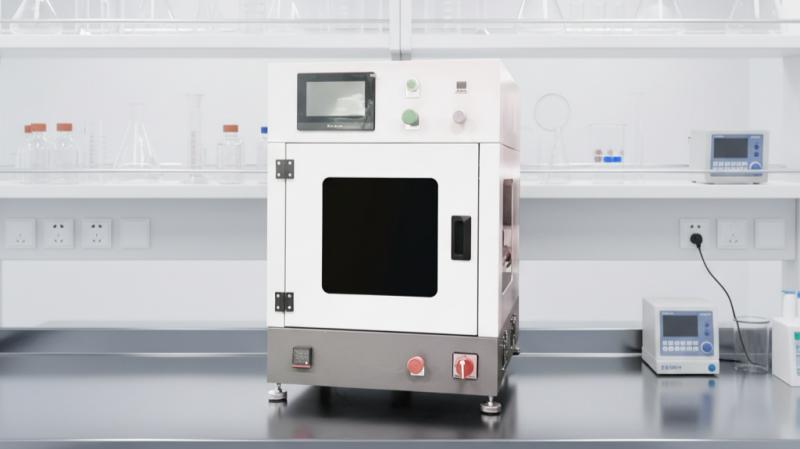
> Ultrasonic spraying is the preferred coating process for carbon-plastic composite bipolar plates: it enables the application of a uniform carbon coating—without any “dead zones”—across the surface of flow-channeled bipolar plates, thereby avoiding defects associated with traditional air spraying, such as particle agglomeration, thick edges, and pinholes.
Coating Performance Evaluation Methods
1. Electrochemical performance testing: Potentiodynamic polarization curves to measure corrosion current density; Electrochemical Impedance Spectroscopy (EIS) to analyze coating barrier properties; long-term potentiostatic testing to evaluate durability.
2. Conductivity testing: Four-probe method to measure bulk resistivity; contact resistance testing system (standard pressure of 140 N/cm²) to measure Interfacial Contact Resistance (ICR).
3. Interface and structural characterization: SEM/AFM to observe coating microstructure and roughness; XRD/XPS to analyze composition and phase structure; scratch tests/tensile tests to evaluate adhesion strength.
4. Single-cell validation: Testing energy efficiency, power density, and cycling stability under actual operating conditions.
Technical Challenges and Development Trends
Core Technical Challenges
1. Balancing cost and mass production: Vacuum-based processes entail high costs; there is a need to develop non-vacuum, continuous coating technologies.
2. Synergistic performance optimization: Conductivity and corrosion resistance often involve a trade-off; multi-component composite and gradient structure designs are required.
3. Uniform coating of complex flow channels: Bipolar plate flow channel structures are complex, making them prone to uneven coating thickness and “dead zone” issues.
4. Long-term stability: Failure modes such as delamination and cracking at the coating-substrate interface are prone to occurring during long-term cycling.
Future Development Directions
1. Multi-component composite coatings: Carbon-based/metal-nitride gradient coatings and graphene/conductive polymer composite coatings to achieve performance synergy.
2. Low-cost non-vacuum processes: Technologies such as ultrasonic spraying, sol-gel, and chemical conversion to reduce equipment and operating costs.
3. Smart coating design: Self-healing coatings and adaptive interface coatings to enhance durability and reliability.
4. Integrated fabrication: Simultaneous forming of the coating and flow channels to achieve comprehensive optimization of bipolar plate performance and structure.
Bipolar plate coating technology is rapidly transitioning from laboratory research to large-scale application. Through material innovation and process optimization, it will provide critical support for the commercialization of flow batteries in the field of large-scale, long-duration energy storage.
About Cheersonic
Cheersonic is the leading developer and manufacturer of ultrasonic coating systems for applying precise, thin film coatings to protect, strengthen or smooth surfaces on parts and components for the microelectronics/electronics, alternative energy, medical and industrial markets, including specialized glass applications in construction and automotive.
Our coating solutions are environmentally-friendly, efficient and highly reliable, and enable dramatic reductions in overspray, savings in raw material, water and energy usage and provide improved process repeatability, transfer efficiency, high uniformity and reduced emissions.
If you have any technical questions, customization demands, or procurement inquiries about ultrasonic atomization nozzles, feel free to contact our professional sales and technical team for detailed parameters, customized solutions, and industry application support.
Email: market2@cheersonic.com
